
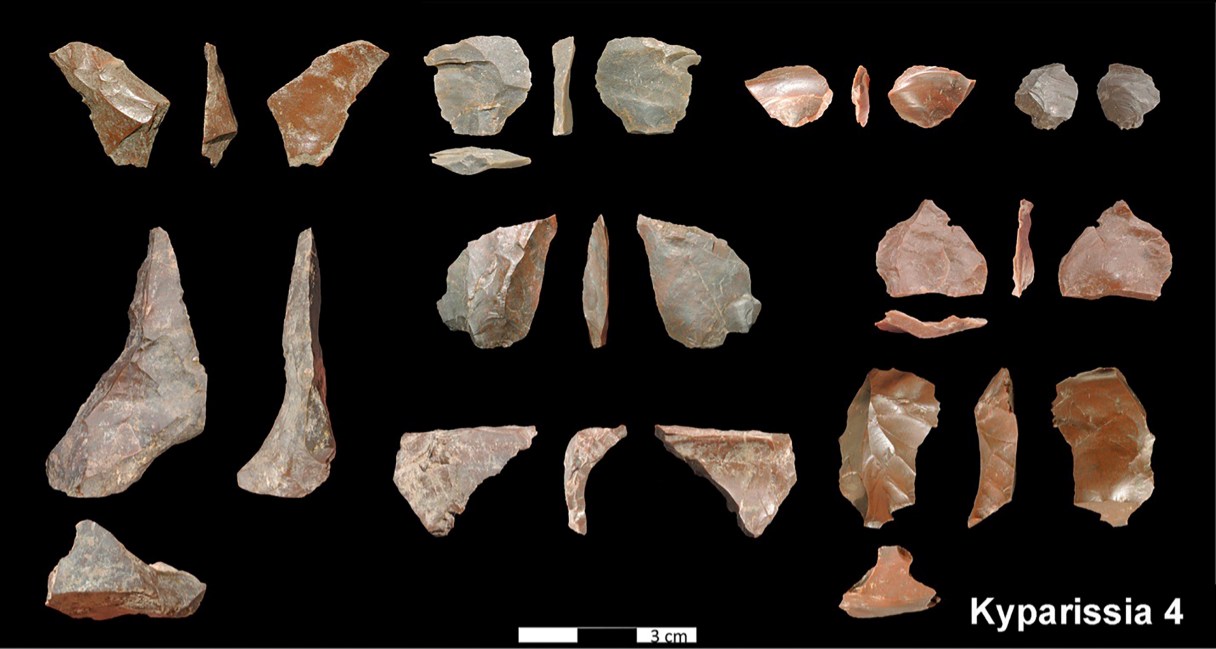
ATHENS, Greece (AP) — Deep in an open coal mine in southern Greece, researchers have discovered the antiquities-rich country’s oldest archaeological site, which dates to 700,000 years ago and is associated with modern humans’ hominin ancestors.
The find announced June 1 would drag the dawn of Greek archaeology back by as much as a quarter of a million years, although older hominin sites have been discovered elsewhere in Europe. The oldest, in Spain, dates to more than a million years ago.
The Greek site was one of five investigated in the Megalopolis area during a five-year project involving an international team of experts, a Culture Ministry statement said.
It was found to contain rough stone tools from the Lower Palaeolithic period — about 3.3 million to 300,000 years ago — and the remains of an extinct species of giant deer, elephants, hippopotamus, rhinoceros and a macaque monkey.
The project was directed by Panagiotis Karkanas of the American School of Classical Studies at Athens, Eleni Panagopoulou from the Greek Culture Ministry and Katerina Harvati, a professor of paleoanthropology at the University of Tübingen in Germany.