
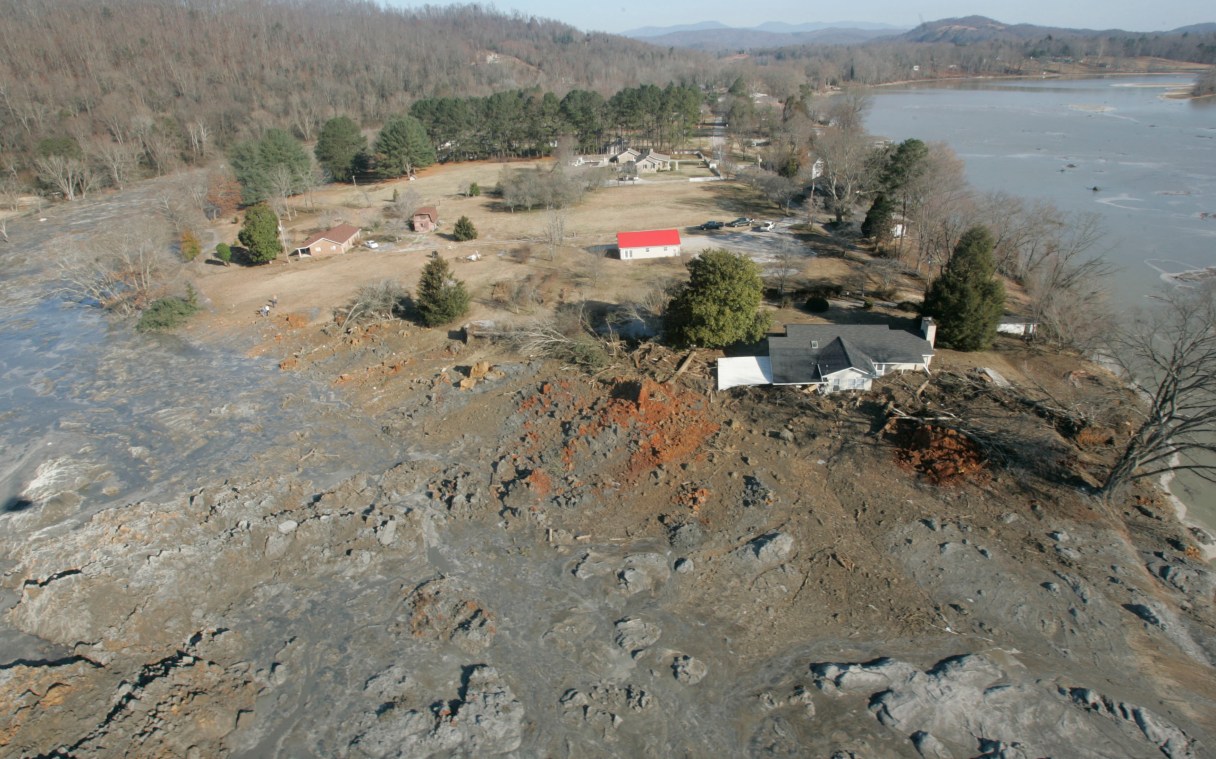
NASHVILLE, Tenn. (AP) — Attorneys for a group of workers who believe their jobs cleaning up a massive coal ash spill in Tennessee led to a slew of illnesses, including fatal cancers, have reached a settlement with the contractor who organized the cleanup for the Tennessee Valley Authority, according to a notice posted on the Jacobs Engineering website on Tuesday.
Beginning in 2013, more than 200 workers sued Jacobs, claiming the company’s supervisors misled them about the dangers of the ash, failed to provide them with protective gear like respirators, and tampered with the air monitoring equipment meant to keep the workers safe.
In 2018, a Knoxville jury took only a few hours to decide that Jacobs had breached its duty of safety, exposing workers to airborne “fly ash” with known carcinogens. The jurors said Jacobs’ actions were capable of making the workers sick. The key question of whether they caused each worker’s specific illness was left for a different jury in a second phase of the federal civil trial.
That second phase never came.
The judge at the time recognized that the workers still had a long road ahead with the lawsuit and ordered the two sides to try mediation, alluding to many of the workers’ urgent need for medical care. Mediation, however, was not successful, and the suit dragged on as Jacobs continued to file appeals, repeatedly trying to get the case thrown out.