
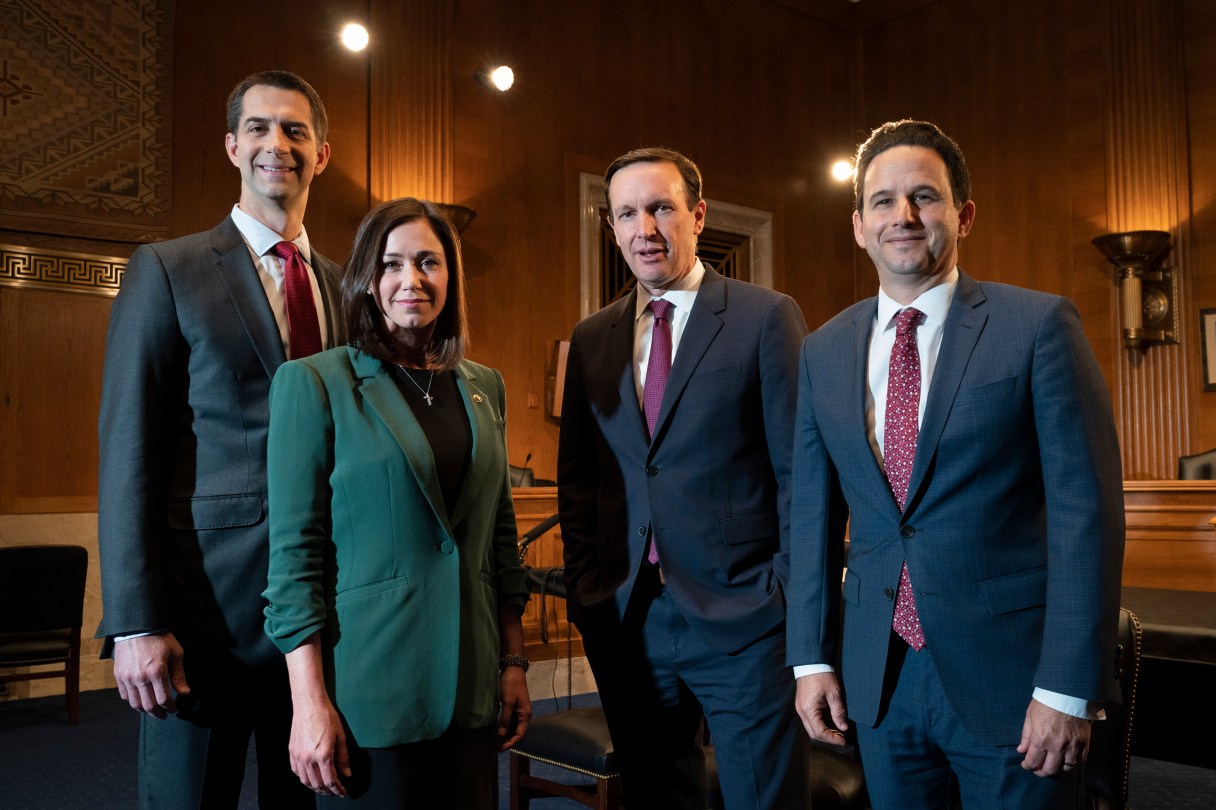
WASHINGTON (AP) — Sen. Katie Britt says she hears about it constantly when she is at home in Alabama — at school track meets, basketball tournaments and on her regular morning walks with friends. And when she was running for the Senate last year, Britt says, “parent after parent” came up to her wanting to discuss the way social media was harming their kids.
Britt also navigates the issue in her own home, as the mother of a 13-year-old and a 14-year-old.
“Enough is enough,” says Britt, a Republican who last week introduced bipartisan legislation with three other senators — all parents of young children and teenagers — to try to better protect children online. “The time to act is now.”
Connecticut Sen. Chris Murphy, too, deals with it firsthand as a father to an 11-year-old and a 14-year-old. Murphy says he’s seen the upsides to social media, like connection during the coronavirus pandemic and silly videos that bring them joy. But he’s also seen the downsides, including children he knows who he says have ventured into dark corners of the online world.
“I just feel like we’ve reached this point where doing nothing is not an option,” says Murphy, a Democrat. “And increasingly, when members of Congress go home, this is one of the first or second issues that they’re hearing about from their constituents.”