

“NO SURRENDER: A FATHER, A SON AND AN EXTRAORDINARY ACT OF HEROISM THAT CONTINUES TO LIVE ON TODAY” by Chris Edmonds and Douglas Century (HarperCollins, 352 pages, $30).
Enshrined on the Wall of Honor at Yad Vashem, Israel’s national Holocaust memorial, are the names of over 27,000 gentiles who risked their lives to save Jews during the dark days of the Third Reich. These heroes are called the Righteous Among the Nations. Among them is one American serviceman: Master Sergeant Roddie Edmonds, a Knoxville native who died in 1985 without ever telling his family about the act of courage that led to this posthumous honor. His son, Chris Edmonds, learned of his father’s heroism almost by accident and now, with co-author Douglas Century, shares Roddie’s story with the world in “No Surrender: A Father, a Son and an Extraordinary Act of Heroism That Continues To Live on Today.”
Roddie Edmonds enlisted in the army nine months before Pearl Harbor and spent the first three years of the war training infantry troops. When it came time for Roddie to lead men in combat, it was late 1944, and Germany was thought to be on the ropes, ready to surrender. Roddie’s officers in the 106th Infantry Division, writes Chris Edmonds, “were told that the men were being given an ‘easy’ posting, being sent to a sector so uneventful that GIs had nicknamed it the Ghost Front.” The line they were sent to was in the heart of the Ardennes forest.
On the morning of Dec. 16, 1944, the Germans crashed into the untested soldiers of the 106th, a surprise attack that became the Battle of the Bulge, one of the most brutal battles of the war. Hitler’s troops, kicked across half of Europe by Allied armies, were desperate and seeking revenge. They committed atrocities, massacring American prisoners at villages like Wereth and Malmedy. Roddie’s men, along with thousands of other U.S. troops, were ultimately forced to surrender to the still powerful and often fanatical Germans.
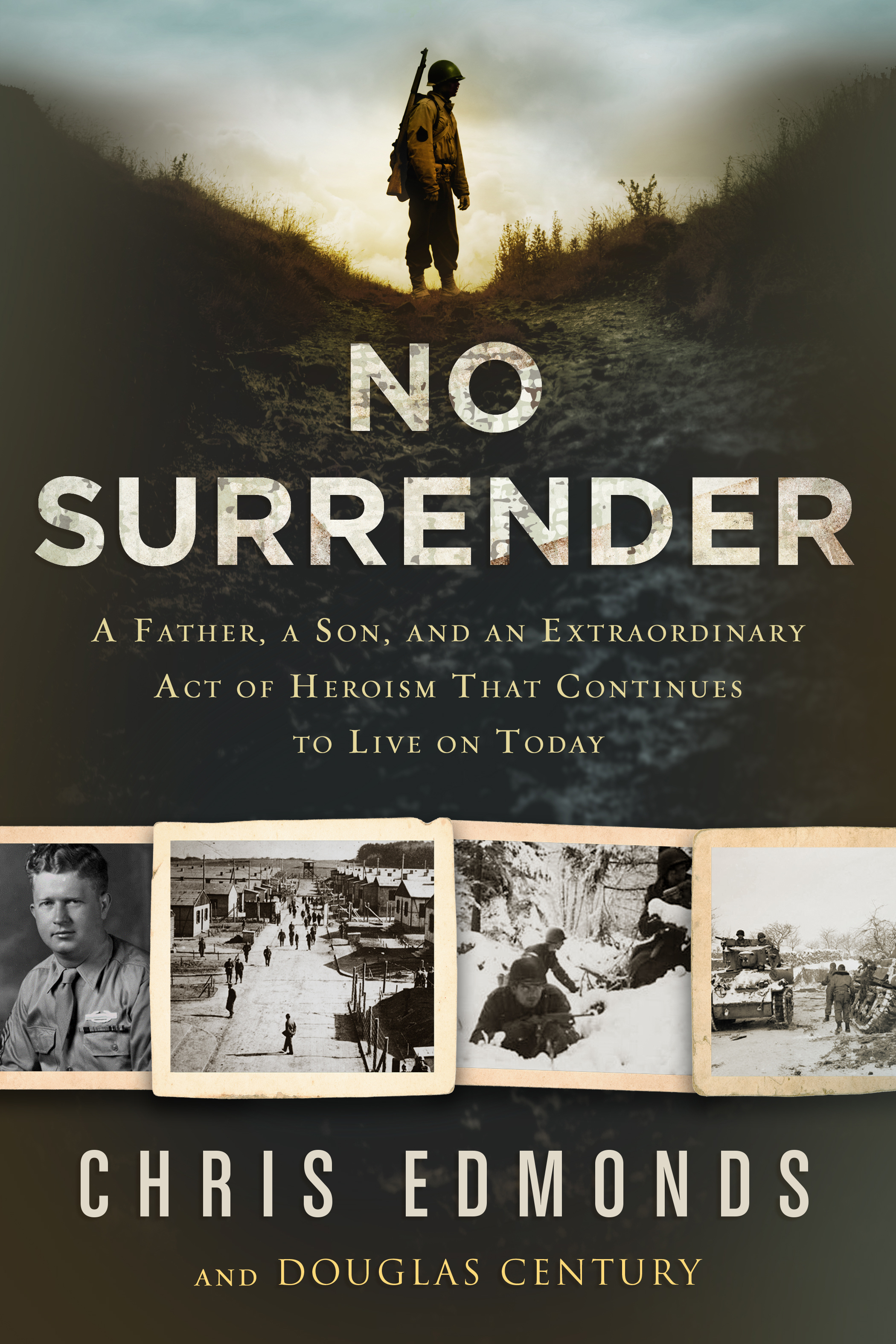 Photo from HarperCollins / Cover of “No Surrender” by Chris Edmonds and Douglas Century.
As risky as it was for any American soldier to surrender during those desperate hours, it was far more dangerous for Jewish troops. By late 1944, most people knew what the Nazis were doing to Jews, though the worst horrors were yet to be uncovered. Surrendering Jews had to decide whether to throw away their dog tags and deny their religion or stand up for their beliefs and potentially be killed. “Most knew they could not risk capture with that H for Hebrew identifying them as Jews,” writes Edmonds. “Some Jewish GIs swapped dog tags with those around the necks of dead comrades.”