
Friday, October 30, 2026Oct 30

This story is free to read.

US pulls plug on authorization for lithium exploration next to a national wildlife refuge in Nevada

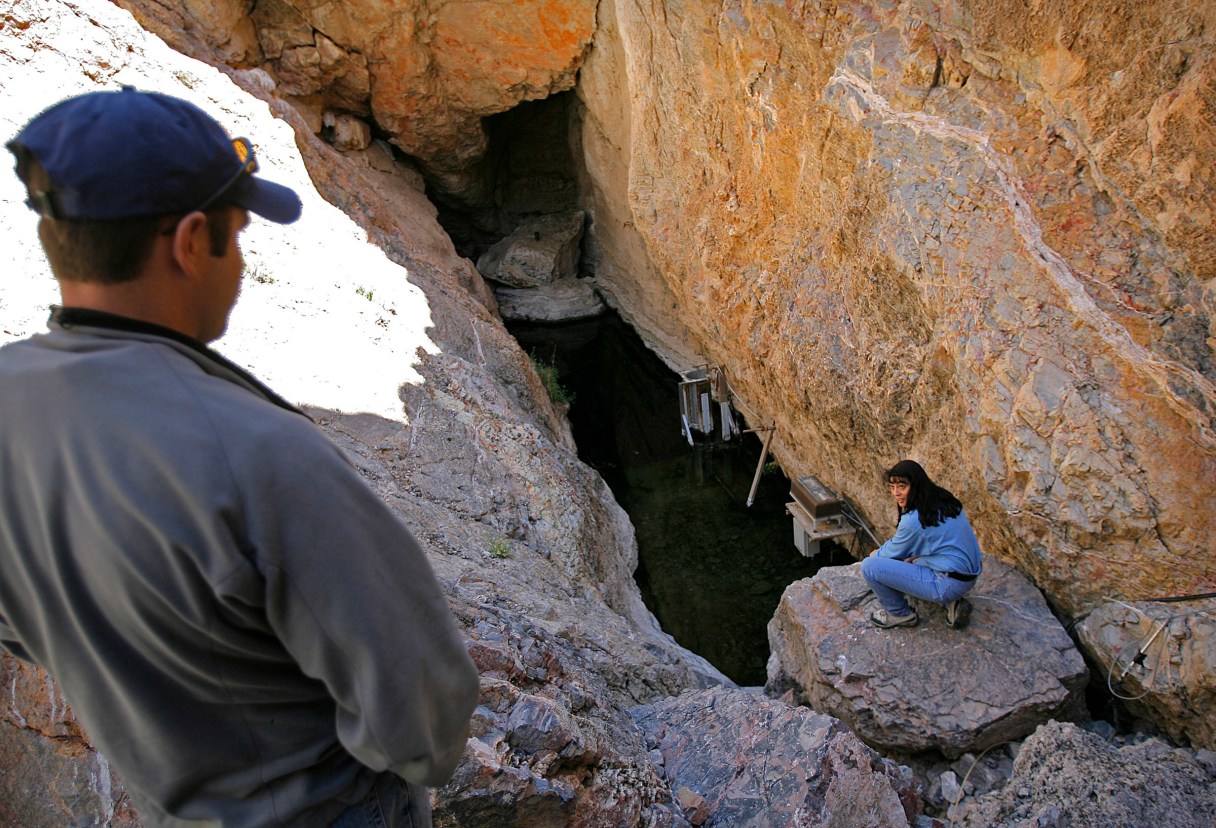
FILE - Biologist Mike Bower, left, with the National Park Service, and Fish and Wildlife Service field supervisor Cynthia Martinez, are seen in Devil's Hole, the endangered Devil's Hole Pupfish's only natural habitat, at Death Valley National Park in Nev., April 6, 2006. Federal land managers have formally withdrawn their authorization of a Canadian mining company’s lithium exploration project bordering a national wildlife refuge in southern Nevada after conservationists sought a court order to block it. (AP Photo/Jae C. Hong, File)
FILE - Biologist Mike Bower, left, with the National Park Service, and Fish and Wildlife Service field supervisor Cynthia Martinez, are seen in Devil's Hole, the endangered Devil's Hole Pupfish's only natural habitat, at Death Valley National Park in Nev., April 6, 2006. Federal land managers have formally withdrawn their authorization of a Canadian mining company’s lithium exploration project bordering a national wildlife refuge in southern Nevada after conservationists sought a court order to block it. (AP Photo/Jae C. Hong, File) FILE - Biologist Mike Bower, left, with the National Park Service, and Fish and Wildlife Service field supervisor Cynthia Martinez, are seen in Devil's Hole, the endangered Devil's Hole Pupfish's only natural habitat, at Death Valley National Park in Nev., April 6, 2006. Federal land managers have formally withdrawn their authorization of a Canadian mining company’s lithium exploration project bordering a national wildlife refuge in southern Nevada after conservationists sought a court order to block it. (AP Photo/Jae C. Hong, File)

RENO, Nev. (AP) — Federal land managers have formally withdrawn their authorization of a Canadian mining company’s lithium exploration project bordering a national wildlife refuge in southern Nevada after conservationists sought a court order to block it.

The Center for Biological Diversity and the Amargosa Conservancy said in a lawsuit filed July 7 that the project on the edge of the Ash Meadows National Wildlife Refuge outside Las Vegas posed an illegal risk to a dozen fish, snail and plant species currently protected under the Endangered Species Act.

They filed an additional motion this week in federal court seeking a temporary injunction prohibiting Rover Metals from initiating the drilling of 30 bore sites in search of the highly sought-after metal used to manufacture batteries for electric vehicles.

But before a judge in Las Vegas could rule on the request, the Bureau of Land Management notified Rover Metals on Wednesday that its earlier acceptance of the company’s notice of its intent to proceed “was in error.”

“The agency has concluded that proposed operations are likely to result in disturbance to localized groundwaters that supply the connected surface waters associated with Threatened and Endangered species in local springs,” said Angelita Bulletts, district manager of the bureau’s southern Nevada district.