
Tuesday, November 17, 2026Nov 17

Legitimacy of ‘customer’ in Supreme Court gay rights case raises ethical and legal flags

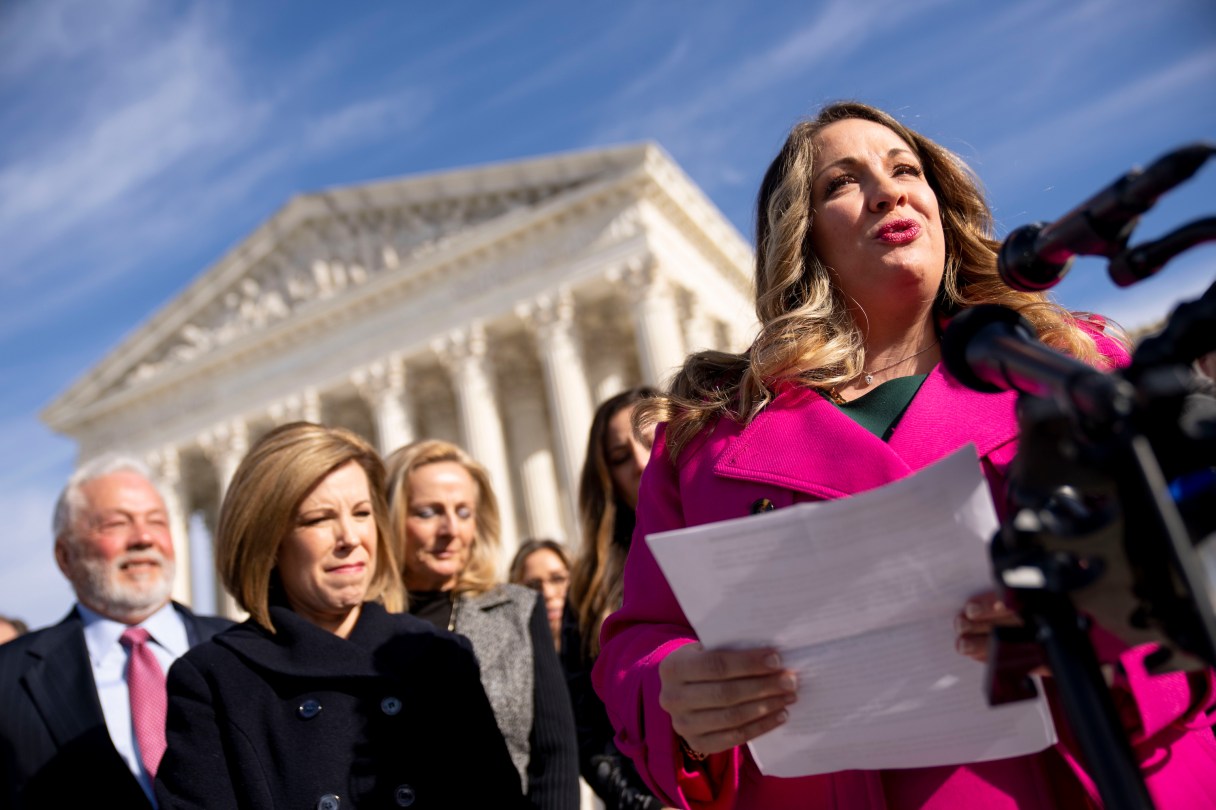
FILE - Lorie Smith, a Christian graphic artist and website designer in Colorado, right, accompanied by her lawyer, Kristen Waggoner of the Alliance Defending Freedom, second from left, speaks outside the Supreme Court in Washington, Monday, Dec. 5, 2022, after her case was heard before the Supreme Court. In a defeat for gay rights, the Supreme Court's conservative majority ruled Friday, June 30, 2023, Smith who wants to design wedding websites can refuse to work with same-sex couples. (AP Photo/Andrew Harnik, File)

A Christian graphic artist who the Supreme Court said can refuse to make wedding websites for gay couples pointed during her lawsuit to a request from a man named “Stewart” and his husband-to-be. The twist? Stewart says it never happened.

The revelation has raised questions about how Lorie Smith’s case was allowed to proceed all the way to the nation’s highest court with such an apparent misrepresentation and whether the state of Colorado, which lost the case last week, has any legal recourse.

It has served as another distraction at the end of a highly polarizing term for a Supreme Court marked by ethical questions and contentious rulings along ideological lines that rejected affirmative action in higher education and President Joe Biden’s $400 billion plan to cancel or reduce federal student loan debts.

Here’s a look at the legal questions surrounding the mysterious would-be customer, “Stewart:”

WHAT ROLE DID THE CLAIM PLAY IN THE CASE?