
Monday, November 16, 2026Nov 16

New electric vehicle charging network being built by major automakers could lure more buyers to EVs

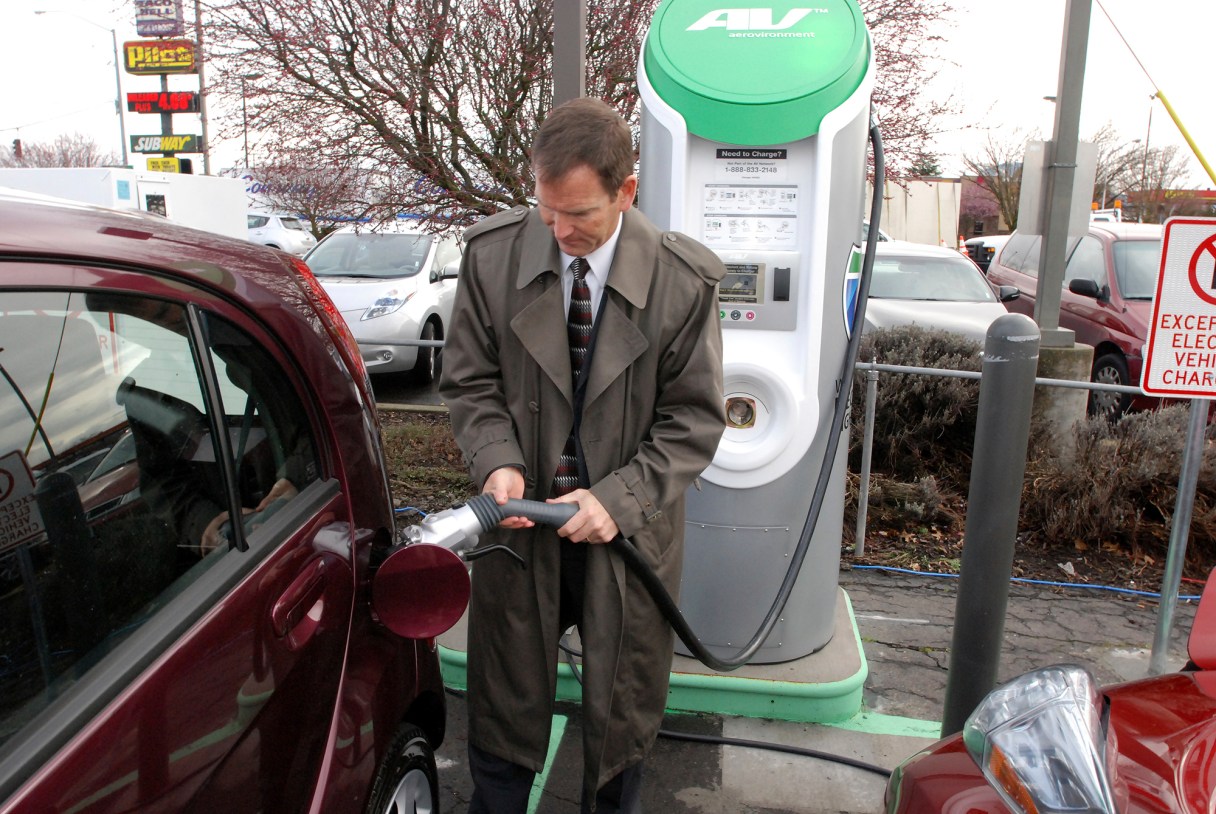
FILE - Thomas Miller, Western EV fleet sales manager for Mitsubishi Motors North America, demonstrates a fast-charger connection on a Mitsubichi i car Friday, March 16, 2012 in Central Point, Ore. The second-largest electric vehicle fast-charging network, Electrify America, with 800 direct-current fast-charging stations and more than 3,600 plugs nationwide, said Wednesday, July 26, 2023, it will work to add Tesla's connector to existing and future chargers by 2025. (AP Photo/Jeff Barnard, File)

DETROIT (AP) — The announcement Wednesday that seven major automakers are joining to build a large North American electric vehicle charging network should pull people off the sidelines to at least consider shifting away from gas-powered vehicles.

That’s how auto industry analysts see the move by General Motors, BMW, Honda, Hyundai, Kia, Mercedes and Stellantis to build a network of fast-chargers that will rival Tesla’s and will nearly double the number of quick-charging plugs in the U.S. and Canada.

“Anything that gets more — and especially more reliable chargers — out there will be a benefit to anybody considering EVs,” said Sam Abuelsamid, an e-mobility analyst for Guidehouse Insights. “It should help sway some people who were on the fence about buying an EV.”

The companies said they will share in a multibillion-dollar investment to build “high power” charging stations with at least 30,000 plugs in urban areas and along travel corridors by 2030.

The dramatic move is intended to allay fears that chargers won’t be available for long-distance travel.