
For the hundreds of thousands of Israeli democracy defenders who tried to block Prime Minister Benjamin Netanyahu’s judicial coup Monday, the stripping of the Israeli Supreme Court’s key powers to curb the executive branch surely feels like a stinging defeat. I get it, but don’t totally despair. Help may be on the way from talks between the United States and Saudi Arabia.
Yes, you read that right.
When I interviewed President Joe Biden in the Oval Office recently, my column focused on his urging Netanyahu not to ram through the judicial overhaul without even a semblance of national consensus. But that’s not all we talked about. The president is wrestling with whether to pursue the possibility of a U.S.-Saudi mutual security pact that would involve Saudi Arabia normalizing relations with Israel, provided that Israel make concessions to the Palestinians that would preserve the possibility of a two-state solution.
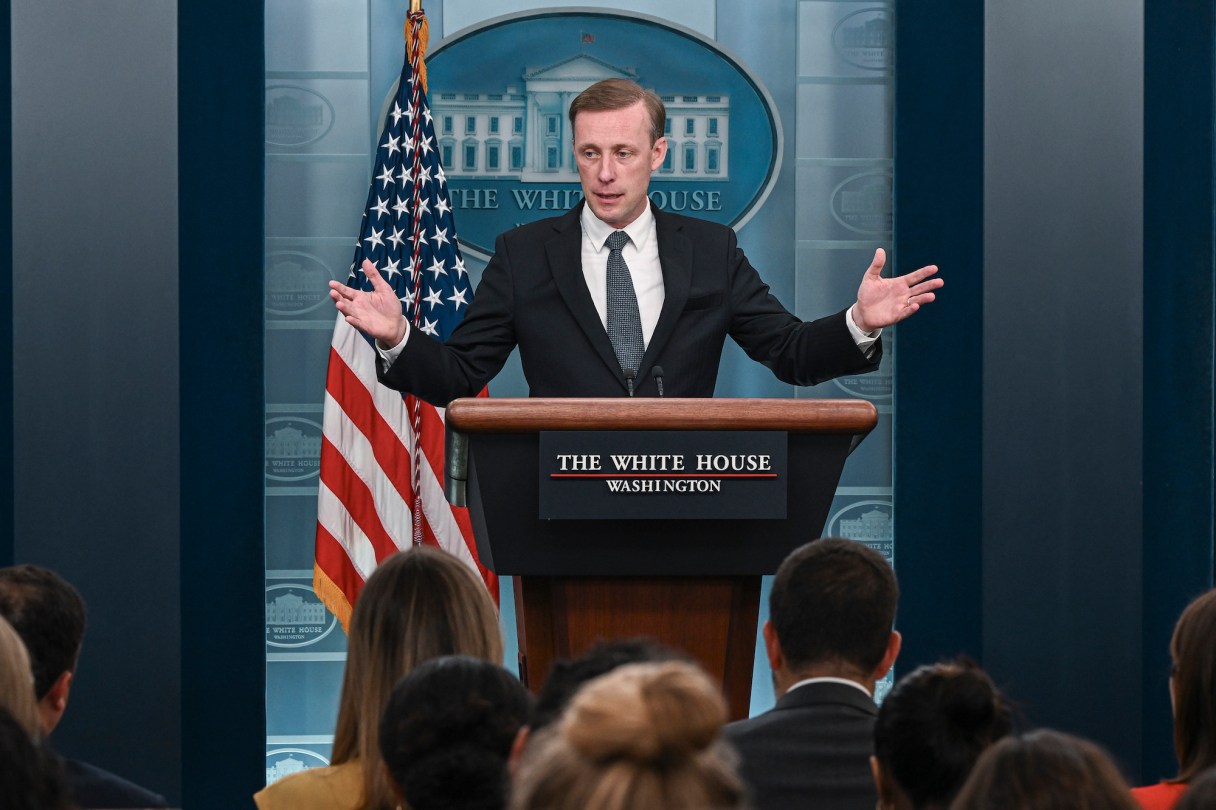
After discussions in the past few days among Biden, his national security adviser, Jake Sullivan, Secretary of State Antony Blinken and Brett McGurk, the top White House official handling Middle East policy, Biden has dispatched Sullivan and McGurk to Saudi Arabia, where they arrived Thursday morning, to explore the possibility of some kind of U.S.-Saudi-Israeli-Palestinian understanding.
The president still has not made up his mind whether to proceed, but he gave a green light for his team to probe with Crown Prince Mohammed bin Salman of Saudi Arabia to see if some kind of deal is possible and at what price. Closing such a multinational deal would be time-consuming, difficult and complex, even if Biden decides to take it to the next level right away. But the exploratory talks are moving ahead now, and they’re important for two reasons.