
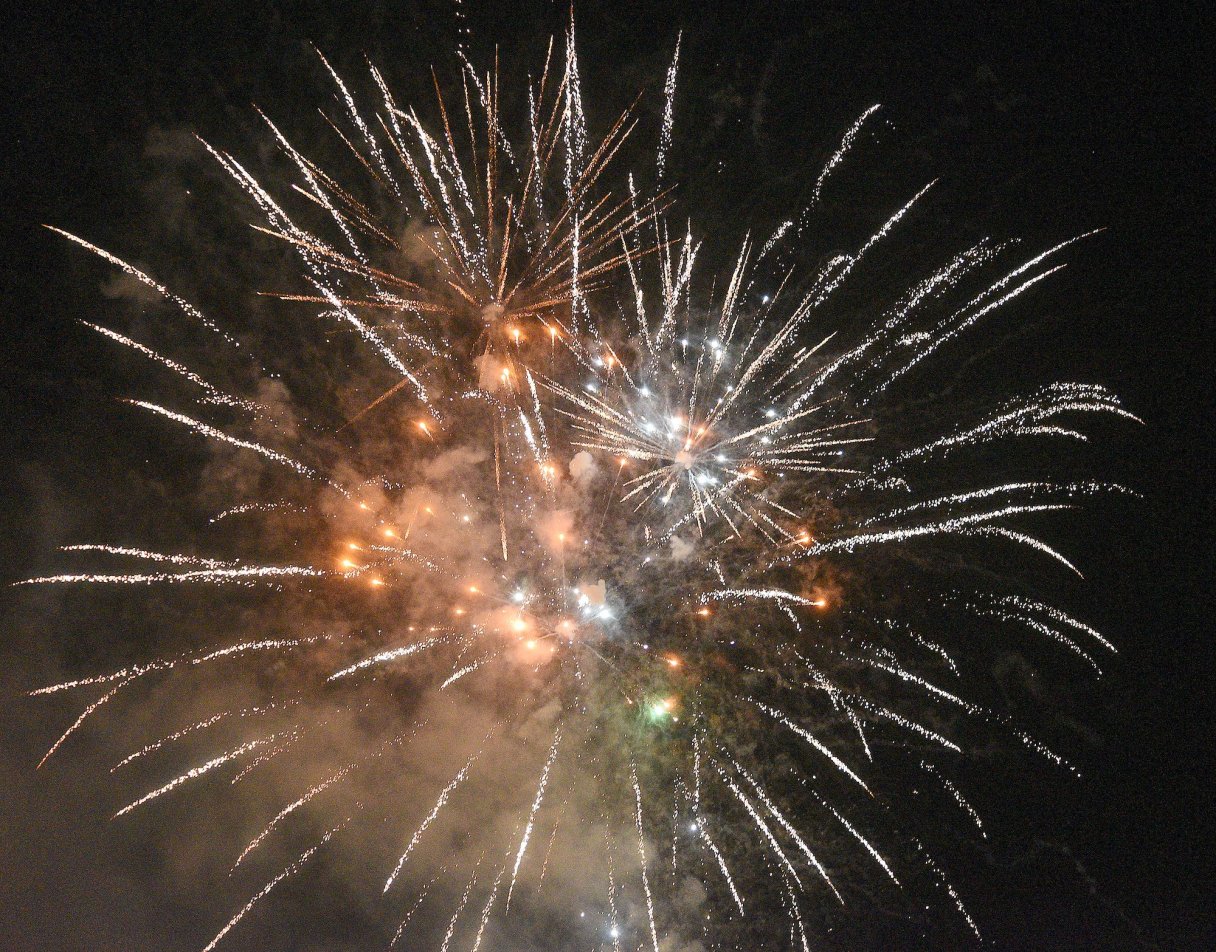
The Fourth of July fireworks were wonderful. We drove around the neighborhood to check out what was happening. Best of all was watching the sky explode over the Tennessee River. Of course, we were sad for everyone living near Canada, where smoke from horrendous wildfires there forced some cities to cancel their July Fourth fireworks shows. I was grateful not to have to endure their air pollution levels — until I wheezed as I drove past a house seemingly wrapped in gauzy smoke from the fireworks lit up in the driveway. I heard Mother Earth whisper to me that my gratitude should come with a grain of salt, or saltpeter.
Did you know that saltpeter, used in food preservatives and fertilizers, also helps launch fireworks into the sky? There’s about a 42% increase in fine particulate pollutants in the air following July Fourth fireworks displays. The pollution slowly dissipates, but these microscopic pollutants are tiny enough to travel into your lungs, where they can cause respiratory problems. Think what that means when your neighbors are lighting up the sky all weekend.
(READ MORE: Reactions mixed to Chattanooga’s Fourth of July laser show)
Breathing in smoke of any kind can damage not only your lungs, but also your heart and brain. The Environmental Protection Agency reports that fireworks contain uniquely toxic particles, including a mix of metals, which produce the colors in the “rocket’s red glare.” They also contain poly-cyclic aromatic hydrocarbons, which are chemicals found in gasoline known to cause cancer in high concentrations.
We spend more than $2 billion on fireworks a year. For that, we get a colorful display as well as air and water pollution, fire threats and as many as 10,000 fireworks-related injuries that often lead to emergency room visits.