
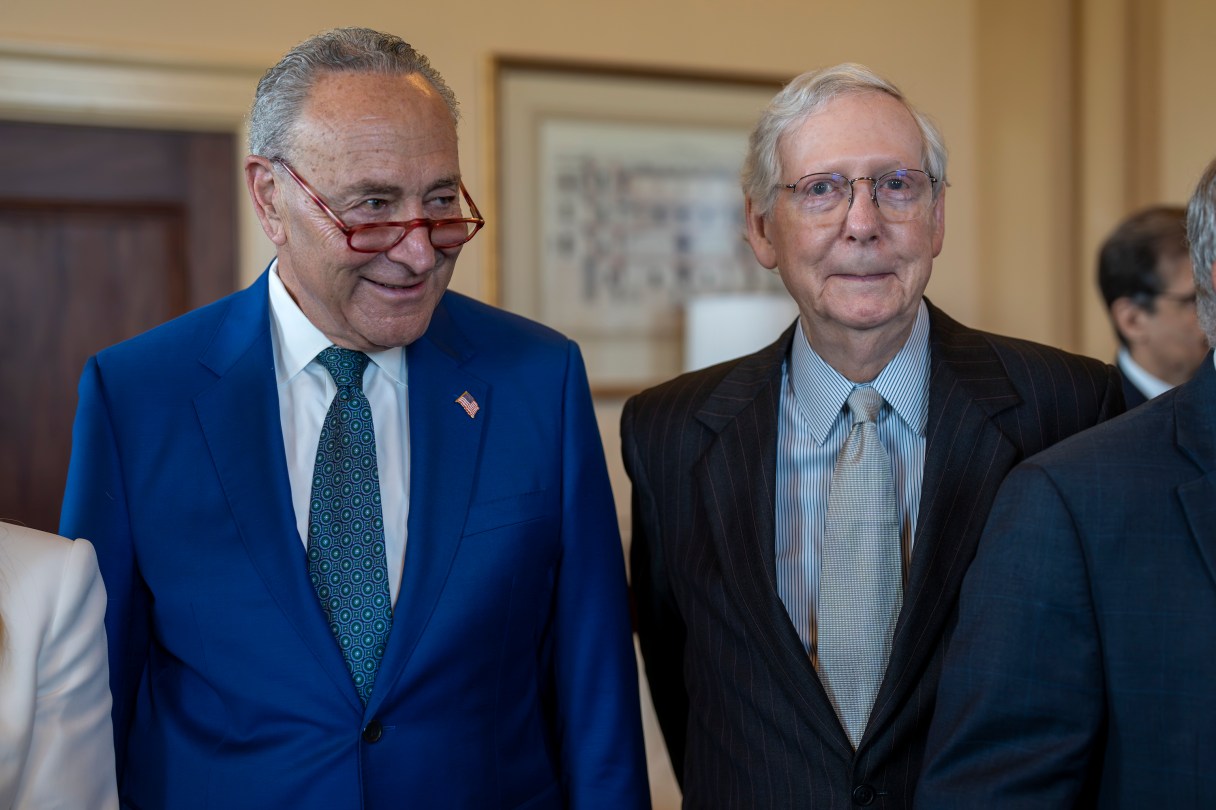
WASHINGTON (AP) — The Senate has passed a massive annual defense bill that would deliver a 5.2% pay raise for service members and keep the nation’s military operating, avoiding partisan policy battles with an overwhelmingly bipartisan vote.
Senate passage, 86-11, sets up a clash with the House, which passed its own version of the annual defense bill along party lines earlier this month after pointed debates over social issues like abortion access and diversity initiatives. The sharply partisan arguments over the House legislation veered from a bipartisan tradition of finding consensus on national defense policy.
The strong bipartisan vote for the legislation in the Senate Thursday evening, just before the Senate left for its August recess, could give it momentum as the two chambers next look to settle their differences in the fall.
Senate Majority Leader Chuck Schumer, D-N.Y., said there is a “glaring contrast” between the two chambers’ defense bills. The Senate had no “animus or acrimony,” in contrast to the House’s partisan battles, he said.
Mississippi Sen. Roger Wicker, the top Republican on the Senate Armed Services Committee, said that “I don’t think either party got exactly what they wanted” in the Senate bill. But he said the legislation would help the military improve recruitment and prevent conflict.