
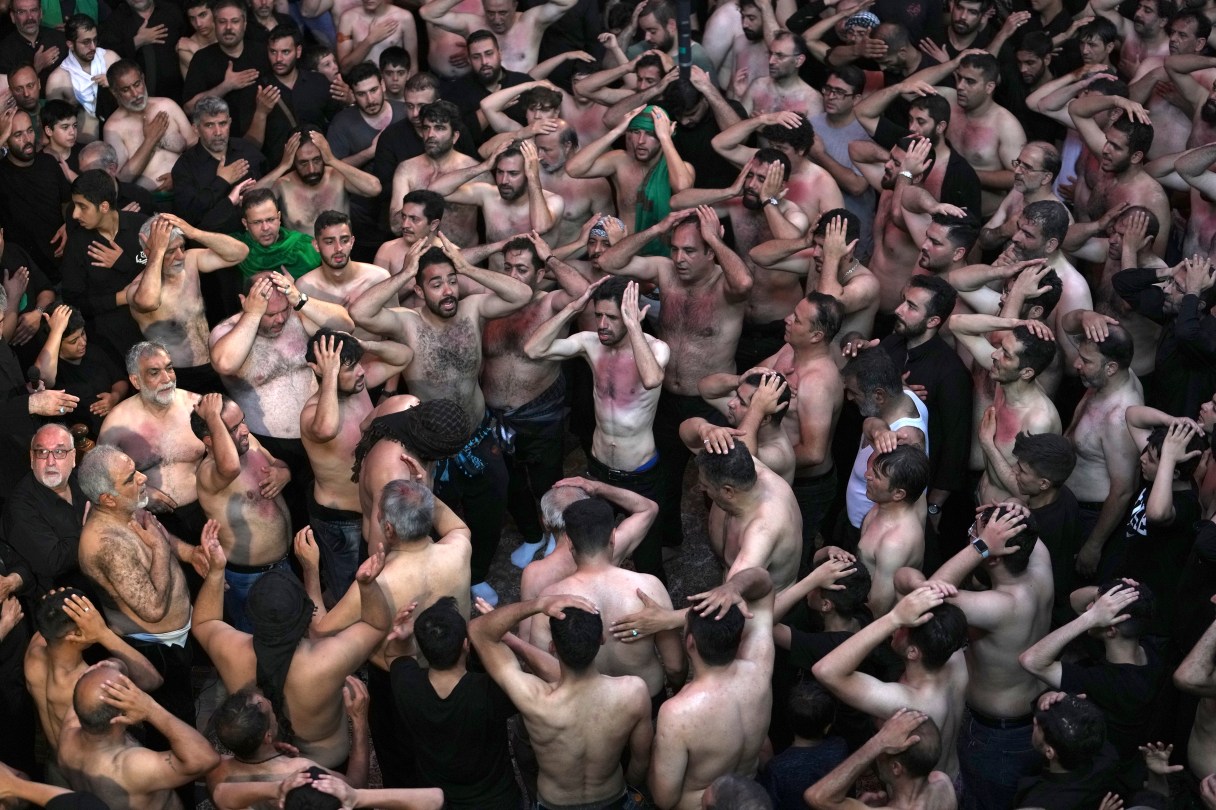
TEHRAN, Iran (AP) — Millions of Shiite Muslims in Iran, Afghanistan, Pakistan and around the world on Friday commemorated Ashoura, a remembrance of the 7th-century martyrdom of the Prophet Muhammad’s grandson, Hussein, that gave birth to their faith.
In Afghanistan, the Taliban cut mobile phone services in key cities holding commemorations for fear of militants targeting Shiites, whom Sunni extremists consider heretics. Security forces in neighboring Pakistan as well stood on high alert as the commemorations there have seen attacks in the past.
Not all Shiites, however, were to mark the day Friday. Iraq, Lebanon and Syria planned their remembrances for Saturday, which will see a major suburb of Beirut shut down and the faithful descend on the Iraqi city of Karbala, where Hussein is entombed in a gold-domed shrine.
Shiites represent over 10% of the world’s 1.8 billion Muslims and view Hussein as the rightful successor to the Prophet Muhammad. Hussein’s death in battle at the hands of Sunnis at Karbala, south of Baghdad, ingrained a deep rift in Islam and continues to this day to play a key role in shaping Shiite identity.
Over 1,340 years after Hussein’s martyrdom, Baghdad, Tehran, Islamabad and other major capitals in the Middle East were adorned with symbols of Shiite piety and repentance: red flags for Hussein’s blood, symbolic black funeral tents and black dress for mourning, processions of men and boys expressing fervor in the ritual of chest-beating and self-flagellation with chains.