
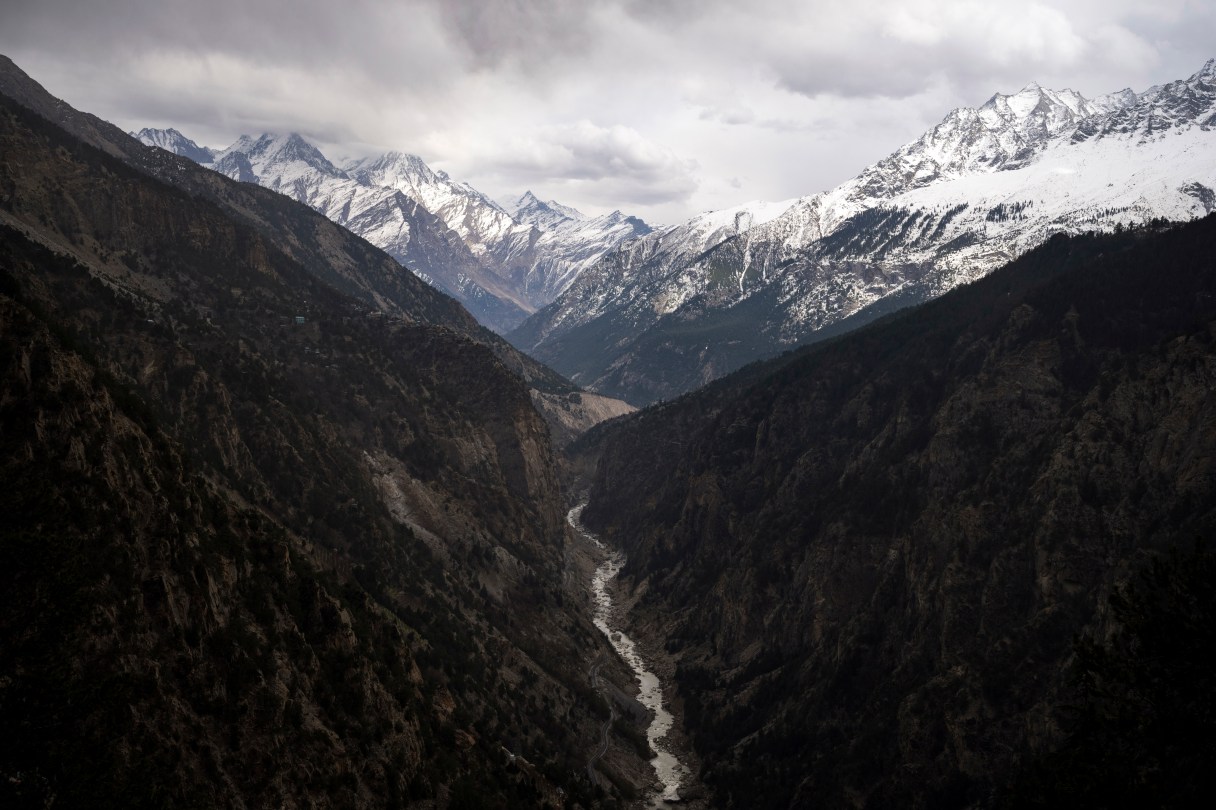
BENGALURU, India (AP) — Glaciers are melting at unprecedented rates across the Hindu Kush Himalayan mountain ranges and could lose up to 80% of their current volume this century if greenhouse gas emissions aren’t sharply reduced, according to a new report.
The report Tuesday from Kathmandu-based International Centre for Integrated Mountain Development warned that flash floods and avalanches would grow more likely in coming years, and that the availability of fresh water would be affected for nearly 2 billion people who live downstream of 12 rivers that originate in the mountains.
Ice and snow in the Hindu Kush Himalayan ranges is an important source of water for those rivers, which flow through 16 countries in Asia and provide fresh water to 240 million people in the mountains and anther 1.65 billion downstream.
“The people living in these mountains who have contributed next to nothing to global warming are at high risk due to climate change,” said Amina Maharjan, a migration specialist and one of the report’s authors. “Current adaptation efforts are wholly insufficient, and we are extremely concerned that without greater support, these communities will be unable to cope.”
Various earlier reports have found that the cryosphere — regions on Earth covered by snow and ice — are among the worst affected by climate change. Recent research found that Mount Everest’s glaciers, for example, have lost 2,000 years of ice in just the past 30 years.