
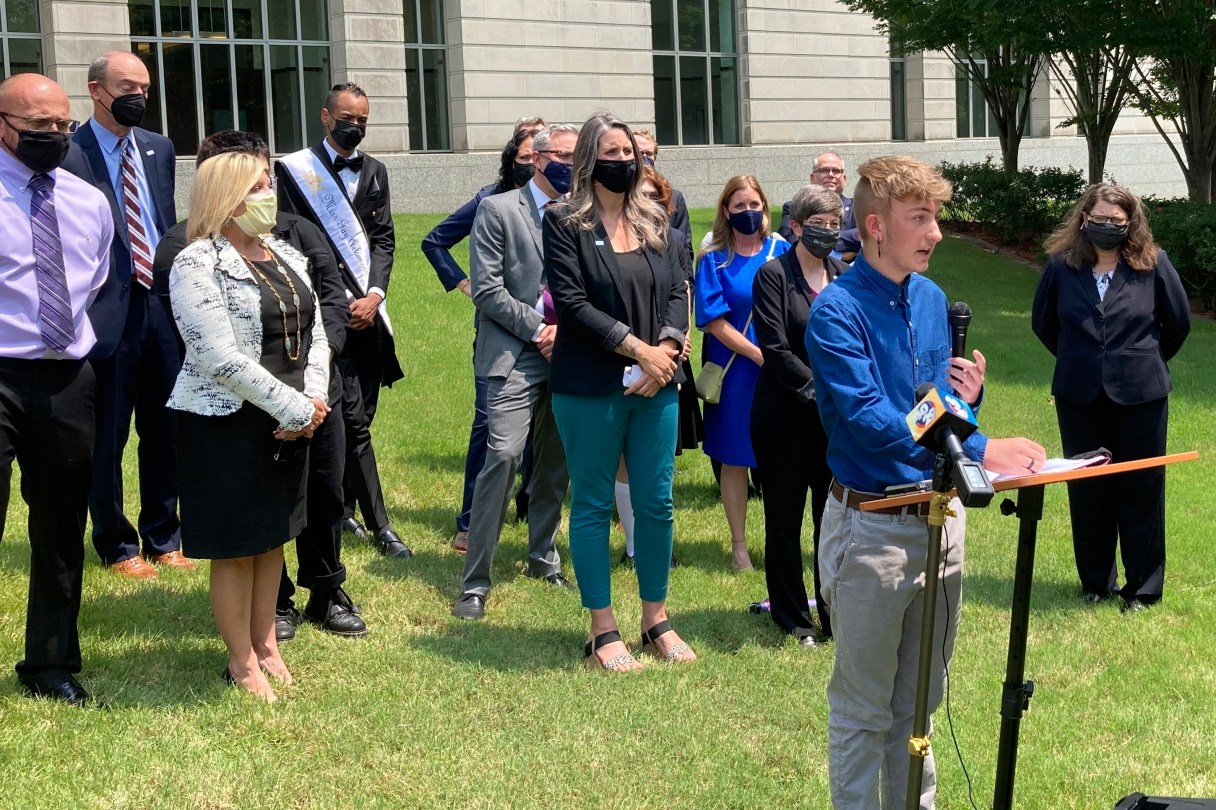
LITTLE ROCK, Ark. (AP) — A federal judge struck down Arkansas’ first-in-the-nation ban on gender-affirming care for children as unconstitutional Tuesday, the first ruling to overturn such a prohibition as a growing number of Republican-led states adopt similar restrictions.
U.S. District Judge Jay Moody issued a permanent injunction against the Arkansas law, which would have prohibited doctors from providing gender-affirming hormone treatment, puberty blockers or surgery to anyone under 18.
Arkansas’ law, which Moody temporarily blocked in 2021, also would have prohibited doctors from referring patients elsewhere for such care. At least 19 other states have enacted laws restricting or banning gender-affirming care for minors following Arkansas’ law, and nearly all of them have been challenged in court.
In his order, Moody ruled that the prohibition violated the due process and equal protection rights of transgender youth and families. He said the law also violated the First Amendment rights of medical providers by prohibiting them from referring minor patients elsewhere for the care.
“Rather than protecting children or safeguarding medical ethics, the evidence showed that the prohibited medical care improves the mental health and well-being of patients and that, by prohibiting it, the state undermined the interests it claims to be advancing,” Moody wrote in his ruling.