
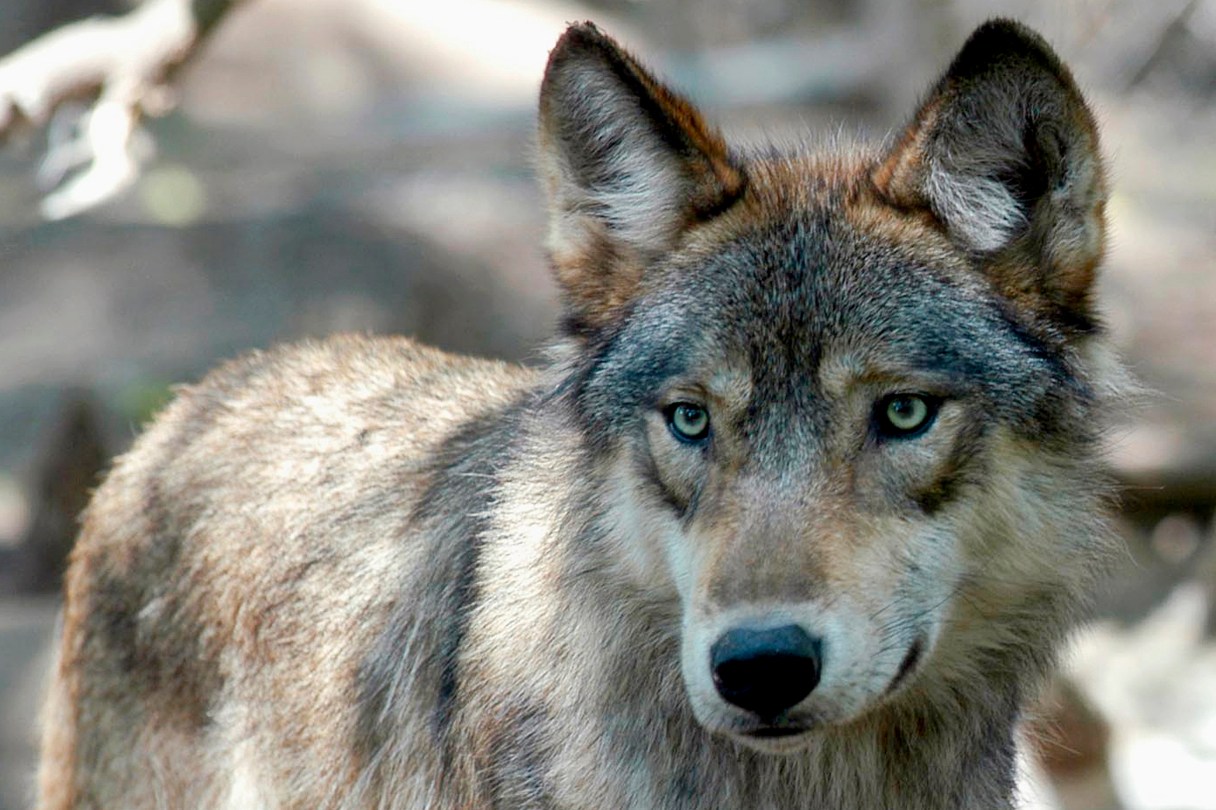
MADISON, Wis. (AP) — Wisconsin wildlife officials released a revised draft wolf management plan Tuesday that recommends holding the statewide population at around 1,000 animals, a concession to conservatives looking for a hard limit.
The Department of Natural Resources adopted a wolf management plan in 1999 that calls for capping the statewide population at 350 wolves. The population has roughly tripled since then, leading to occasional wolf attacks on pets, hunting dogs and livestock. Hunters and farmers have pointed to the 350-animal limit as justification for generous kill quotas, angering animal rights advocates.
The department released a draft of a new wolf management plan in November. The proposal didn’t include a hard population goal, instead recommending that advisory committees monitor local wolf populations and decide whether to reduce them, maintain them or allow them to grow.
The draft wasn’t well received by hunters, farmers and GOP legislators. State Rep. Chanz Green and state Sen. Rob Stafsholt introduced a bill in March that would require the DNR to set a statewide population goal in its new plan. The measure has yet to get a hearing.
The plan the DNR unveiled Tuesday still doesn’t set a hard population goal. But it does include a chart laying out recommendations on when to reduce the statewide population, when it would be considered stable and when to let it grow.