
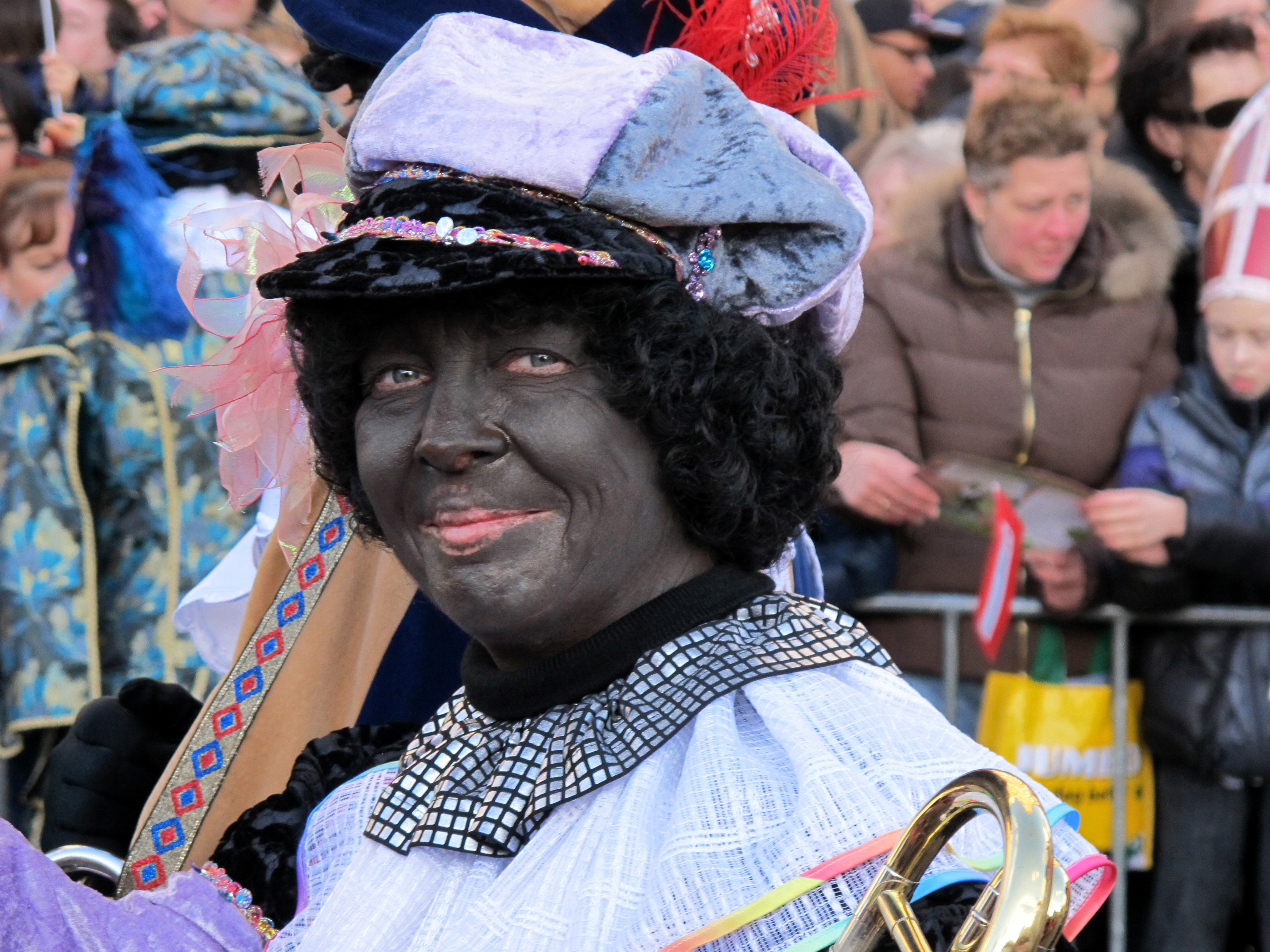
 A person dressed as “Zwarte Piet” or “Black Pete” attends a parade after St. Nicholas, or Sinterklaas, arrived by boat in Amsterdam, Netherlands. Foreigners visiting the Netherlands in winter are often surprised to see that the Dutch version of St. Nicholas’ little helpers resemble a racist caricature of a black person. The overwhelming majority of Dutch, who pride themselves on tolerance, are fiercely devoted to their holiday tradition and say “Zwarte Piet,” whose name means “Black Pete,” is absolutely harmless, a fictional figure who does not represent any race. But now a growing group of Dutch natives are questioning whether this particular part of the tradition should be changed.
AMSTERDAM – Foreigners visiting the Netherlands in winter are often surprised to see that the Dutch version of St. Nicholas’ helpers have their faces painted black, wear Afro wigs and have thick red lips – in short, a racist caricature of a black person.
The overwhelming majority of Dutch are fiercely devoted to the holiday tradition of “Zwarte Piet” – whose name means “Black Pete” – and insist he’s a harmless fictional figure who doesn’t represent any race. But a growing number are questioning whether “Zwarte Piet” should be given a makeover or banished from the holiday scene, seeing him as a blight on the nation’s image as a bulwark of tolerance.
“There is more opposition to Zwarte Piet than you might think,” says Jessica Silversmith, director of the regional Anti-Discrimination Bureau for Amsterdam. She said that historically her office received only one or two complaints per year, but the number jumped to more than 100 last year, and will escalate much further this year.
“It’s not only Antilleans or Surinamers who are complaining,” she said, referring to people descended from the former Dutch colonies that once traded in slavery. “It’s all kinds of Dutch people.”
There are various versions of the history of St. Nicholas – “Sinterklaas” in Dutch – and of Zwarte Piet, who made his debut as an African servant in an 1850 book.