
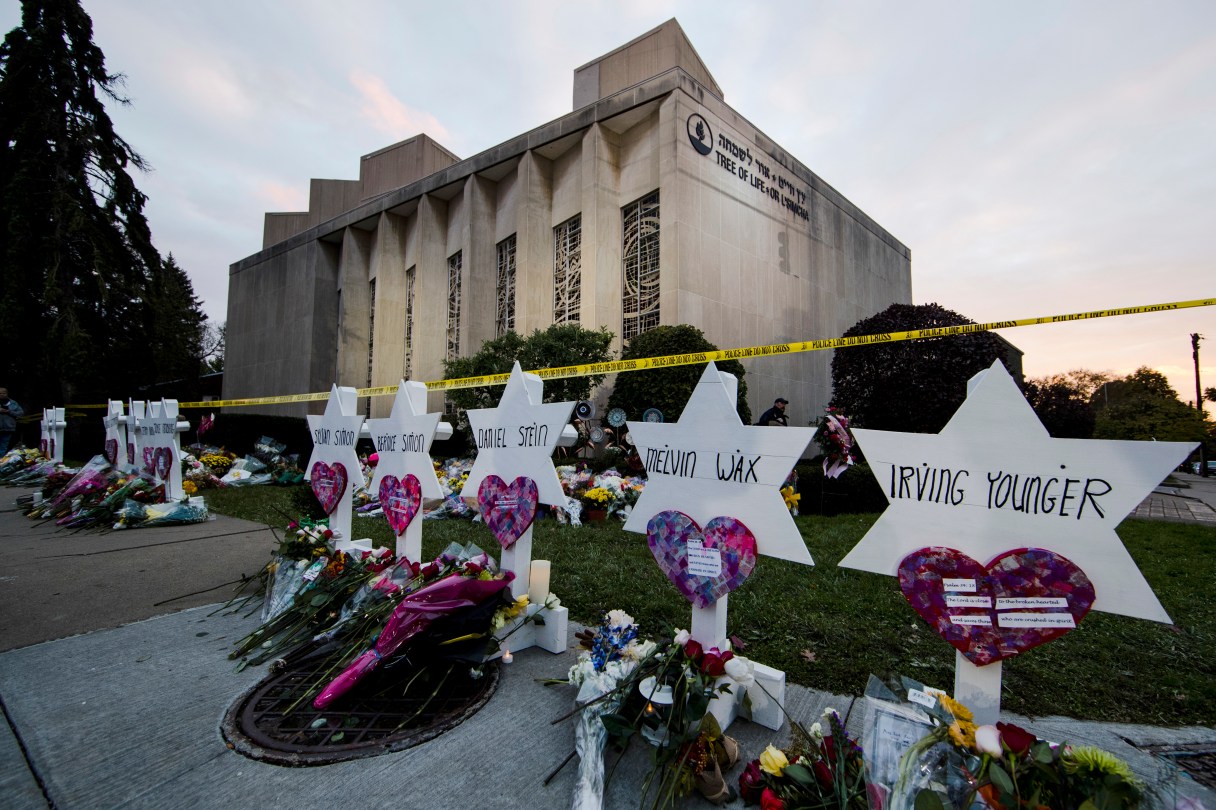
PITTSBURGH (AP) — The gunman who killed 11 people at a Pittsburgh synagogue in 2018 is eligible for the death penalty, a federal jury announced Thursday, setting the stage for further evidence and testimony on whether he should be sentenced to death or life in prison.
The government is seeking capital punishment for Robert Bowers, who raged against Jewish people online before storming the Tree of Life synagogue with an AR-15 rifle and other weapons in the nation’s deadliest antisemitic attack. The jury agreed with prosecutors that Bowers — who spent six months planning the attack and has since expressed regret that he didn’t kill more people — had formed the requisite legal intent to kill.
Bowers’ lawyers argued that his ability to form intent was impaired by mental illness and a delusional belief that he could stop a genocide of white people by killing Jews who help immigrants.
Jurors reached the verdict after less than two hours of deliberation. As it was read, Bowers showed little reaction in keeping with his demeanor throughout the trial. In the courtroom gallery, survivors and victims’ relatives heeded the judge’s request to keep their emotions in check.