
Tuesday, November 17, 2026Nov 17

A Greek zoo serves up frozen meals to animals to help them beat the heat

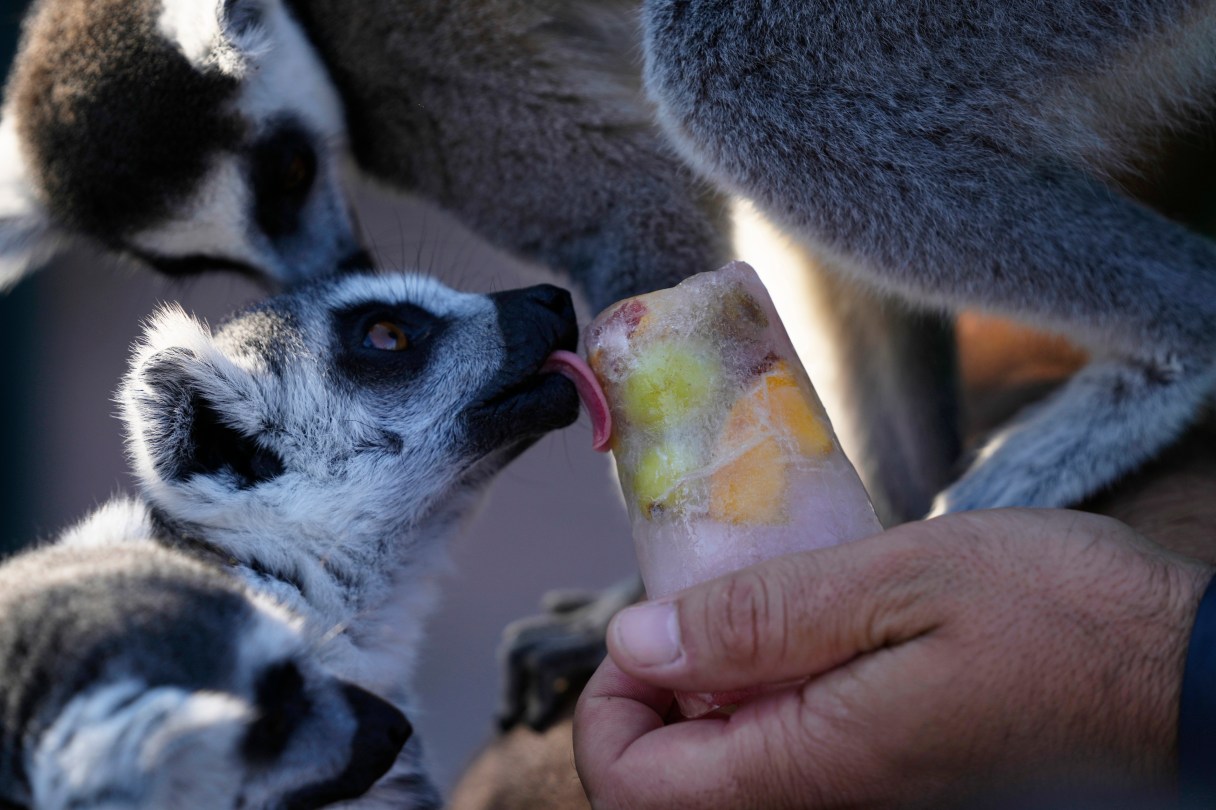
A ring-tailed lemur licks a fruit popsicle, at the Attica Zoological Park in Spata suburb, eastern Athens, Friday, Aug. 4, 2023. A large number of animals being fed frozen meals at the Attica Zoological Park outside the Greek capital Friday, as temperatures around the country touched 40C (104 degrees Fahrenheit) and were set to rise further, in the fourth heat wave in less than a month. (AP Photo/Thanassis Stavrakis)

SPATA, Greece (AP) — At first sight, Tiembe studies his frozen breakfast with hesitation: Chunks of red meat and bone packed in a foot-long block of ice.

The 15-year-old Angolan lion eventually licks the ice before gnawing free pieces of meat.

Animals at the Attica Zoological Park outside the Greek capital were being fed frozen meals Friday as temperatures around the country reached 40 C (107.5 F) and were set to rise further, in the fourth heat wave in less than a month.

The extreme temperatures and wildfires — a growing concern for biodiversity in southern Europe — have had an impact on Greek wildlife.

A fire on the island of Rhodes burned for 11 successive days, triggering the evacuation of 20,000 people, mostly tourists.