
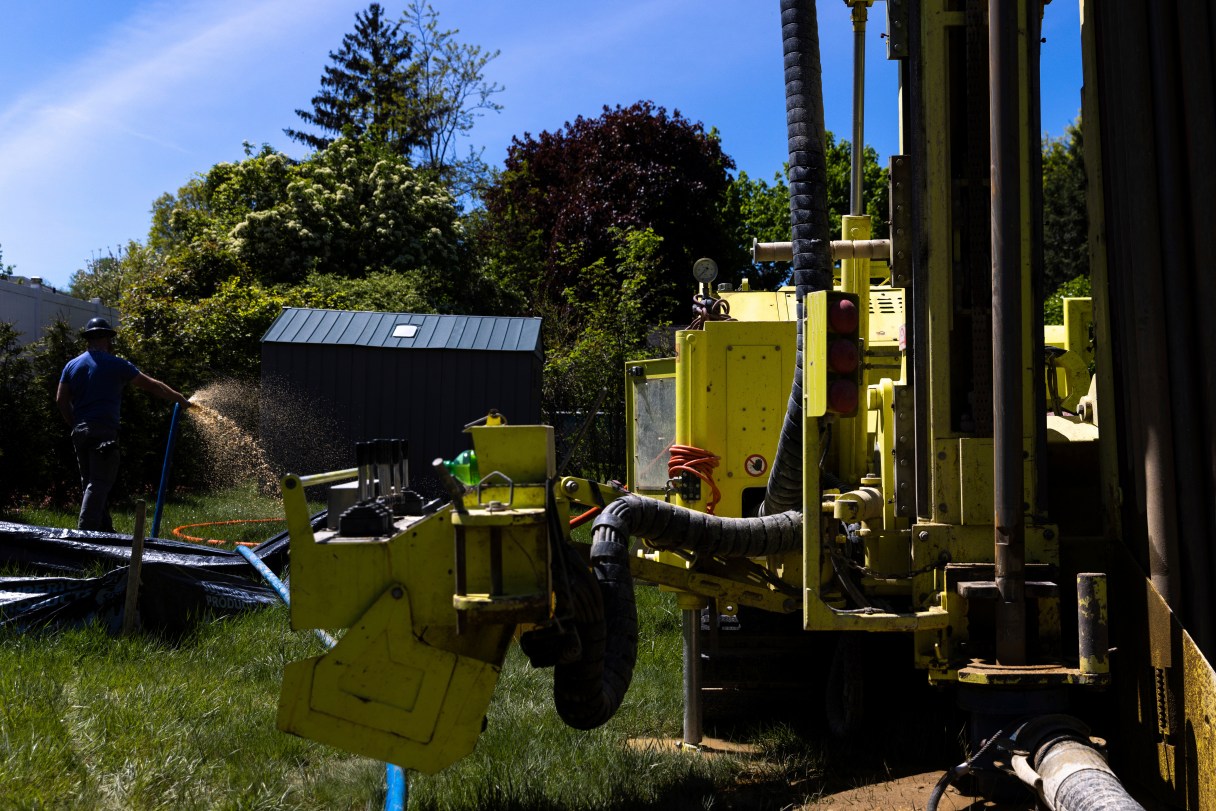
Summers are famously humid in New York State, but life in the Maioli household has gotten more comfortable since the couple installed a new heating and cooling system — one that isn’t well known yet in the U.S.
“My wife is pretty happy because in the summer we can keep it to as cold as we like,” typically 69 or 70 F, said Joe Maioli, in Ontario, New York. In 2021, the couple installed a geothermal or ground source heat pump.
The units you see that look like box fans outside homes and businesses are the more common air-source heat pumps. They wring energy out of outdoor air for heat and soak up excess heat indoors and move it out when they’re cooling. Geothermal heat pumps use underground temperatures, instead of outdoor air.
A major push is now underway to get people to consider ground-source heat pumps because they use far less electricity than other heating and cooling methods. “Ground-source heat pumps average about 30 percent less electricity use than air-source heat pumps over the course of the heating season,” said Michael Waite, senior manager in the buildings program at the American Council for an Energy Efficient Economy.
“Cooling the house for a month is maybe $10 worth of electricity, and this is the most efficient way to do it,” said Maioli. During the coldest winter month, their highest heating bill was around $70, he said.