
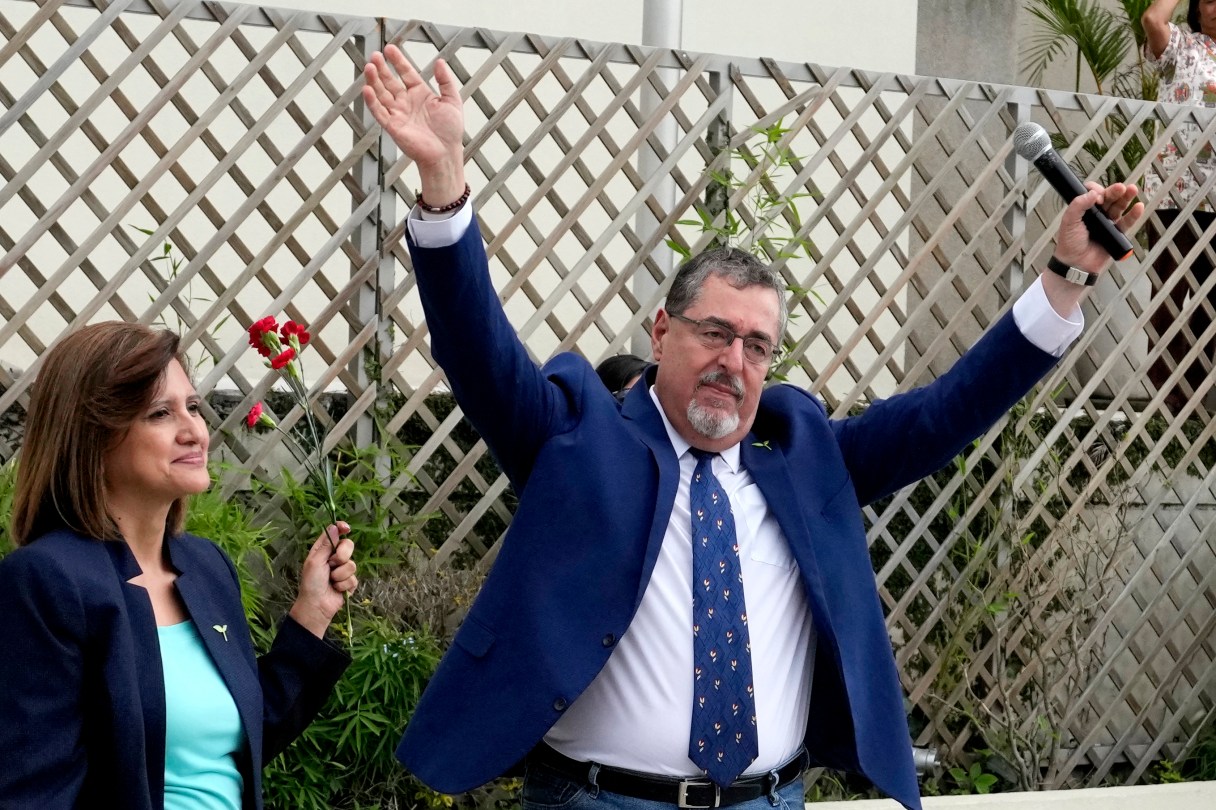
GUATEMALA CITY (AP) — The Guatemalan government’s clumsy interference with its presidential election has turned a global spotlight on rampant corruption that previously had received only limited international attention.
President Alejandro Giammattei was deeply unpopular at home, but other than occasional reprobation from the United States and Europe, had managed to consolidate his control of the justice system, completely upending a longstanding anti-corruption campaign in the country with little consequence.
The June 25 presidential election may have changed all that. In the days leading up to the vote, it appeared there would be a runoff between a small number of right and extreme right candidates, including Giammattei allies. But with a large number of null votes, many cast in protest, and a campaign that resonated especially with young Guatemalans, progressive candidate Bernardo Arévalo placed second, ensuring his participation in an Aug. 20 runoff.
Suddenly, it seemed there was a real possibility of choice for Guatemalans who want to change the status quo. That stunned the powers that be, who quickly reacted.
“I think that fear clouded him, blinded him,” Katya Salazar, executive director of the Due Process Foundation, said of Giammattei. She added that Arévalo’s surprise support was “a demonstration of the dissatisfaction” in the Central American country.