
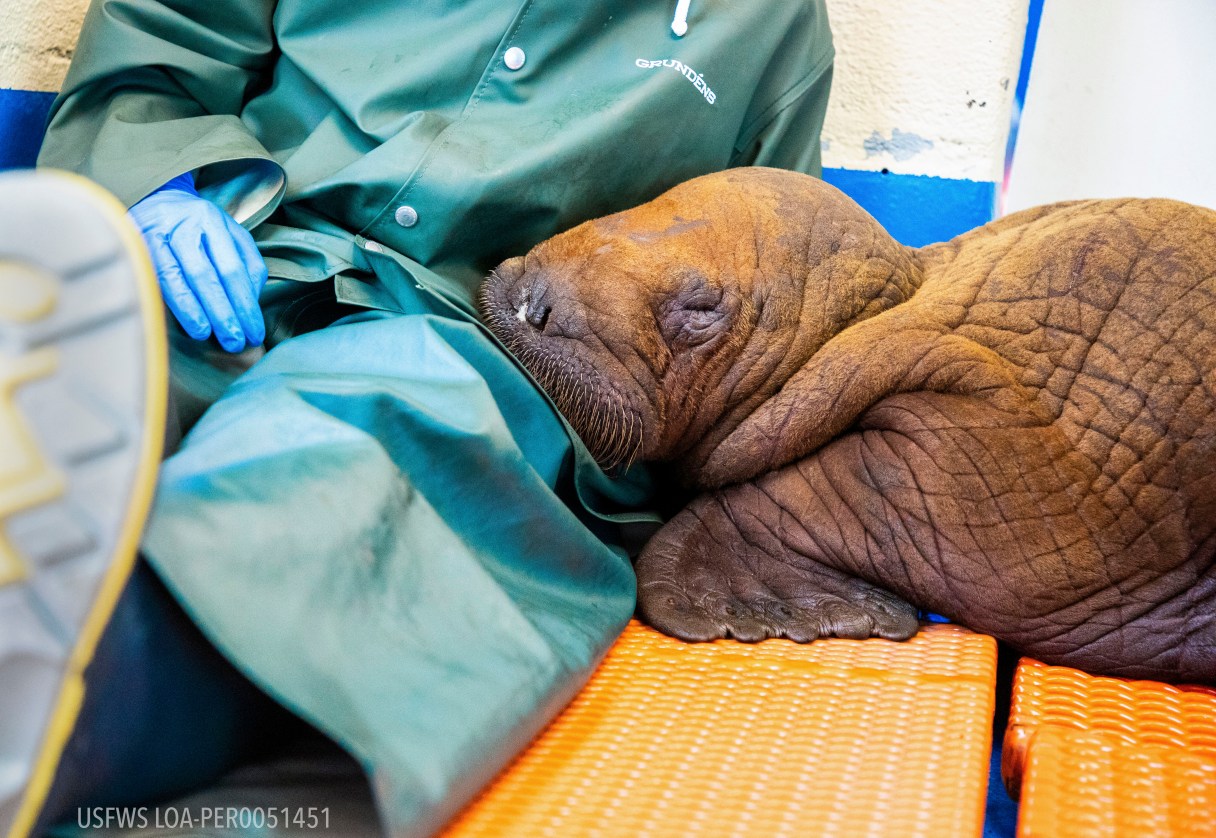
JUNEAU, Alaska (AP) — A 200-pound (90 kilogram) walrus calf found alone and miles from the ocean on Alaska’s North Slope is being bottle fed and receiving round-the-clock “cuddling” from doting animal welfare workers who are trying to keep the 1-month-old baby alive.
The male Pacific walrus — who, so far, doesn’t have a name — was found Monday and flown a day later from the North Slope to Seward, where the Alaska SeaLife Center is based, a journey of at least 700 miles (1,126 kilometers). Staff with the nonprofit research facility and public aquarium are caring for the gigantic, brown, wrinkly-skinned baby, which was dehydrated and possibly fighting an infection.
In an effort to mimic the near-constant care a calf would get from its mom, the walrus is receiving “round the clock ‘cuddling'” to keep him calm and aid in his development and is being fed every three hours, the center said. It described the cuddling as trained staff giving the walrus “the option to have a warm body to lean up against, which he has been taking advantage of almost constantly.”
The calf was found by oil field workers about 4 miles (6.4 kilometers) inland from the Beaufort Sea, in Alaska’s extreme north. A “walrus trail,” or track, was seen on the tundra near a road where the walrus was found. But it’s unclear how, exactly, he got there, the center said.
While calves rely on their mothers for their first two years of life, no adults were seen nearby, which raised concerns about the infant’s ability to survive without intervention.