
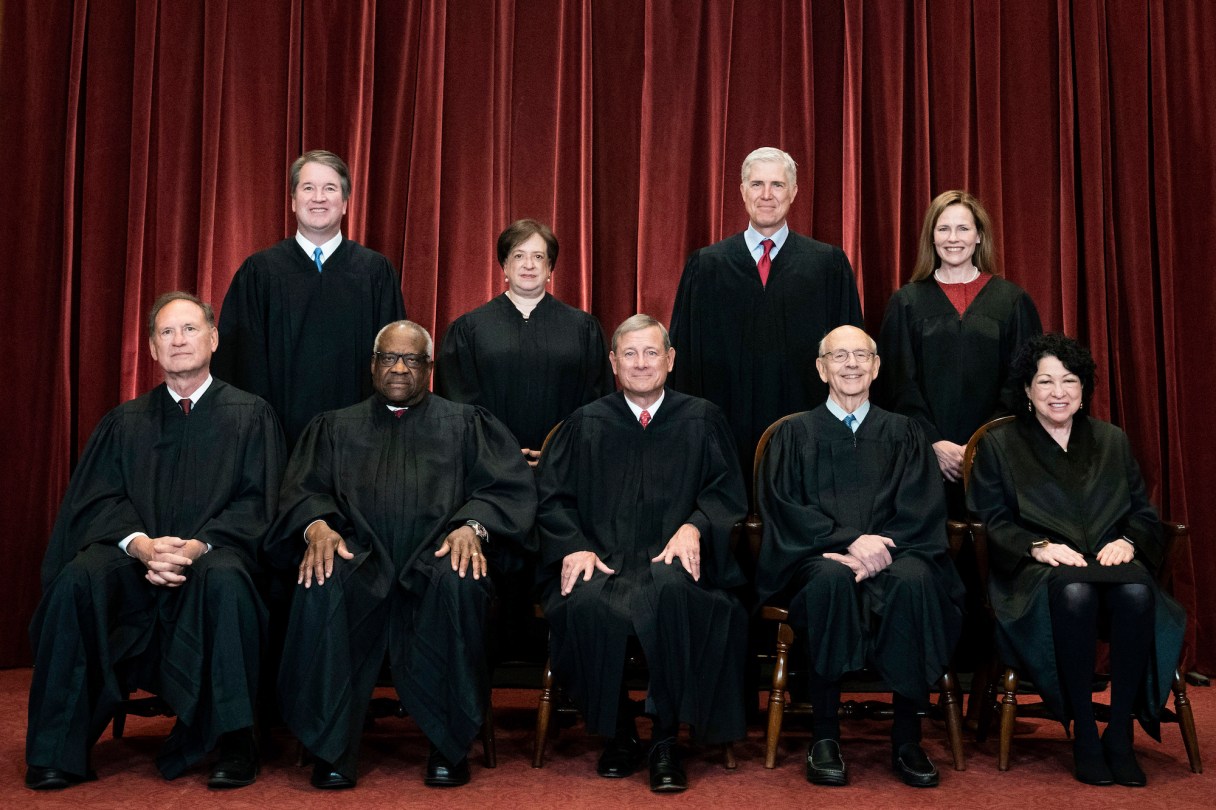
A 6-3 conservative supermajority has really put the “supreme” in “Supreme Court,” and not in a good way.
The court’s major rulings in the term that just ended continued to defy precedents and expand its power versus the president and Congress. All the while, reports of justices’ ethical transgressions mounted, and Chief Justice John G. Roberts Jr. gave the back of his hand to calls for reform, claiming against all evidence that the justices can police themselves.
The worrisome result for our democracy is a court with more power and less legitimacy. The public’s opinion of the justices remains at an all-time low, with less than a third of American voters having positive views of the Supreme Court, according to a recent NBC News poll.
The justices have dashed off for their summer breaks with their families or perhaps their favorite right-wing billionaires — who knows which, given Clarence Thomas and Samuel Alito’s failures to disclose such junkets? — but the court will remain in the headlines. On Thursday, the Democratic-controlled Senate Judiciary Committee plans to vote on Supreme Court reforms that have gained support with the justices’ inadvertent help. The legislation would require the court to spell out a code of conduct, create a lower court to review ethics complaints against the justices and tighten federal laws governing their financial disclosures and recusals from cases presenting conflicts of interest.
The bill would not heed progressives’ calls to expand the court to dilute conservatives’ sway — a bad idea that would only further politicize the institution (as President Joe Biden argues ). Nor does the bill include term limits for justices — a much better idea, especially given Republican presidents’ practice of choosing relatively young nominees who can stay on the bench for decades, though it could require amending the Constitution.