
Monday, November 16, 2026Nov 16

Supreme Court rejects novel legislative theory, but leaves a door open for 2024 election challenges

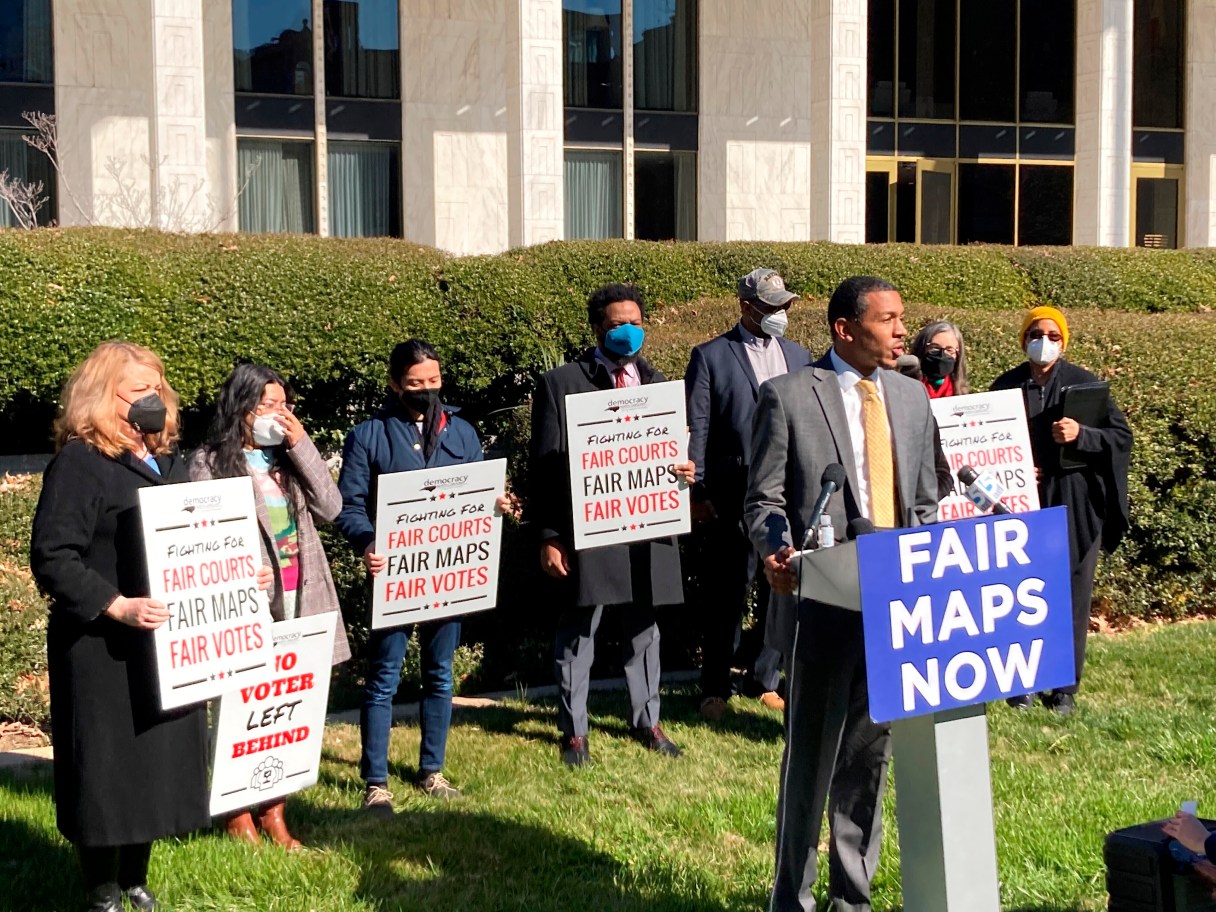
FILE - Reggie Weaver, at podium, speaks outside the Legislative Building in Raleigh, N.C., Feb. 15, 2022, about a partisan gerrymandering ruling by the North Carolina Supreme Court. The Supreme Court has ruled that North Carolina’s top court did not overstep its bounds in striking down a congressional districting plan as excessively partisan under state law. The justices on Tuesday rejected the broadest view of a case that could have transformed elections for Congress and president by leaving state legislatures virtually unchecked by their state courts when dealing with federal elections. (AP Photo/Gary D. Robertson, File)

The U.S. Supreme Court shot down a controversial legal theory that could have changed the way elections are run across the country, but left the door open to more limited challenges that could increase its role in deciding voting disputes during the 2024 presidential election.

The court’s 6-3 ruling Tuesday drove a stake through the most extreme version of the so-called independent state legislature theory, which holds that legislatures have absolute power in setting the rules of federal elections and cannot be second-guessed by state courts. That decision cheered voting rights groups.

“We beat back the most serious legal threat our democracy has ever faced today,” said Kathay Feng of Common Cause, whose lawsuit challenging congressional districts drawn by North Carolina’s Republican-controlled legislature triggered the case.

But for some critics of the theory, the danger is not entirely past.

The court found that state courts still must act within “ordinary bounds” when reviewing laws governing federal elections. That gives another set of tools for those who lose election lawsuits in state courts to try to persuade federal judges to overturn those rulings.