
Monday, November 16, 2026Nov 16

Thousands more prisoners across the US will get free college paid for by the government

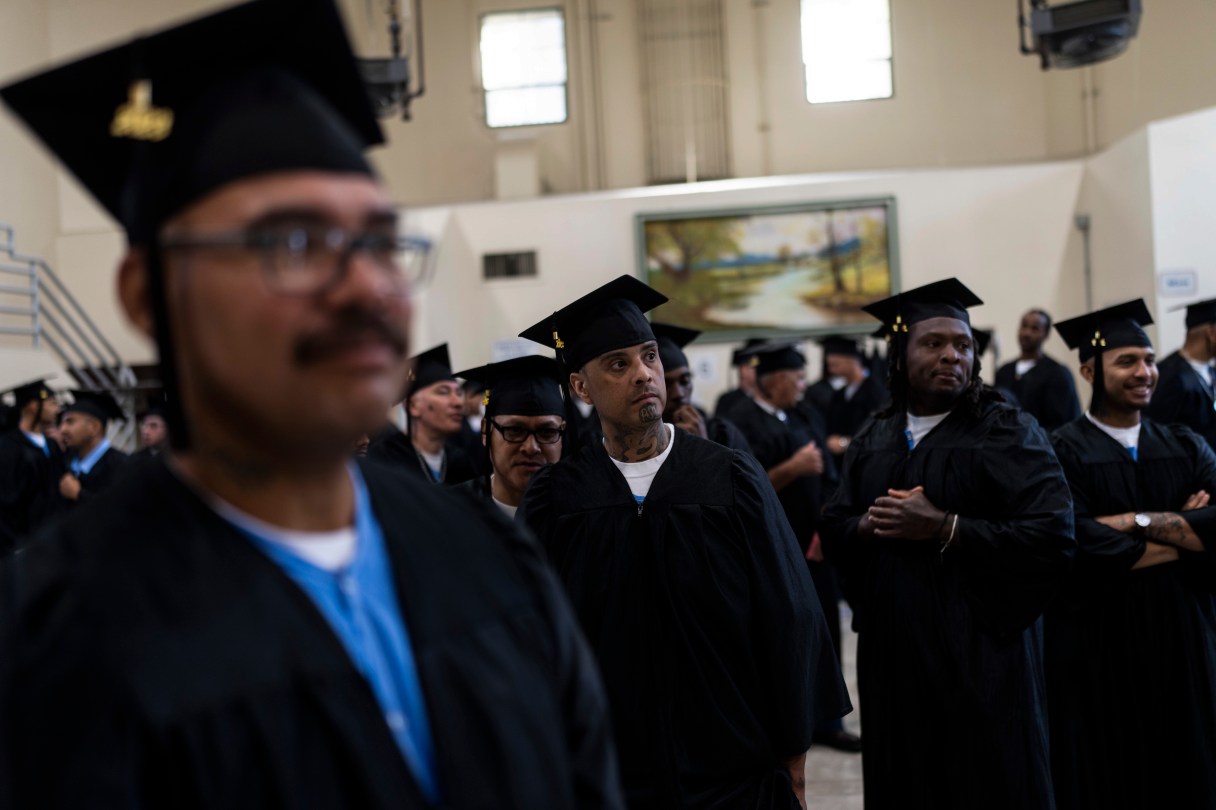
Incarcerated graduates, who finished various educational and vocational programs in prison, wait for the start of their graduation ceremony at Folsom State Prison in Folsom, Calif., Thursday, May 25, 2023. Thousands of prisoners throughout the United States get their college degrees behind bars, most of them paid for by the federal Pell Grant program, which offers the neediest undergraduates tuition aid that they don’t have to repay. That program is about to expand exponentially next month, giving about 30,000 more students behind bars some $130 million in financial aid per year. (AP Photo/Jae C. Hong)

REPRESA, California (AP) — The graduates lined up, brushing off their gowns and adjusting classmates’ tassels and stoles. As the graduation march played, the 85 men appeared to hoots and cheers from their families. They marched to the stage – one surrounded by barbed wire fence and constructed by fellow prisoners.

For these were no ordinary graduates. Their black commencement garb almost hid their aqua and navy-blue prison uniforms as they received college degrees, high school diplomas and vocational certificates earned while they served time.

Thousands of prisoners throughout the United States get their college degrees behind bars, most of them paid for by the federal Pell Grant program, which offers the neediest undergraduates tuition aid that they don’t have to repay.

That program is about to expand exponentially next month, giving about 30,000 more students behind bars some $130 million in financial aid per year.

The new rules, which overturn a 1994 ban on Pell Grants for prisoners, begin to address decades of policy during the “tough on crime” 1970s-2000 that brought about mass incarceration and stark racial disparities in the nation’s 1.9 million prison population.