
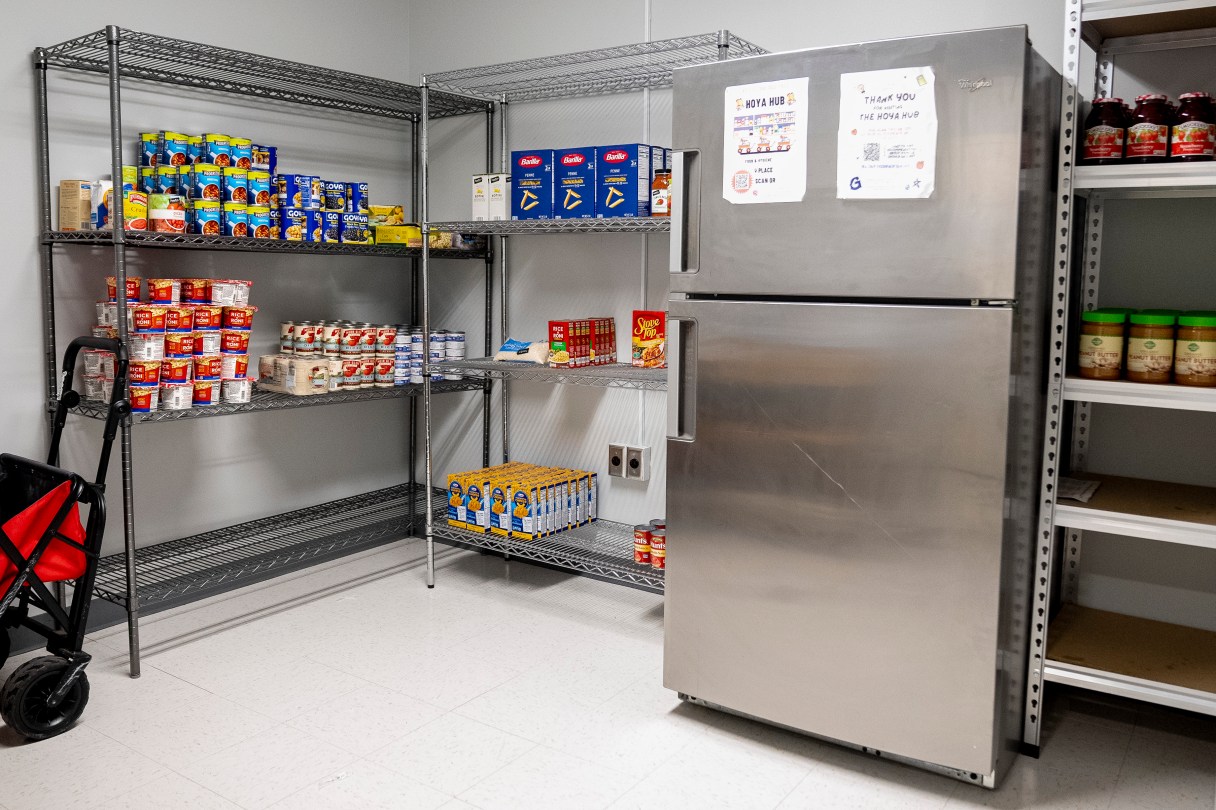
WASHINGTON (AP) — Raised on welfare by his grandmother, Joseph Sais relied so much on food stamps as a college student that he thought about quitting school when his eligibility was revoked.
In the midst of the COVID-19 pandemic, Sais said, he missed an “important letter” and temporarily lost his eligibility in SNAP, the foundational anti-poverty program commonly known as food stamps. “There were times when I was taking a test and instead of focusing on the test, I’m focused on what I’m going to be able to eat tonight,” said Sais, who graduated from Sacramento State University with a degree in political science and journalism and is now a first-year graduate student at the same school.
Sais, whose eligibility was restored earlier this year, is part of a largely hidden group that researchers and policymakers are still trying to address: full-time college students struggling with serious food insecurity. Radha Muthiah, president of the Capital Area Food Bank, calls it a hidden crisis, “one of those issues that came out of the shadows during the pandemic.” She estimates at least 30% of college students are food insecure.
The U.S. Department of Agriculture relaxed eligibility SNAP requirements for college students during the pandemic, allowing in those on financial aid with no expected family support and anyone who qualified for work-study programs, regardless of hours worked. Researchers estimate as many as 3 million college students were added to the program as a result.