
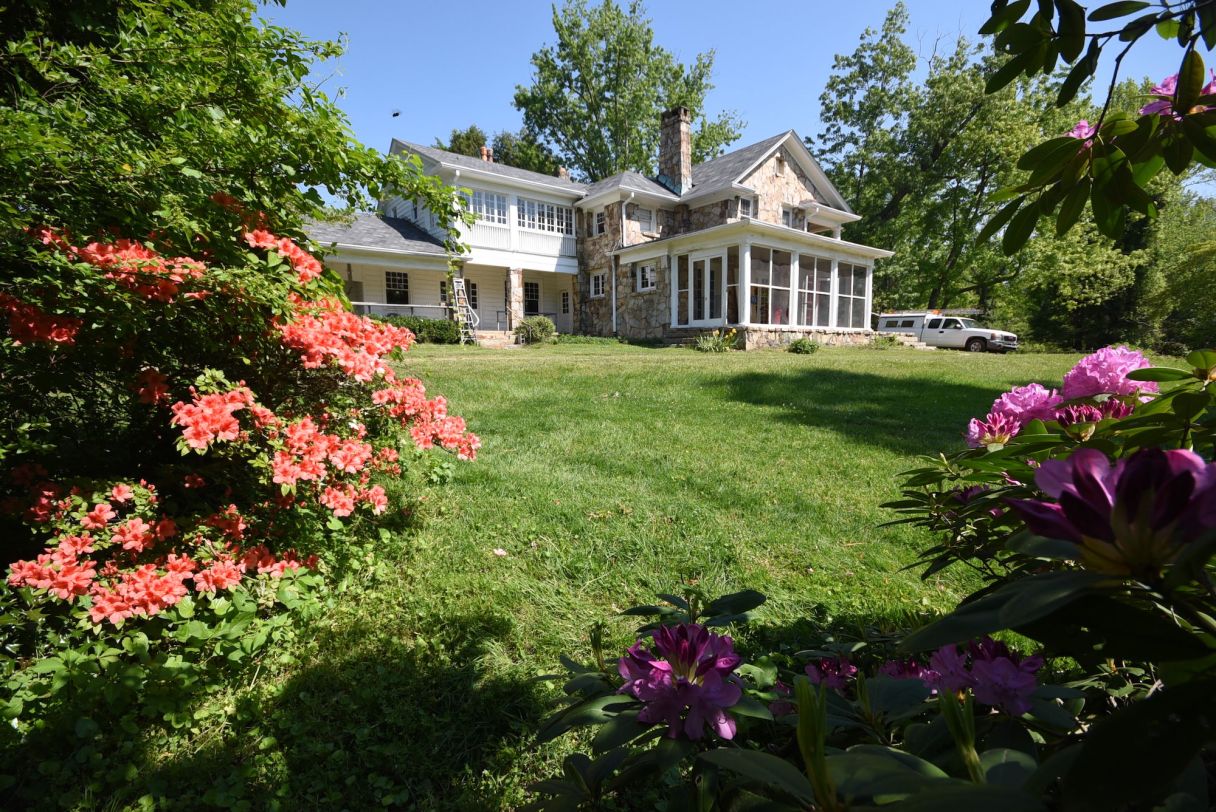
Martha Bachman McCoy had a lot to live up to. Her grandfather, Jonathan Waverly Bachman, the revered pastor at First Presbyterian Church, ministered to all classes, creeds and colors during the yellow fever epidemic of 1878. Her father, Nathan Lynn Bachman, a U.S. senator 1933-1937, supported President Franklin Roosevelt in bringing economic recovery and the TVA to Tennessee. Her mother, Evalina Duke Bachman, was an active civic leader.
Martha had her own sense of duty. A graduate of Girls Preparatory School and Sweetbriar College, she married Thomas McCoy, an attorney from Asheville, North Carolina, and lived there several years. The couple later returned with daughter Sally (McCoy Garland) to live in the family home on Walden’s Ridge. She served on the boards of Little Miss Mag Day Nursery, Girls Preparatory School, Red Cross and Family Service Agency; volunteered at Moccasin Bend Mental Health Institute; and was a member of First Presbyterian Church, the DAR and Colonial Dames of America.
Historian and publisher Karen Stone wrote in “Walden’s Ridge: The Early Years” that “Martha Bachman spent her teen years riding her horse over the family farm and through the woodlands. She loved the wild mountain dearly. Martha elaborated, ‘In the early days, Walden’s Ridge was far from being a social center. As a matter of fact, it was downright disreputable — wild and free. Prohibition … moonshining brought great prosperity, and all the ex-miners rode around in Stutz Bearcats.’
“[She] was throughout her long life a champion of the Ridge and its people. She was well known for her historical sketches and talks in which her continuing theme was the community spirit and fellowship of all the inhabitants of Walden’s Ridge, irrespective of city, town, or country residence. She kept her barn filled with horses. She fed foxes on one side of the house and raccoons on the other side to keep them from fighting.”
Her historical commentary began with Cherokees hunting game on the mountain, followed by pioneers moving in and Anderson Pike being built in the 1840s. She described how the Federals in October 1863 used the Pike at her front gate to transport desperately needed supplies from their Bridgeport, Alabama, depot to Gen. William Rosecrans’ soldiers and animals in Chattanooga. She recounted Confederate Gen. Joe Wheeler’s devastating raid on the Union wagon train.