
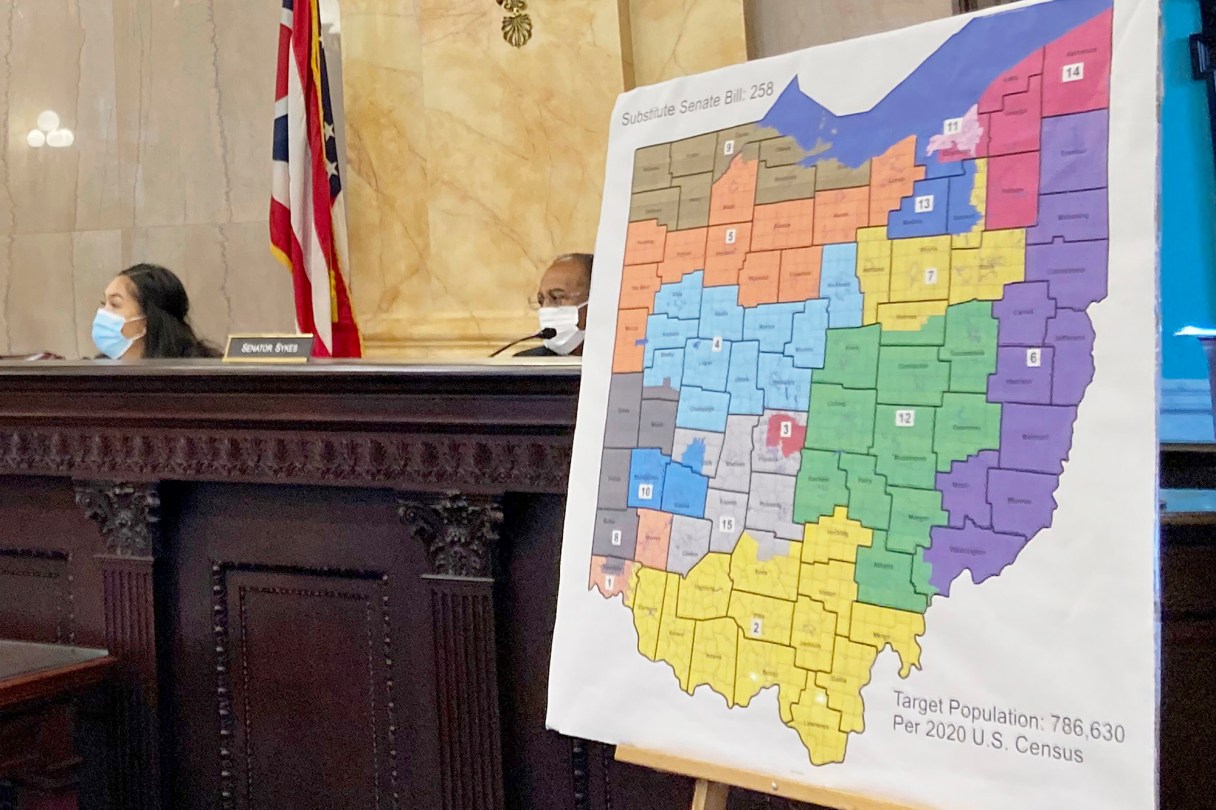
The Ohio Supreme Court will take yet another look at the legality of the state’s congressional districts after the U.S. Supreme Court on Friday set aside a ruling striking down the districts and ordered further consideration of the case.
The nation’s high court directed Ohio’s top court to reassess the case in light of its ruling Tuesday in a North Carolina redistricting case. Justices in that instance rejected an expansive version of the so-called independent state legislature theory, which holds that legislatures have absolute power in setting the rules of federal elections and cannot be overruled by state courts.
But the high court said state courts still must act within “ordinary bounds” when reviewing laws governing federal elections.
The Supreme Court’s brief order Friday was the fourth this month addressing redistricting conducted by states based on the 2020 census. Its other decisions dealt with Republican-drawn U.S. House districts in Alabama and Louisiana, which lower courts said likely violated the federal Voting Rights Act by diluting the voting strength of Black residents.
In both Ohio and North Carolina, Republican state lawmakers contended in appeals that their state’s highest court had gone too far when striking down U.S. House districts enacted by GOP state officials.