
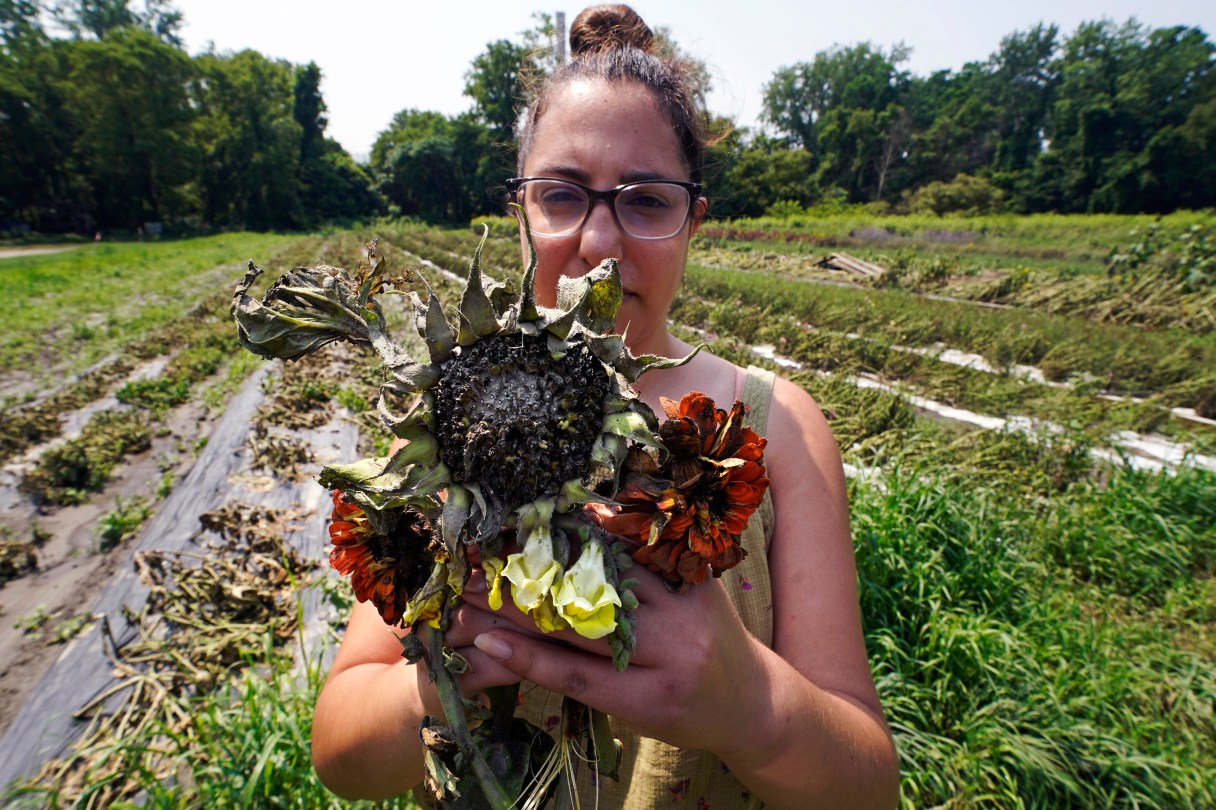
Well before it was warm enough to plant seedlings in the ground, farmer Micah Barritt began nursing crops like watermelon, eggplant and tomatoes — eventually transplanting them from his greenhouse into rich Vermont soil, hoping for a bountiful fall harvest.
Within a few hours last week, those hopes were washed away when flood waters inundated the small farm, destroying a harvest with a value he estimated at $250,000. He still hopes to replant short-season crops like mustard greens, spinach, bok choy and kale.
“The loss of the crops is a very tangible way to measure the flood, but the loss of the work is hard to measure,” said Barritt, one of five co-owners of Diggers’ Mirth Collective Farm in Burlington, Vermont. “We’re all grieving and heartbroken because of this.”
That heartbreak was felt by farmers in several Northeast states after floods dealt a devastating blow at the worst possible time — when many plants were too early to harvest, but are now too late to replant in the region’s abbreviated growing season.
Storms dumped up to two months’ worth of rain over a couple of days in parts of the region, surpassing the amount that fell when Tropical Storm Irene blew through in 2011, causing major flooding. Officials have called last week’s flooding Vermont’s worst natural disaster since floods in 1927.