
Monday, November 16, 2026Nov 16

How hip-hop went from being shunned by big business to multimillion-dollar collabs

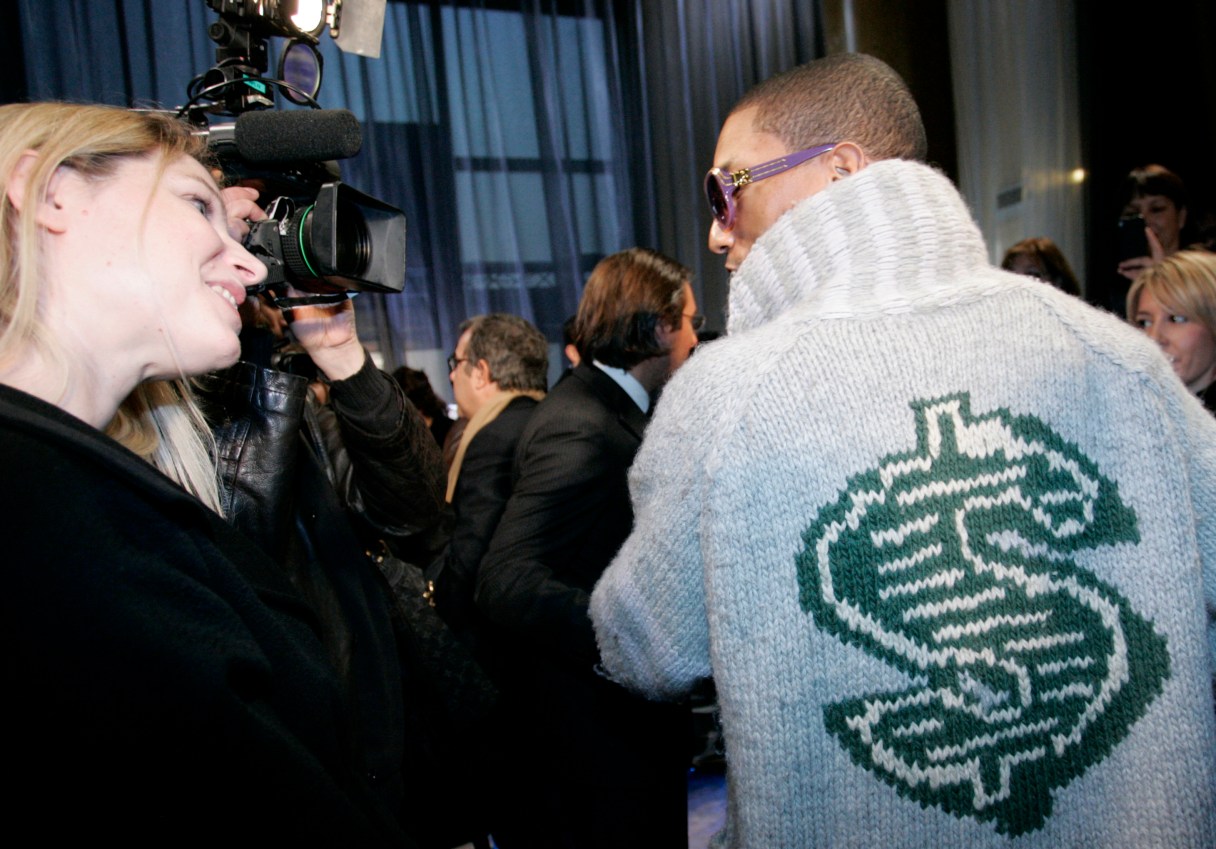
FILE -  U.S rap artist Pharrell Williams, right, talks with an unidentified journalist after the presentation of Louis Vuitton men's fall/winter 2008-2009 fashion collection in Paris, Jan.17, 2008. The signs of hip-hops influence are now everywhere from Pharrell Williams becoming Louis Vuittons mens creative director to billion-dollar brands like Dr. Dres Beats headphones and retail mainstays like Diddys Sean John and the Rocawear line started by Jay-Z. It didnt start out that way. Companies at first balked at partnering with hip-hop acts because they felt that the genre that appealed to Black and brown teens and young adults didn't align with their brands. (AP Photo/Thibault Camus, file)
FILE - U.S rap artist Pharrell Williams, right, talks with an unidentified journalist after the presentation of Louis Vuitton men's fall/winter 2008-2009 fashion collection in Paris, Jan.17, 2008. The signs of hip-hops influence are now everywhere from Pharrell Williams becoming Louis Vuittons mens creative director to billion-dollar brands like Dr. Dres Beats headphones and retail mainstays like Diddys Sean John and the Rocawear line started by Jay-Z. It didnt start out that way. Companies at first balked at partnering with hip-hop acts because they felt that the genre that appealed to Black and brown teens and young adults didn't align with their brands. (AP Photo/Thibault Camus, file)

NEW YORK (AP) — The signs of hip-hop’s influence are everywhere — from Pharrell Williams becoming Louis Vuitton’s men’s creative director to billion-dollar brands like Dr. Dre’s Beats headphones and retail mainstays like Diddy’s Sean John and Jay-Z’s Rocawear.

It didn’t start out that way.

The music genre germinated 50 years ago as an escape from the poverty and violence of New York City’s most distressed borough, the Bronx, where few wanted to invest in its businesses or its people. Out of that adversity blossomed an authentic style of expression, one that connected with the city’s underserved Black and Latino teens and young adults, and filtered through to graffiti, dance and fashion.

As hip-hop spread throughout New York, so did a culture.

“Hip-hop goes beyond the music,” said C. Keith Harrison, a professor and founding director for the University of Central Florida’s Business of Hip-Hop Innovation & Creative Industries certificate program. “Hip-hop always knew, as Nipsey Hussle would say, how to get it out of the trunk, and so they’ve always had to have innovative business models.”