
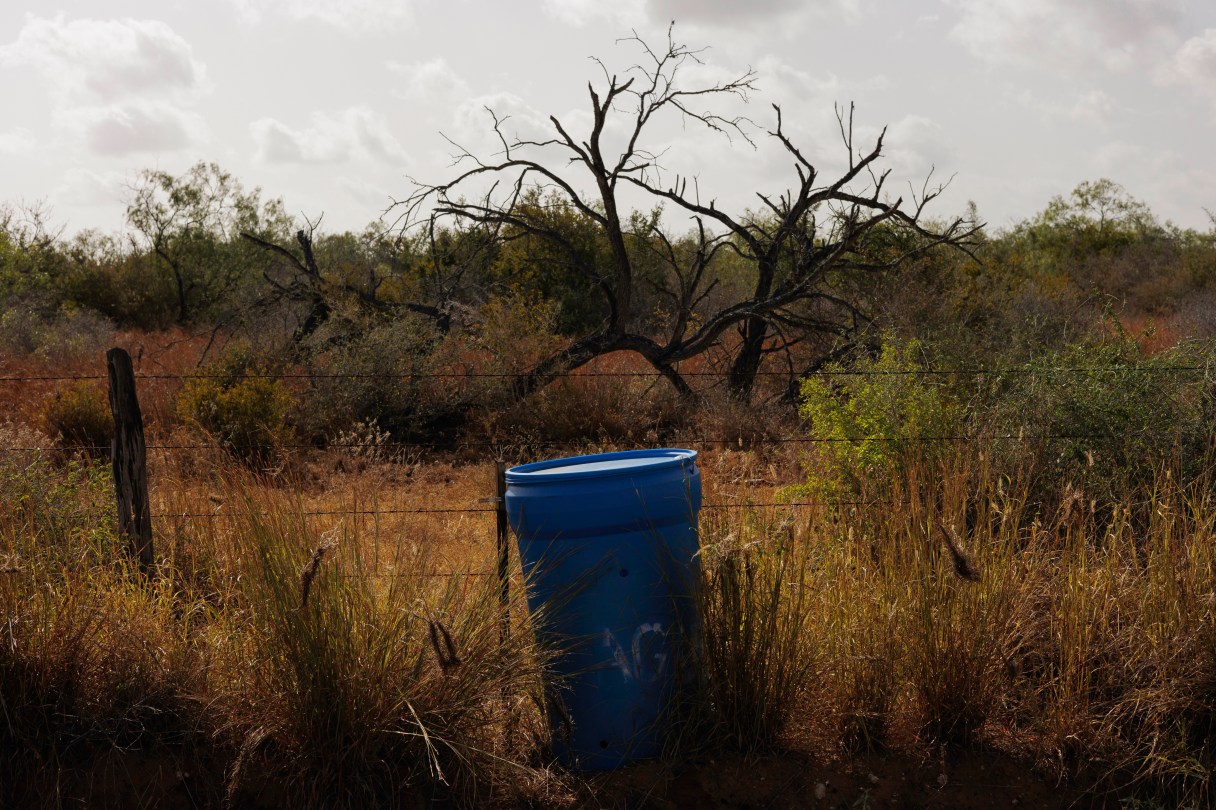
HEBBRONVILLE, Texas (AP) — As one of the worst heat waves on record set in across much of the southern United States this summer, authorities and activists in South Texas found themselves embroiled in a mystery in this arid region near the border with Mexico.
Barrels of life-saving water that a human rights group had strategically placed for wayward migrants traveling on foot had vanished.
Usually, they are hard to miss. Labeled with the word “AGUA” painted in white, capital letters and standing about waist-high, the 55-gallon (208-liter), blue drums stand out against the scrub and grass, turned from green to a sundried brown.
The stakes of solving this mystery are high.
Summer temperatures can climb to 110 degrees Fahrenheit (43.3 degrees Celsius) in Texas’ sparsely populated Jim Hogg County, with its vast, inhospitable ranchlands. Migrants — and sometimes human smugglers — take a route through this county to try to circumvent a Border Patrol checkpoint on a busier highway about 30 miles (48 kilometers) to the east. More than 60 miles (96 kilometers) from the U.S.-Mexico border, it can take several days to walk there for migrants who may have already spent weeks crossing mountains and desert and avoiding cartel violence.