
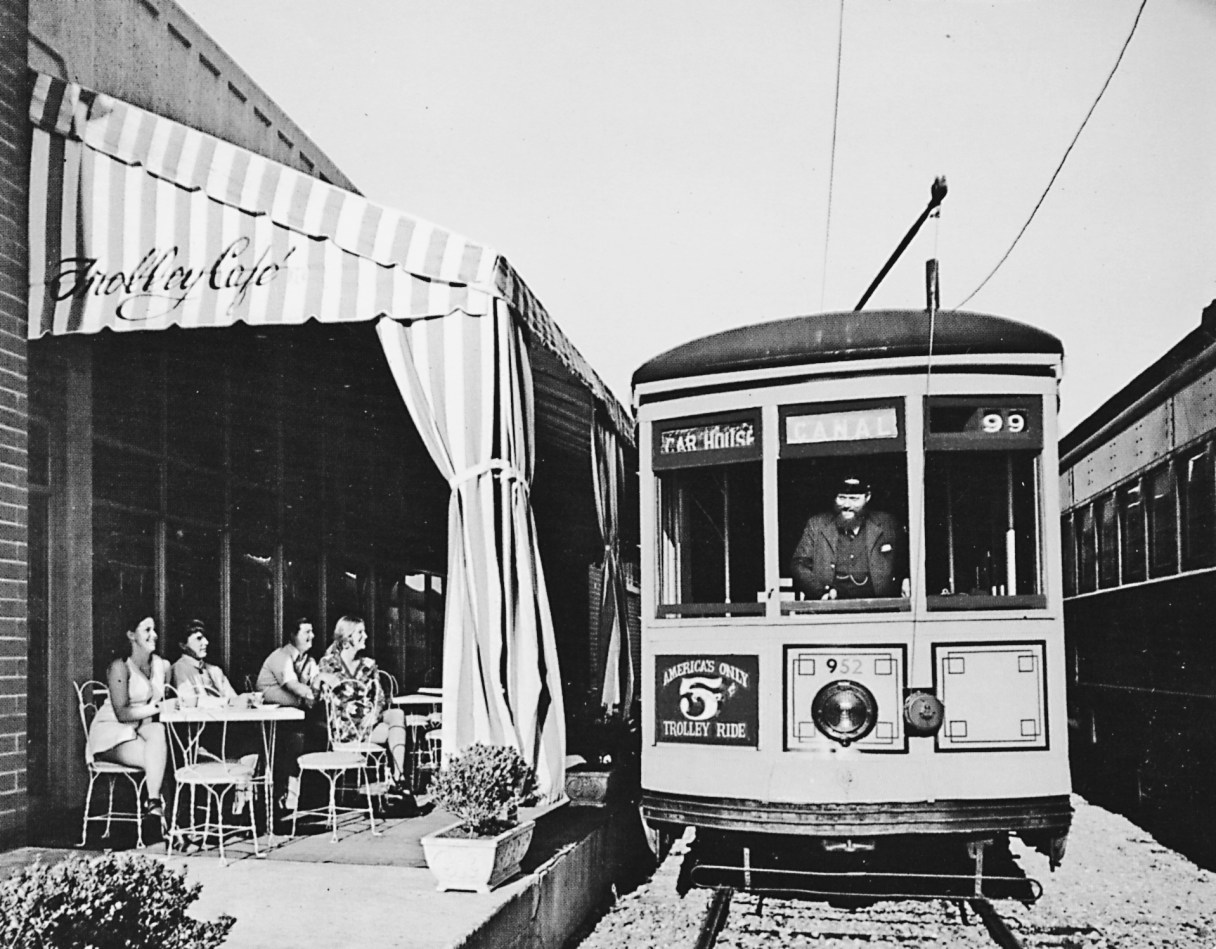
In the early 1900s, before the advent of the automobile, Chattanoogans traversed the city on the streetcar, a train-like carrier propelled on tracks by electricity.
Residents of the St. Elmo neighborhood, for instance, could hop on the streetcar and head north, past the Lookout Mountain Incline Railway into downtown, where tracks were laid on roadways such as Market Street and McCallie Avenue, among others.
From there, they could take a streetcar as far east as Missionary Ridge or head north to Signal Mountain. Passengers could even ride a streetcar into Georgia all the way to Chickamauga Battlefield, according to a 1913 Chattanooga streetcar map found in David Steinberg’s “Chattanooga’s Transportation Heritage,” a book that outlines the history of transportation in the city from the late 1800s to today.
“Imagine if everyone was that well connected to transportation that you could be able to go from the top of Lookout Mountain to the top of Signal Mountain and change the streetcar once,” Justin Strickland, public space coordinator for the city’s transportation division and enthusiast of the city’s streetcar history, said in an interview.
“Every neighborhood that lies within the confines of Signal Mountain, Lookout Mountain and Missionary Ridge,” Strickland continued, “every neighborhood had a streetcar line, adjacent or going through it.”