
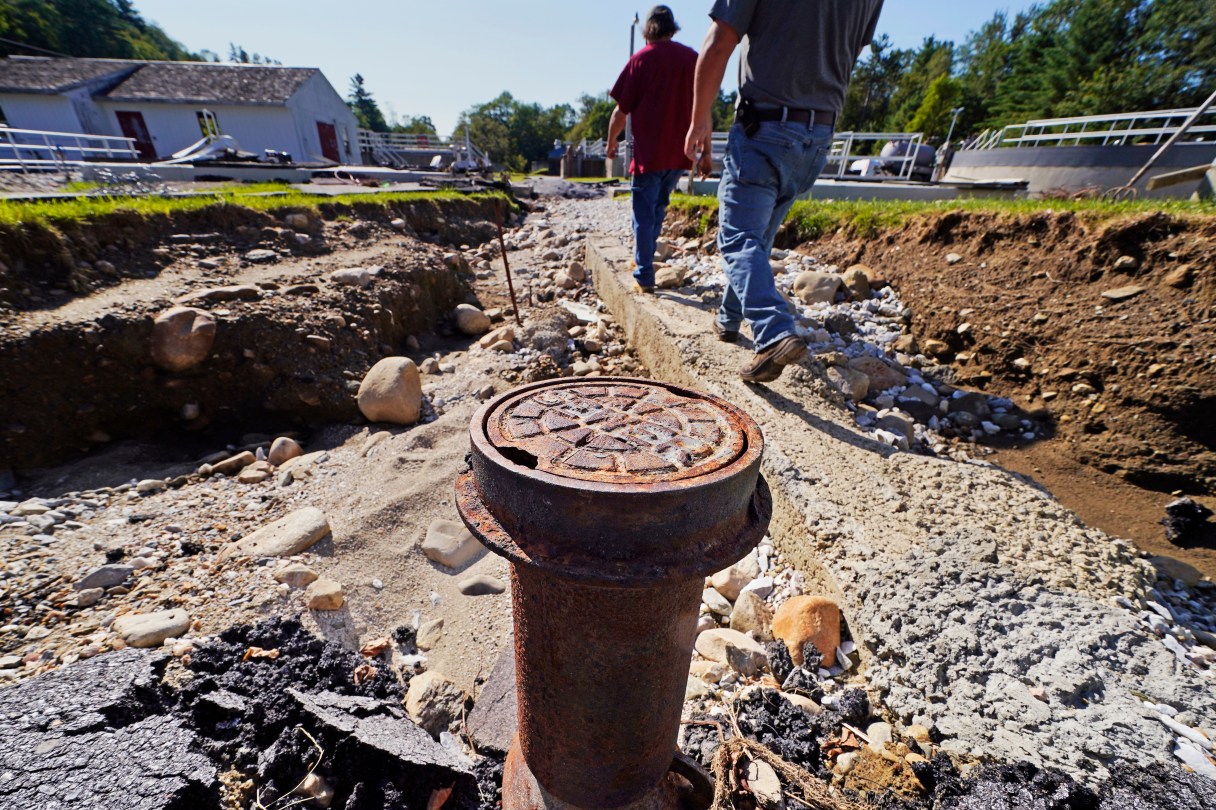
LUDLOW, Vermont (AP) — The crack of a summer thunderstorm once comforted people in Ludlow, Vermont. But that was before a storm dropped eight inches of rain on the village of 2,200 in two days last month. And it was before the devastation of Tropical Storm Irene in 2011. Now a coming rainstorm can stir panic.
“We could lose everything again,” said Brendan McNamara, Ludlow’s municipal manager.
The rainfall that walloped Vermont last month hit Ludlow so hard that floodwaters carried away cars and wiped out roads. It sent mud and debris into homes and businesses and forced officials to close a main road for days.
Thankfully, the facility that keeps the village’s drinking water safe was built at elevation and survived. But its sewage plant fared less well. Flooding tore through it, uprooting chunks of road, damaging buildings and sweeping sewage from treatment tanks into the river. Even now the plant can only handle half its normal load.
It’s not just Ludlow. Water infrastructure across the country is vulnerable as climate change makes storms more unpredictable and destructive, flooding low-lying drinking water treatment plants and overwhelming coastal sewage systems.