
SAN DIEGO (AP) — California’s only native sunfish, the Sacramento perch, survived catastrophic floods in the 1860s and was so abundant that it was a regular staple in San Francisco’s markets before invasive species decimated its population.
Today it is relegated to mostly isolated lakes, reservoirs and ponds with few predators. But as the planet heats up and threatens many cold-water game fish species like trout, the Sacramento perch may be on the cusp of a comeback, thanks in part to its ability to tolerate warm water and extreme conditions.
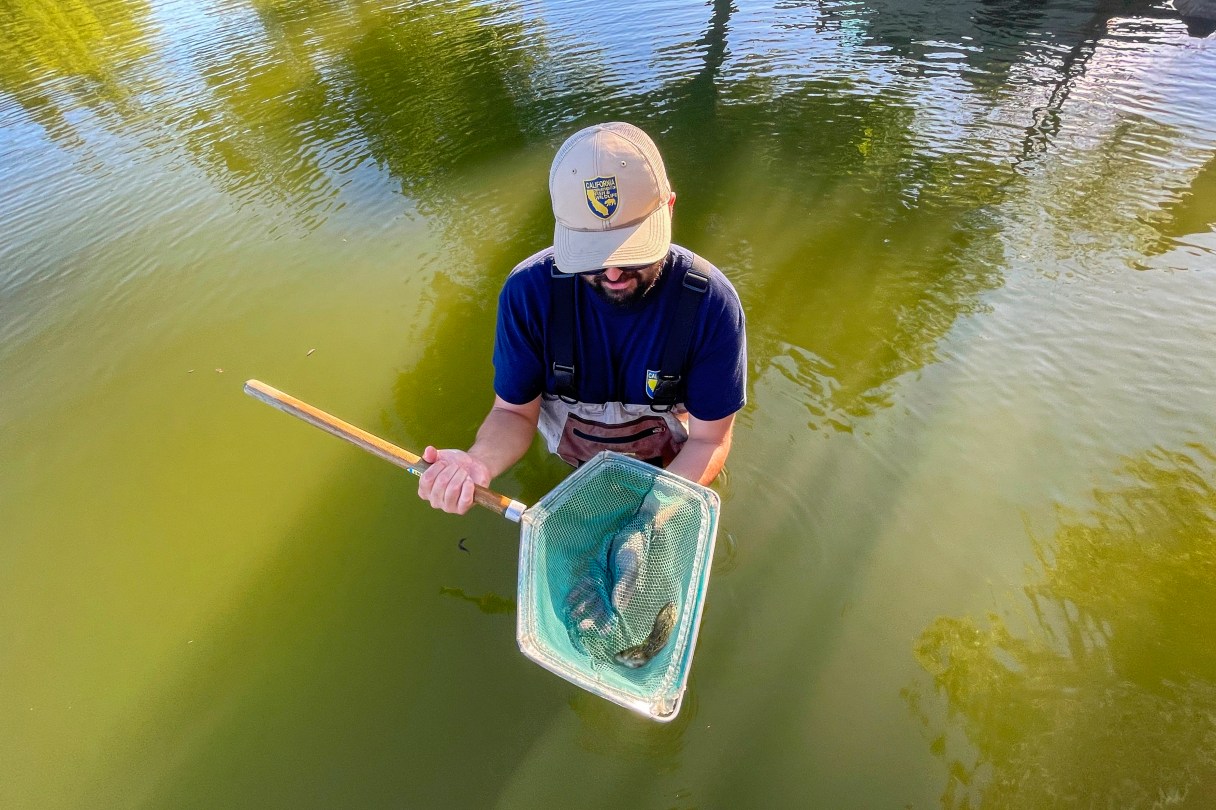
State officials recently introduced Sacramento perch to Southern California in an attempt to widen its range, strengthen its gene pool, create a breeding stock and generate interest among more anglers. Biologists with the California Department of Fish and Wildlife released the first batch of 37 mostly juvenile Sacramento perch on Thursday evening in San Diego County’s only natural lake, Lindo Lake in Lakeside, a suburb east of the city of San Diego.
“It’s a native game fish that we can promote as a viable fishery in the future where we may not be able to have trout in certain areas because of climate change and warming waters,” environmental scientist Matt Lucero with the department said after releasing the fish in batches.
The multiyear experiment reflects the changes facing sportfishing as rivers, streams, lakes and ponds warm. Climate change is the biggest threat to the survival of trout in America’s interior West, according to the Natural Resources Defense Council. It estimates up to 50% of trout habitat in the Rocky Mountain region is at risk of disappearing by the end of the century.