
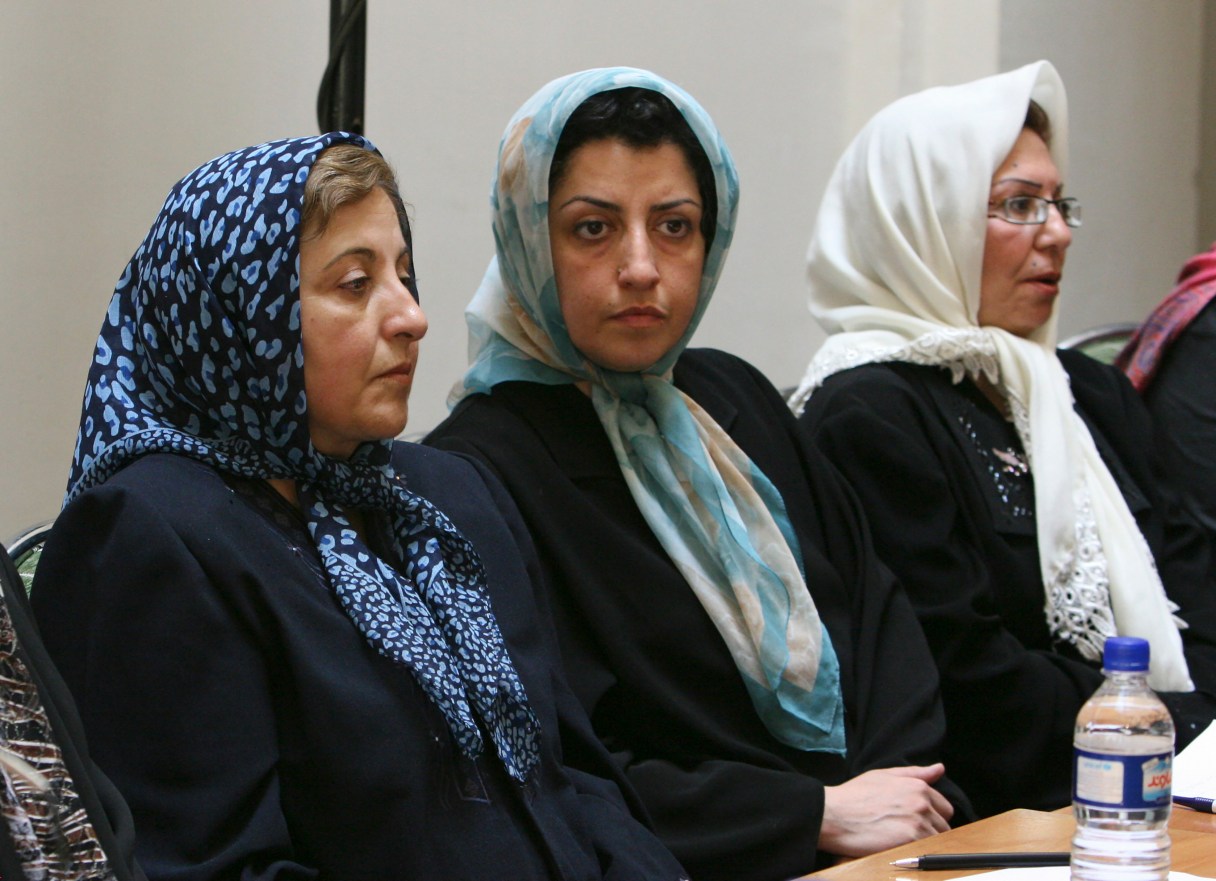
Imprisoned Iranian activist Narges Mohammadi won the Nobel Peace Prize on Friday in recognition of her tireless campaigning for women’s rights and democracy and against the death penalty.
Mohammadi, 51, has kept up her activism despite numerous arrests by Iranian authorities and spending years behind bars. She has remained a leading light for nationwide, women-led protests, sparked by the death last year of a 22-year-old woman in police custody. Those demonstrations grew into one of the most intense challenges ever to Iran’s theocratic government.
“This prize is first and foremost a recognition of the very important work of a whole movement in Iran with its undisputed leader, Narges Mohammadi,” said Berit Reiss-Andersen, the chair of the Norwegian Nobel Committee. She began the announcement with the words “Woman, Life, Freedom” in Farsi — the slogan of the demonstrations in Iran.
Reiss-Andersen said the committee hopes the prize “is an encouragement to continue the work in whichever form this movement finds to be fitting.” She also urged Iran to release Mohammadi in time for the prize ceremony on Dec. 10.
For nearly all of Mohammadi’s life, Iran has been governed by a Shiite theocracy headed by the country’s supreme leader. While women hold jobs, academic positions and even government appointments, their lives can be tightly controlled. Laws require all women to at least wear a headscarf, or hijab, to cover their hair as a sign of piety. Iran and neighboring Afghanistan remain the only countries that mandate it.