
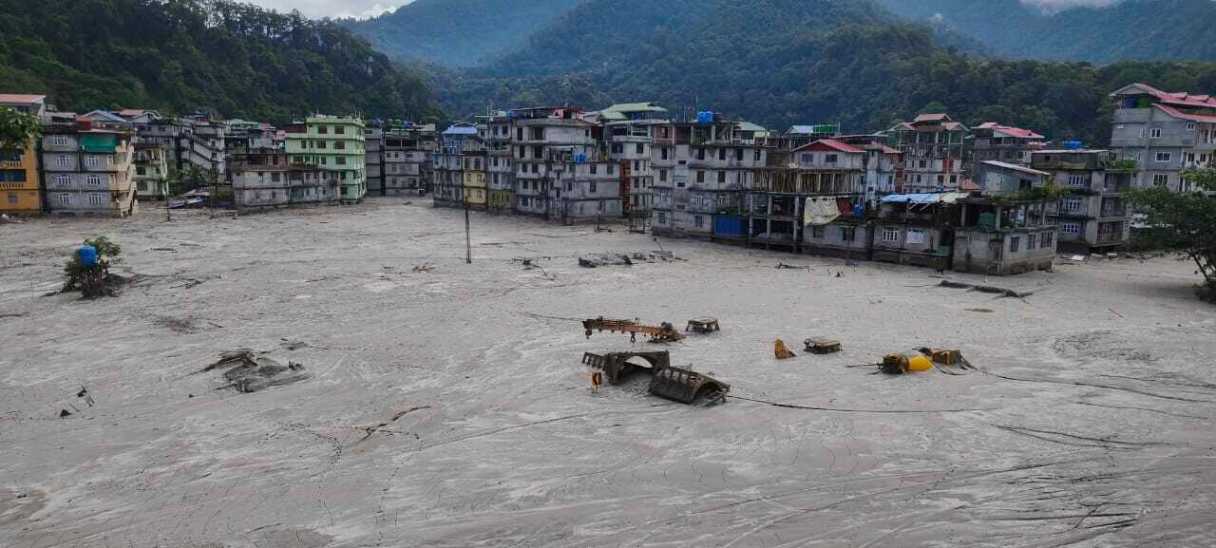
NEW DELHI (AP) — Hundreds of rescuers dug through slushy debris and fast-flowing, icy water Friday in a search for survivors after a glacial lake overflowed and burst through a dam in India’s Himalayan north, a disaster that many had warned was possible for years.
The flood began in the early hours of Wednesday, when water overflowed a mountain lake. It smashed through a major hydroelectric dam downstream and then poured into the valley below, where it killed at least 41 people, carrying bodies kilometers (miles) away, and forced thousands to flee their homes.
It wasn’t clear what triggered the deadly flood, the latest to hit northeast India in a year of unusually heavy monsoon rains. Experts pointed to intense rain, and a 6.2 magnitude earthquake that struck nearby Nepal on Tuesday afternoon, as possible contributors.
But the disaster also underscores a climate dilemma that pits local environmental activists who say dams in the Himalayas are too dangerous against authorities pursuing a national green energy agenda.
The design and placement of the 6-year-old Teesta 3 dam, the largest in Sikkim state, were controversial from the time it was built. A report compiled by the Sikkim State Disaster Management Authority in 2019 had identified Lhonak Lake as “highly vulnerable” to flooding that could breach dams and cause extensive damage to life and property.