
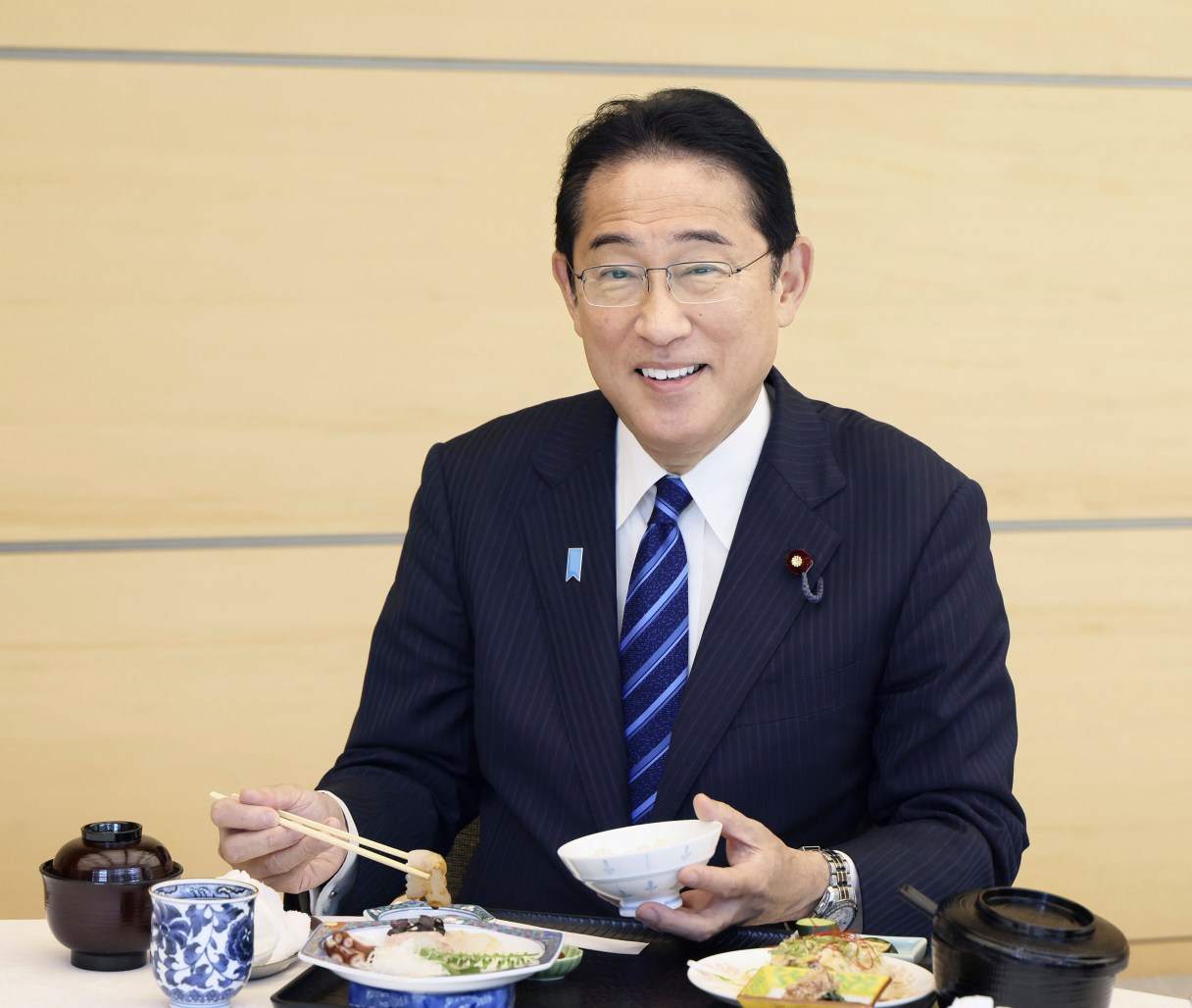
TOKYO (AP) — Japan’s Prime Minister Fumio Kishida and three Cabinet ministers ate Fukushima fish sashimi at a lunch meeting Wednesday, in an apparent effort to show that fish is safe following the release of treated radioactive wastewater from the Fukushima Daiichi nuclear power plant that began last week.
Kishida and the three ministers had sashimi of flounder, octopus and sea bass, caught off the Fukushima coast after the water release, along with vegetables, fruits and a bowl of rice that were harvested in the prefecture, Economy and Industry Minister Yasutoshi Nishimura, who was at the meeting, told reporters.
The release of the treated wastewater into the ocean, which began Thursday and is expected to continue for decades, has been strongly opposed by fishing groups and by neighboring countries. China immediately banned all imports of Japanese seafood in response. In South Korea, thousands of people joined rallies over the weekend to condemn the discharge.
All seawater and fish sampling data since the release have been way below set safety limits.
The lunch showed Kishida’s “strong commitment to take the leadership in tackling reputational damage while standing by the feelings of the fisheries community in Fukushima,” Nishimura said. “It is important to show safety based on scientific evidence and resolutely disseminate (the information) in and outside of Japan.”