
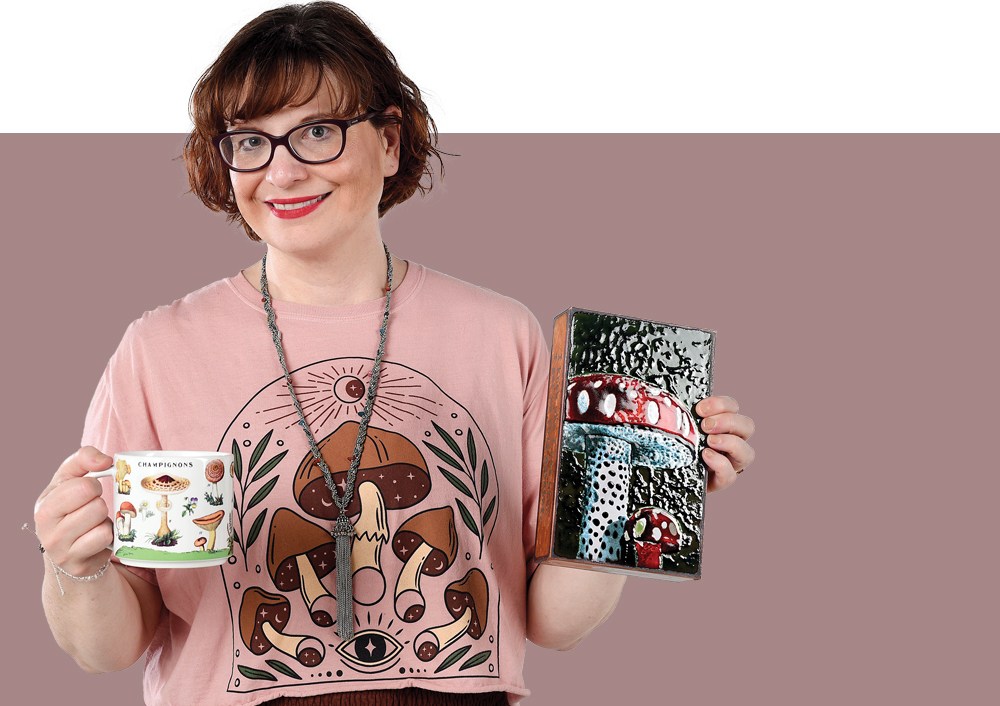
Mushrooms are having a moment. From runways to hit TV shows and restaurant menus to home furnishings, they are popping up everywhere, while news articles and research papers begin digging into their many potential uses.
In 2021, leading fashion designer Stella McCartney debuted the world’s first garments made of mushroom leather, in partnership with Bolt Threads, and last year, she unveiled a mushroom-leather purse. The vegan, sustainable material is constructed of mycelium, the mushroom’s fibrous underground root system that connects the bulbous flowering structures, which are, in turn, inspiring couture and kitschy fashion designs alike. Later this month, Hermès’ mushroom-leather provider, MycoWorks, will open the first commercial-scale “fine mycelium” production plant.
Based on recent studies, mycelium could become a favored fire retardant, and fungi could hold the answer to our plastics problem. A popular 2019 documentary called “Fantastic Fungi” examines mushrooms’ medicinal benefits against diseases including cancer and Alzheimer’s, and last year, the New York Times Bestseller “How to Change Your Mind” was turned into a Netflix docu-series exploring the psychedelic properties of “magic mushrooms,” aka psilocybin.
Forbes and Condé Nast Traveller are among the growing number of mainstream media outlets chronicling the rise of psychedelic retreats such as The Journeyman Collective in Vancouver, which are expected to help propel the psychedelics market to $10.7 billion by 2027, a more than 180% increase over seven years, according to Data Bridge Market Research cited in a 2021 Bloomberg article. Meanwhile, vintage mushroom-shaped lamps are selling for hundreds of dollars on eBay.