
The Fulton County indictments against Donald Trump and his 18 codefendants read like a Netflix thriller at some points. There are secret meetings, taped phone calls, and a president with a singular desire to overturn his loss in the 2020 elections.
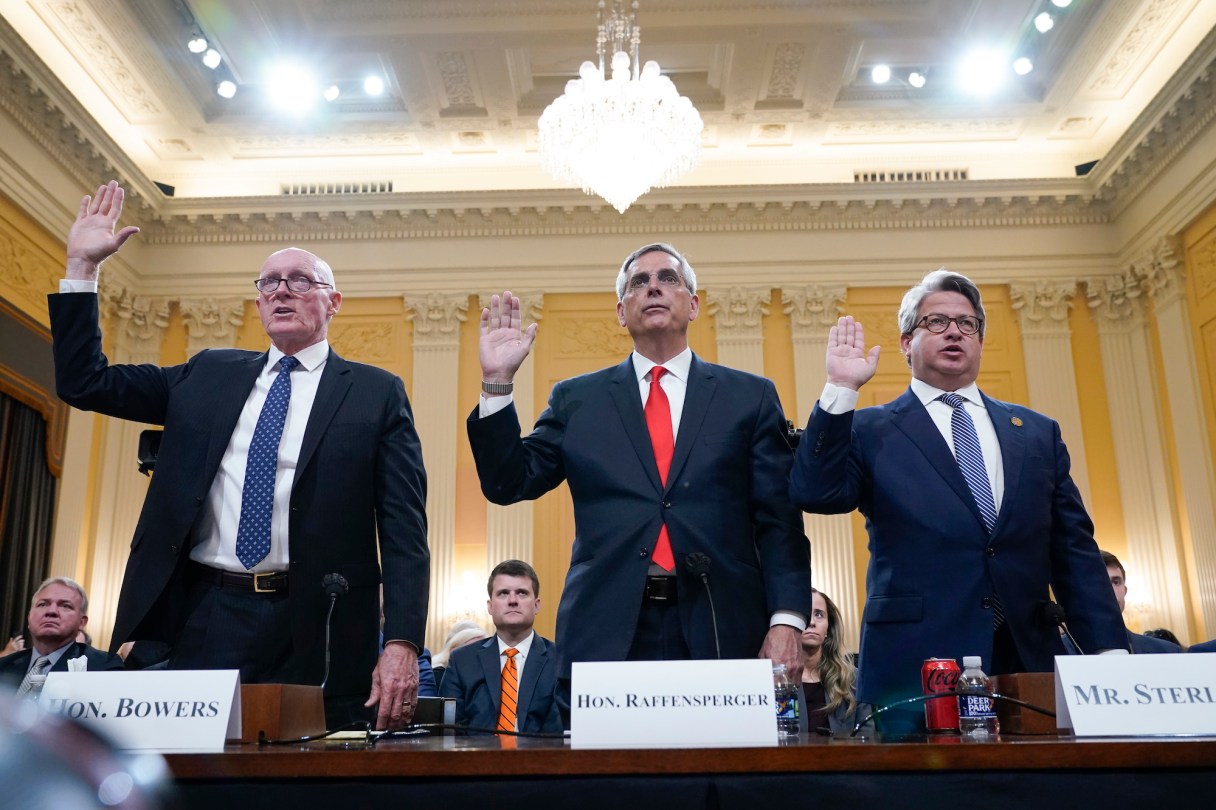
But the indictment includes a surprise ending for Trump, namely that it was a parade of Republican leaders, not Democrats, who stopped Trump from overturning the state’s elections. From Gov. Brian Kemp to House Speaker David Ralston to Secretary of State Brad Raffensperger and staffers up and down the food chain, Trump met one brick wall of resistance after another in the state — and they were all from his own party.
The tick-tock of the indictment starts with Kemp, whom the indictment says Trump called in an attempt to persuade the governor to convene a special session of the General Assembly to appoint electors for him instead of Joe Biden.
When Kemp refused, Trump tweeted the next day calling Kemp a “so-called governor” and demanding a special session anyway.
With time ticking toward the end of his presidency, Trump kept lashing out at Kemp, with no success.