
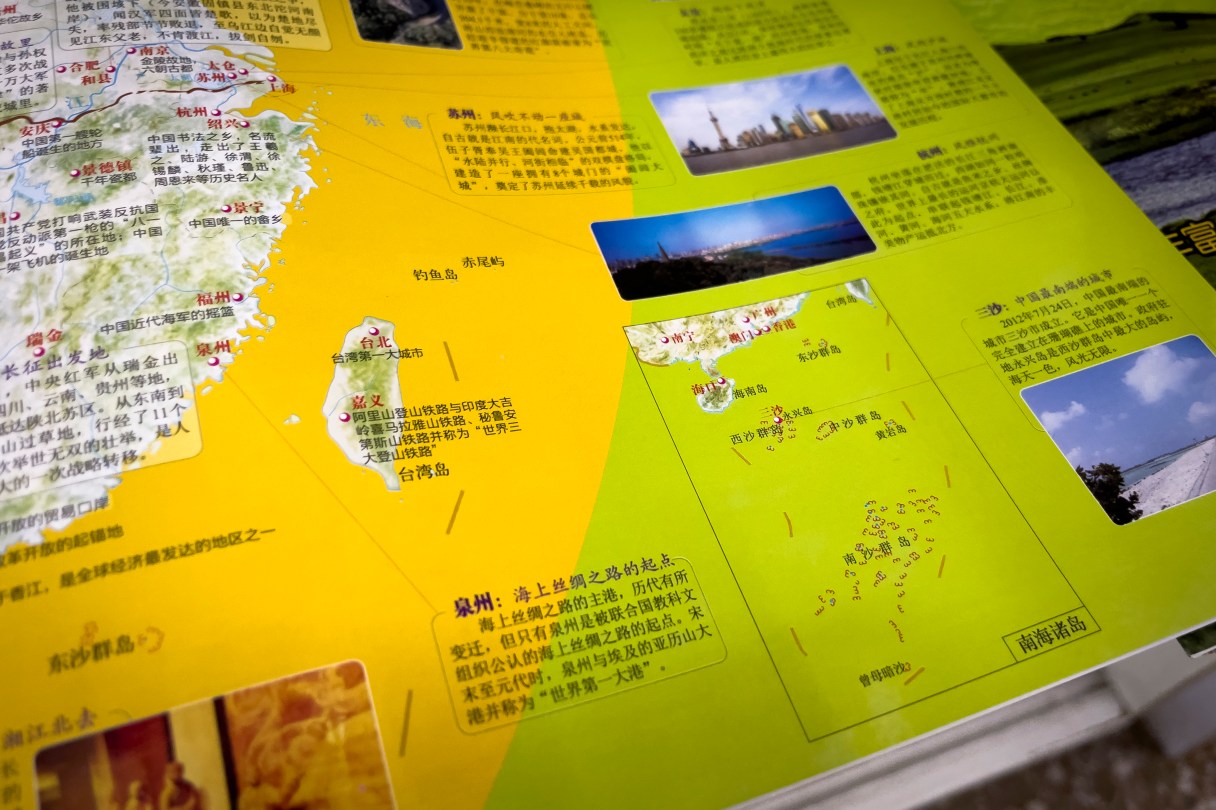
BANGKOK (AP) — China has upset many countries in the Asia-Pacific region with its release of a new official map that lays claim to most of the South China Sea, as well as to contested parts of India and Russia, and official objections continue to mount. What is the map, and why is it upsetting people so much?
WHAT IS CHINA CLAIMING?
China’s Ministry of Natural Resources released the new “standard” national map on Monday, part of what it has called an ongoing effort to eliminate “problem maps.” In it, China clearly shows its so-called nine-dash line, demarcating what it considers its maritime border, claiming almost the entirety of the South China Sea. The current, and other recent iterations of the annual map, include a 10th dash to the east of Taiwan.
In the far northeastern corner of China on the border with Russia, it shows Bolshoy Ussuriysky Island, an island at the confluence of the Amur and Ussuri rivers, as Chinese territory, even though the countries signed an agreement nearly 20 years ago to split the island.
Along the southern border with India, it shows Arunachal Pradesh and the Doklam Plateau, over which China and India have long feuded, clearly within Chinese borders, along with Aksai Chin in the western section that China controls but India still claims.