
GUAYAQUIL, Ecuador (AP) — Men walk through a lush plantation between Ecuador ‘s balmy Pacific coast and its majestic Andes, lopping hundreds of bunches of green bananas from groaning plants twice their height.
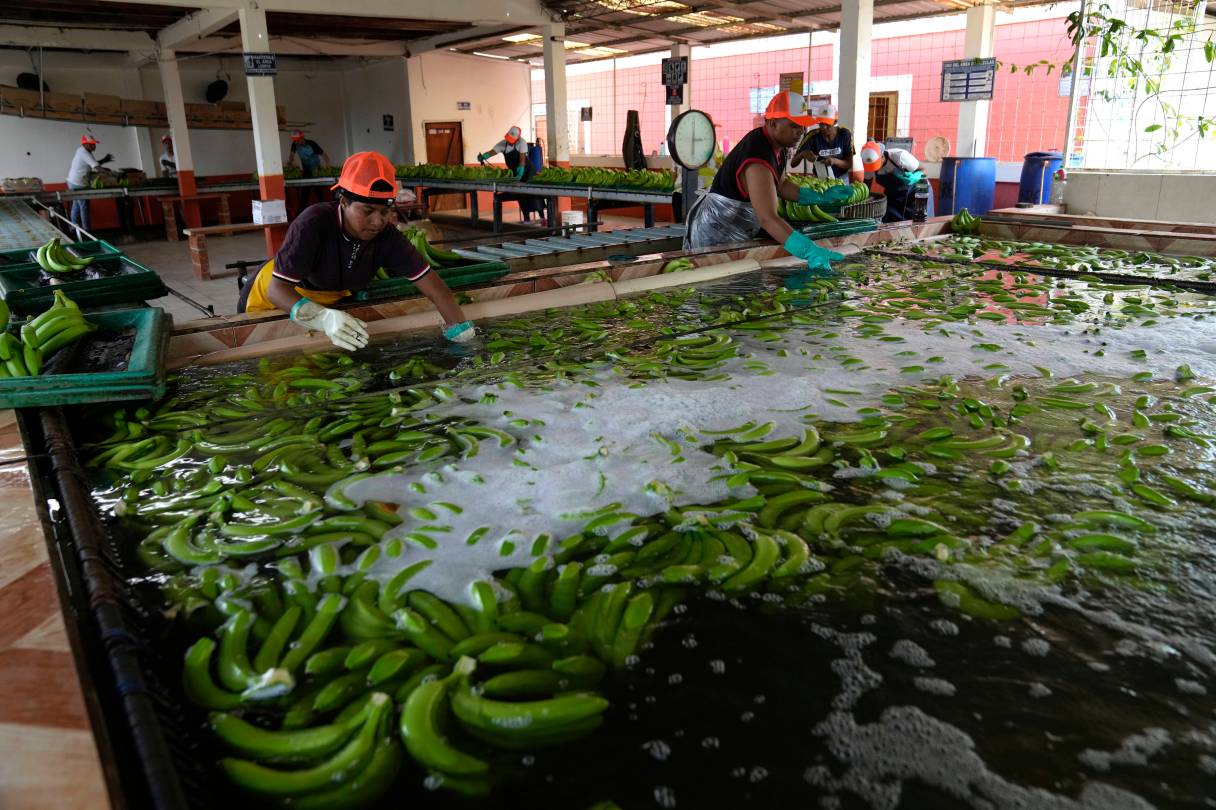
Workers haul the bunches to an assembly line, where the bananas are washed, weighed and plastered with stickers for European buyers. Owner Franklin Torres is monitoring all activity on a recent morning to make sure the fruit meets international beauty standards — and ever more important, is packed for shipment free of cocaine.
Torres is hypervigilant because Ecuador is increasingly at the confluence of two global trades: bananas and cocaine.
The South American country is the world’s largest exporter of bananas, shipping about 6.5 million metric tons (7.2 tons) a year by sea. It is also wedged between the world’s largest cocaine producers, Peru and Colombia, and drug traffickers find containers filled with bananas the perfect vehicle to smuggle their product.
Drug traffickers’ infiltration of the industry that is responsible for about 30% of the world’s bananas has contributed to unprecedented violence across this once-peaceful nation. Shootings, homicides, kidnappings and extortions have become part of daily life, particularly in the Pacific port city and banana-shipping hub of Guayaquil.