
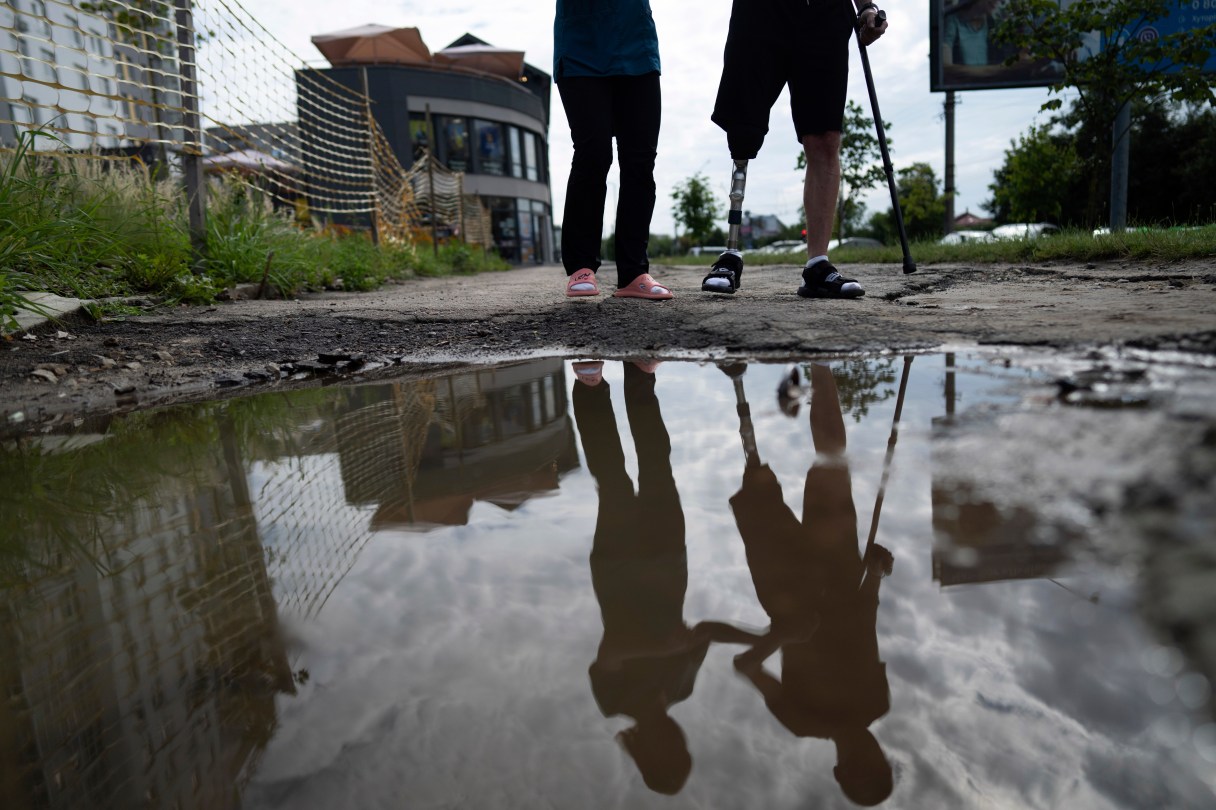
LVIV, Ukraine (AP) — The small band of soldiers gather outside to share cigarettes and war stories, sometimes casually and sometimes with a degree of testiness over recollections made unreliable by their last day fighting, the day the war took away their limbs.
Some clearly remember the moment they were hit by anti-tank mines, aerial bombs, a missile, a shell. For others, the gaps in their memories loom large.
Vitaliy Bilyak’s skinny body is a web of scars that end with an amputation above the knee. During six weeks in a coma, Bilyak underwent over 10 surgeries, including his jaw, hand, and heel, to recover from injuries he received April 22 driving over a pair of anti-tank mines.
“When I woke up, I felt like I was born again and returned from the afterlife,” said Bilyak, who is just beginning his path to rehabilitation. He does not yet know when he’ll receive a prosthesis, which must be fitted individually to each patient.
Ukraine is facing a future with upward of 20,000 amputees, many of them soldiers who are also suffering psychological trauma from their time at the front. Europe has experienced nothing like it since World War I, and the United States not since the Civil War.