
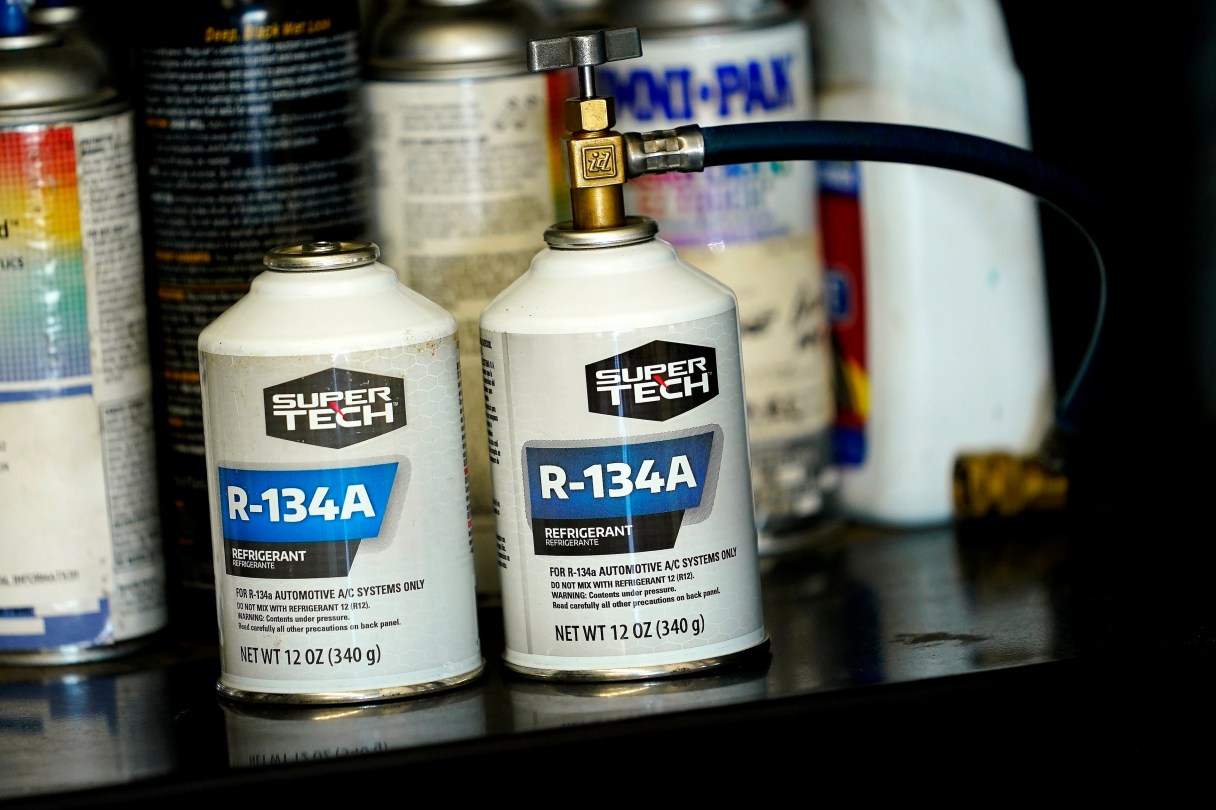
Air conditioning has made it possible to live comfortably in many hot places, but the special chemicals that makes it work are actually extremely hazardous to the climate.
Refrigerants used in fridges, freezers and cars change from a fluid to a gas to transport heat away from the place you want cooled.
In refrigerators, the refrigerant starts as a liquid and expands into a gas, which forces it to cool down. This chilled gas circulates through the fridge, absorbing heat as it flows along.
Once the chilled fluid has absorbed significant heat, say, from eggs you just hardboiled and placed inside, it gets squeezed in a compressor and gets even hotter. The refrigerant then flows through condenser coils where it releases its heat out and cools back into a liquid.
The cycle starts over when the refrigerant enters the expansion device, where the fluid spreads out, cools, and once again turns into a gas.