
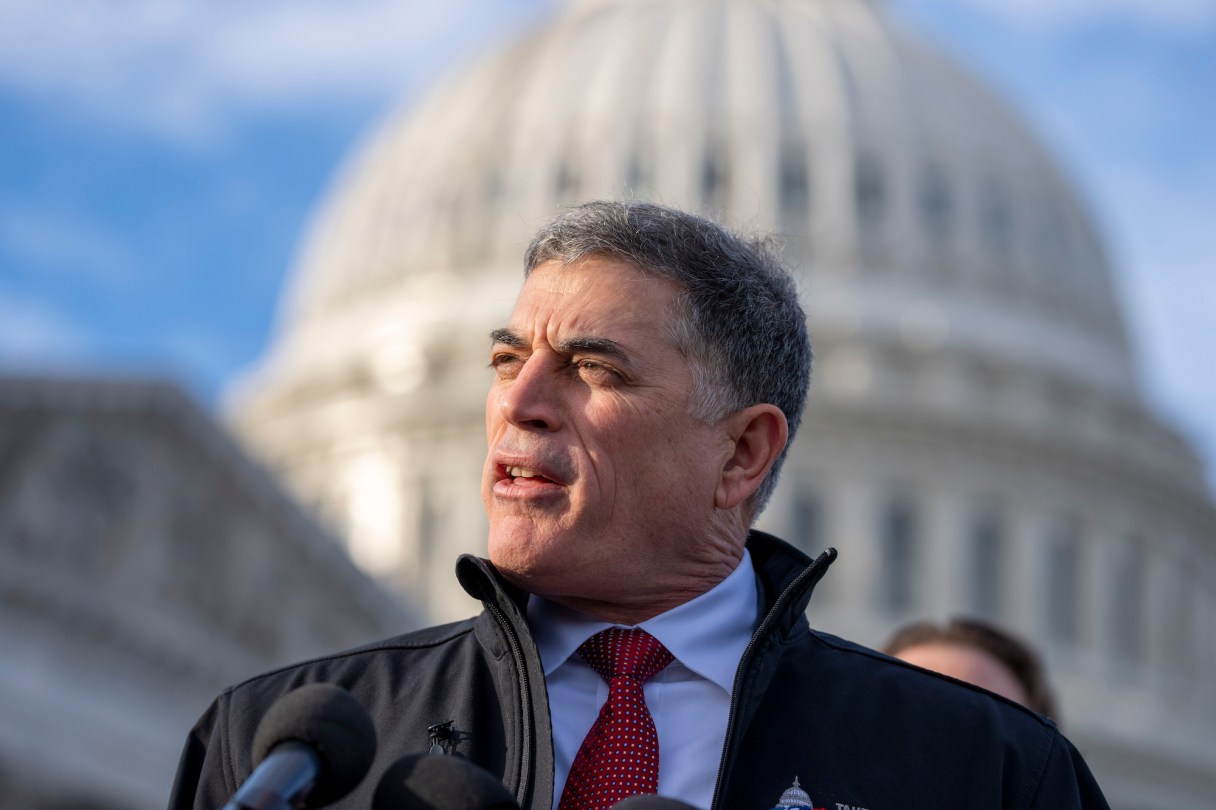
In the latest plan by House Republicans to stop the various prosecutions of former president Donald Trump, Rep. Andrew Clyde of Georgia plans to offer amendments in the Appropriations Committee that would prevent prosecution of presidential candidates.
Clyde, a member of the extreme wing of the party, would do so by invoking a little-used congressional maneuver to eliminate federal funding — including salaries — to anyone involved in such actions. In this case, that would mean stopping the Department of Justice from spending money on prosecuting any presidential candidate. Clyde’s amendment would only prevent federal prosecutions, but other House Republicans are trying to cut federal funds to New York and Georgia to punish them for their state-level indictments of Trump.
The problem is presidential candidates should’t be shielded from prosecution. They should be subject to the rule of law like every other U.S. citizen.
The argument for not prosecuting sitting presidents — which is a policy of the Justice Department, not a law passed by Congress or a judicial doctrine decided by the courts — is based on the potential damage to the nation from a president having to defend him or herself in court while also attempting to fulfill the responsibilities of the office. Presidents are subject to impeachment by the House followed by removal by the Senate, after which they may be charged with a crime and prosecuted like anyone else.
But using Clyde’s logic, presidential candidates would have a perpetual get-out-of-jail-free card, given that after losing once they could presumably file to run in the next election.