
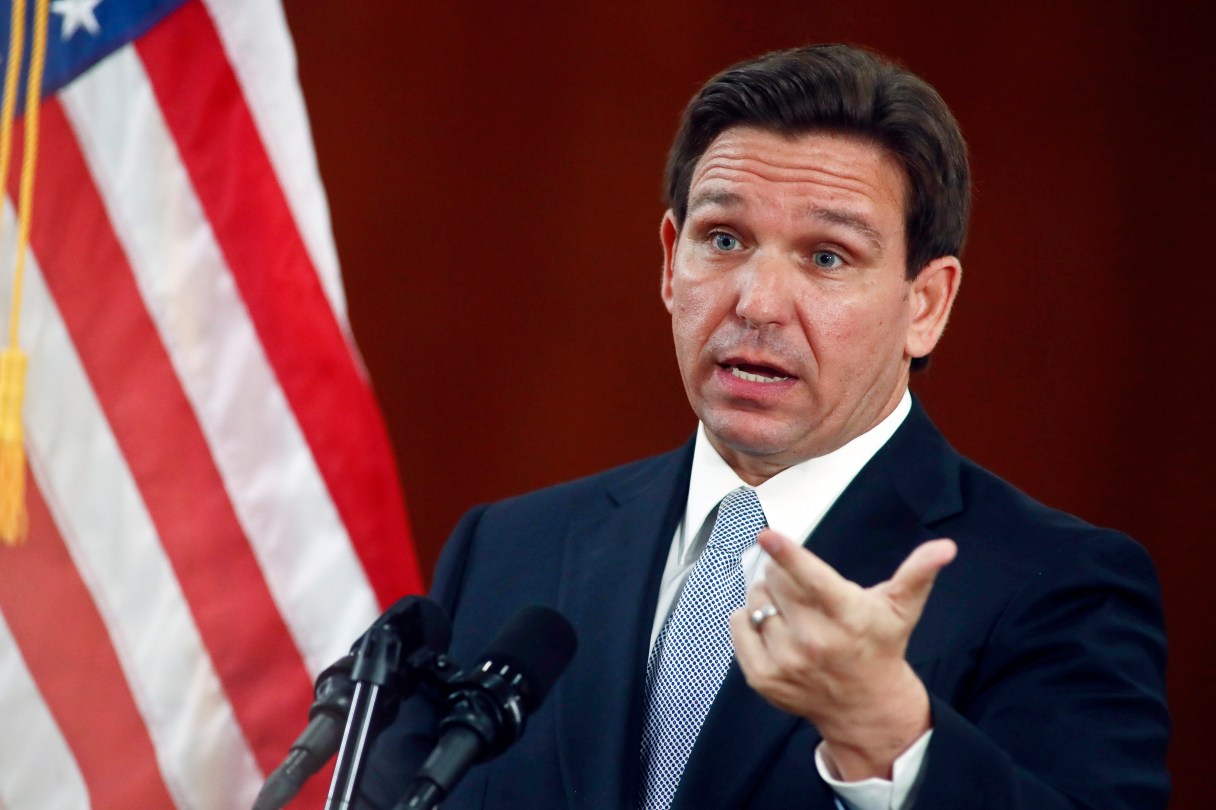
The Florida Supreme Court was confronted Friday with whether to overrule broad abortion rights protections provided for decades under the state constitution and instead uphold a law signed by Republican Gov. Ron DeSantis that bans the procedure in most cases after 15 weeks of pregnancy.
If the 15-week ban remains on the books, an even stricter six-week ban passed by the Republican-led Legislature this year and signed by DeSantis would automatically take effect about a month after the court renders a decision.
The seven justices — including five conservatives appointed by DeSantis, a GOP candidate for president — heard oral arguments in Tallahassee in the lawsuit brought by Planned Parenthood, the American Civil Liberties Union and others. They claim the Florida Constitution’s unique privacy clause for more than 40 years has explicitly protected a right to abortion in the state and should remain in force.
“Abortion has been a recognized right in Florida for decades,” said Whitney White, an ACLU staff attorney. “There’s no basis in the text to exclude a decision so personal and so private as whether to continue a pregnancy.”
Lawyers for the state, however, contend that when the privacy clause was adopted by voter referendum in 1980, few people understood it would cover abortion. State Solicitor General Henry Whitaker told the justices the clause was mainly meant to cover “informational privacy” such as personal records and not abortion.