
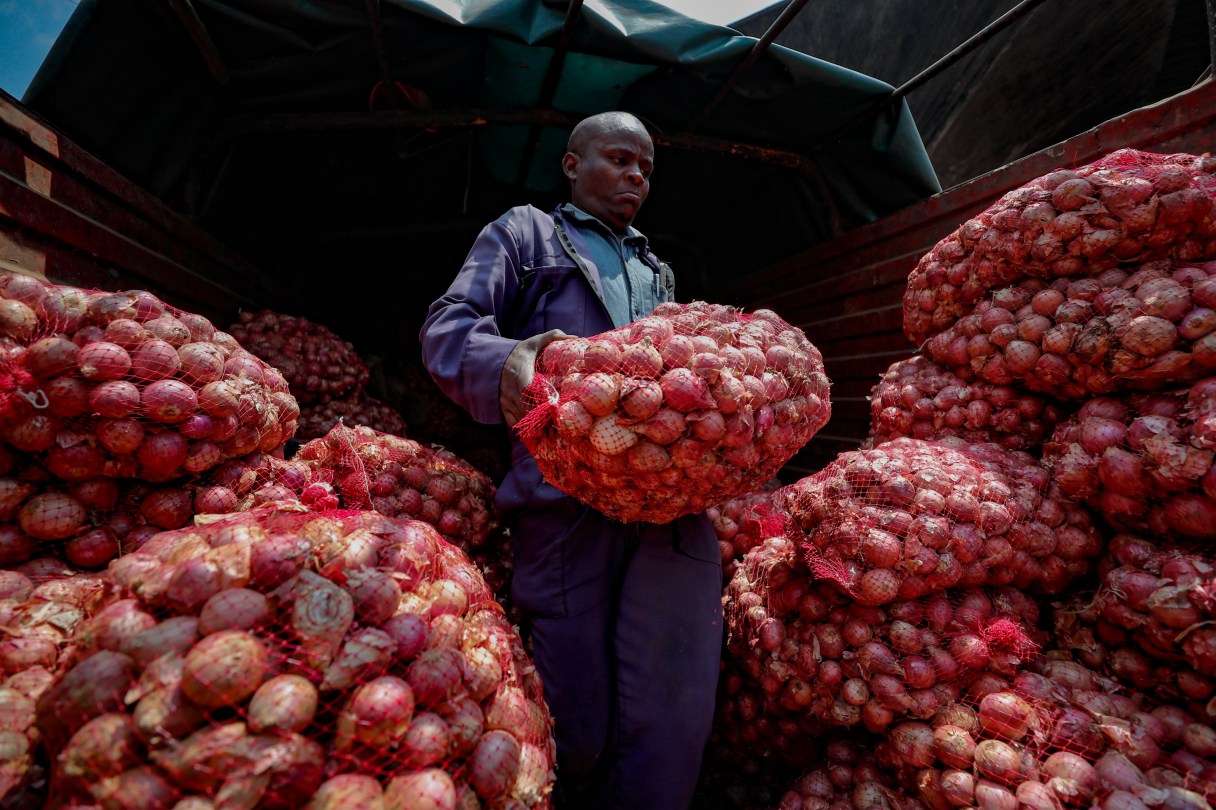
How do you cook a meal when a staple ingredient is unaffordable?
This question is playing out in households around the world as they face shortages of essential foods like rice, cooking oil and onions. That is because countries have imposed restrictions on the food they export to protect their own supplies from the combined effect of the war in Ukraine, El Nino’s threat to food production and increasing damage from climate change.
For Caroline Kyalo, a 28-year-old who works in a salon in Kenya’s capital of Nairobi, it was a question of trying to figure out how to cook for her two children without onions. Restrictions on the export of the vegetable by neighboring Tanzania has led prices to triple.
Kyalo initially tried to use spring onions instead, but those also got too expensive. As did the prices of other necessities, like cooking oil and corn flour.
“I just decided to be cooking once a day,” she said.