
Through a $2.25 million grant awarded to Chattanooga State Community College, the school plans to fast-track its efforts to improve pathways to student success.
The grant is through the U.S. Department of Education’s strengthening institutions program, an initiative to help colleges and universities expand their capacity to serve low-income students by providing funds to improve academic quality, institutional management and fiscal stability.
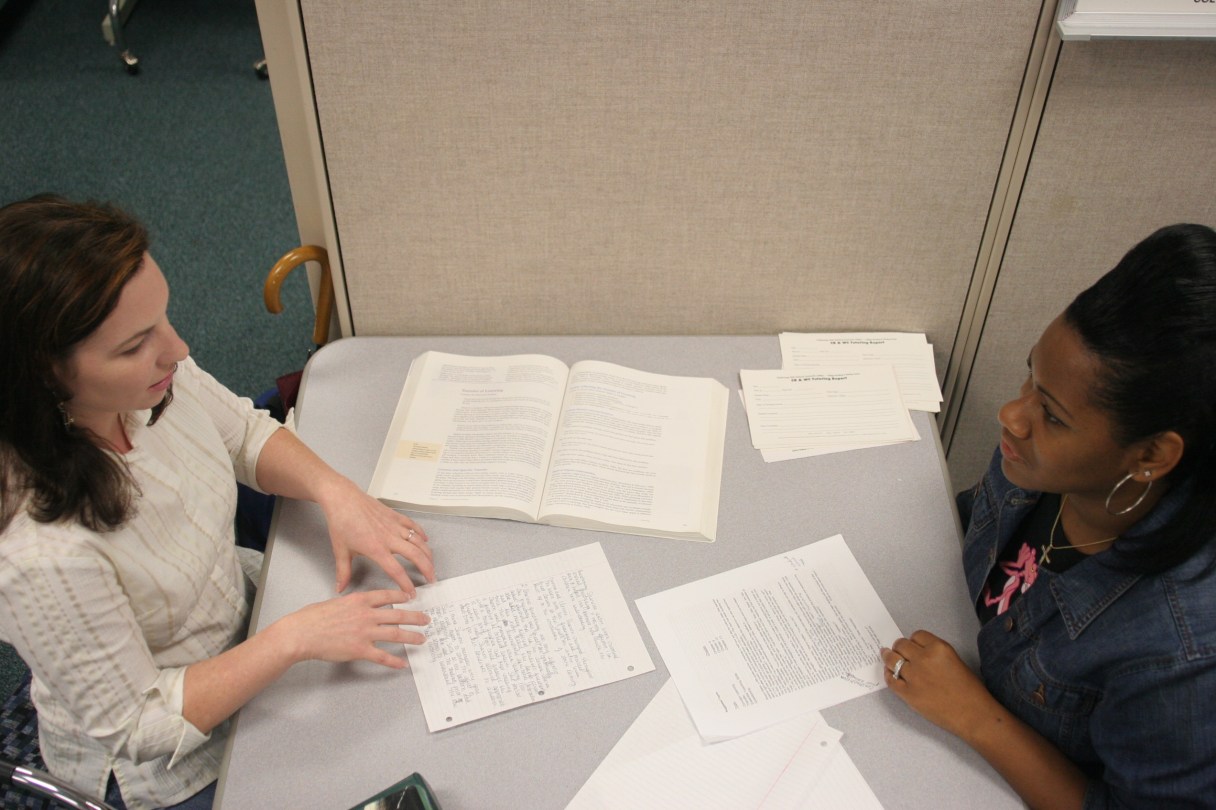
Through the grant, Chattanooga State plans to transform the second floor of its Instructional Materials Center into an academic success center. The new center will renovate both the math center and reading and writing center, as well as create spaces for one-on-one and group tutoring, individual learning booths and a lab for English second language learners.
“The cosmetics will be great, but we’re also changing the culture,” Julius Dodds, the dean of academic success, said in an interview. “Moving from tutors to learning assistants to a learning environment that’s a lot more relaxed as opposed to institutional … all that will make a difference.”
He expects the renovations to be completed by next fall.
Some of Chattanooga State’s student success efforts target specific student populations or classes, said Amanda Bennett, the vice president of student affairs. The grant’s funds will allow the college to expand existing programs so that all students have access to those services.
“So much of this is genuinely about destigmatizing it,” Bennett said in an interview. “We know what works for students, but sometimes they’re reluctant to take advantage of the resources that are here. This is really putting it shoulder-to-shoulder with the supports and not making it feel like you need something extra. This is for everyone in the class.”
The grant will also fund embedded learning assistants in the 20 highest enrollment courses to provide additional support. Most students take at least one of those courses during their time at Chattanooga State, and those classes also tend to have the lowest success rates, Dodds said.
Courses with embedded learning assistants in past semesters have had a higher success rate than those without, school President Rebecca Ashford said.
Faculty who teach one of those high enrollment, low success rate courses will also be provided professional learning opportunities to continue to improve student outcomes, Dodds said.
Chattanooga State’s other main goal is to use the grant to ensure students have guidance on what their credits will allow them to do and what pathways are available to them. That includes making the transition between credit, noncredit and Tennessee College of Applied Technology programs as seamless for students as possible, as well as making students aware of the different pathways to completing a degree or credential.
“When we look at our institution as one institution with many doors, then we need to provide the pathways for all of those students to take,” Dodds said.
Additional investments in technology will also allow Chattanooga State to en masse determine the credential each student is closest to obtaining. The college can already do that for individual students, but being able to do it more comprehensively will enable school officials to communicate with more students, Bennett said.
Chattanooga State was previously awarded the same grant in 2015. Evaluations of that grant showed tutoring was one of the interventions that had the greatest effect on improving student outcomes, which formed the foundation for the new grant, Ashford said.
“We know how transformative this is and what it will enable us to be able to do,” Bennett said. “Everyone across the college is really, really excited that we have this opportunity because it’s going to be such a great impact on our campus.”
Contact Shannon Coan at scoan@timesfreepress.com or 423-757-6396.