
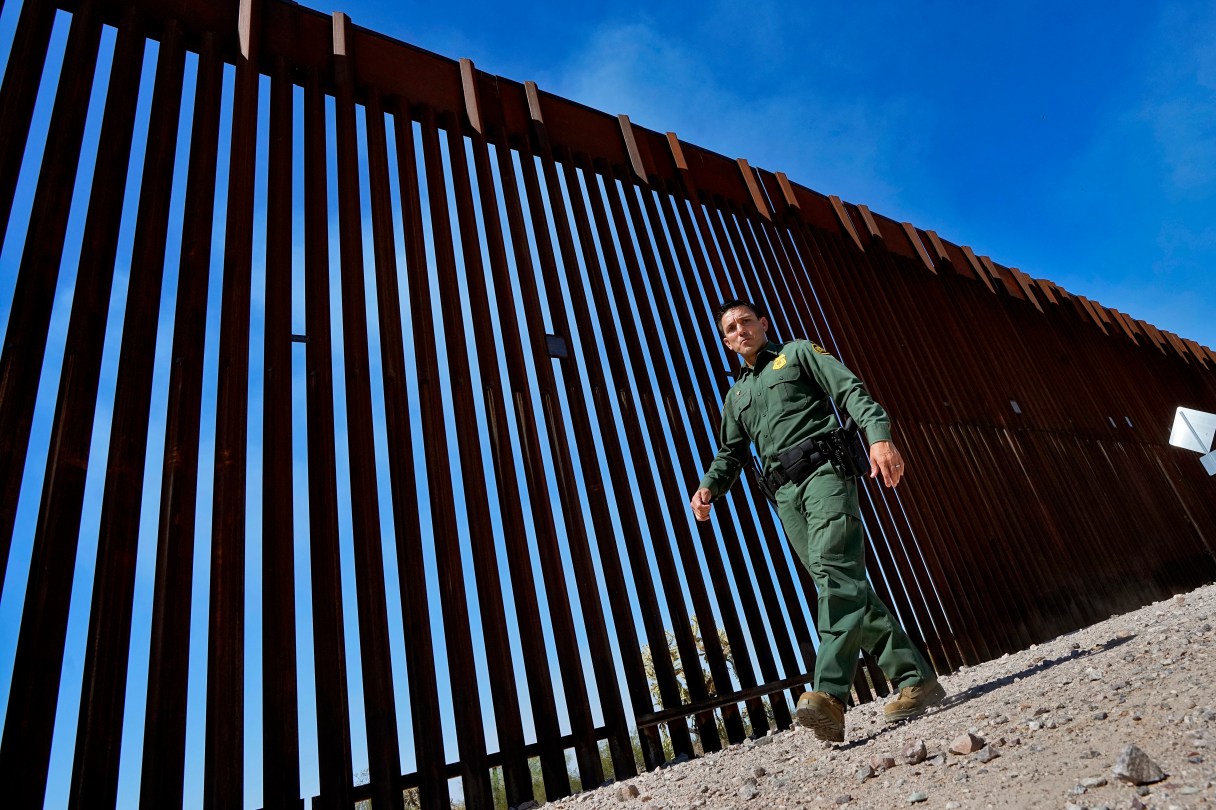
MIAMI (AP) — Most people in the U.S. see Mexico as an essential partner to stop drug trafficking and illegal border crossings, even as they express mixed views of Mexico’s government, according to a new poll.
The poll from the Pearson Institute for the Study and Resolution of Global Conflicts and The Associated Press-NORC Center for Public Affairs Research found that about two-thirds of Americans see their southern neighbor as having at least a friendly relationship with the U.S. Relatively few within that group, or 16%, consider Mexico a close ally. Meanwhile, U.S. adults are more likely to have an unfavorable (38%) view of Mexico’s leadership than a favorable (12%) one. The remaining responded they did not have an unfavorable or favorable view or were not sure.
The poll captures the different perceptions Americans have of Mexico, its leadership and the estimated 10 million immigrants living in the U.S. Mexico is the largest trade partner of the U.S. and both countries have deep diplomatic and cultural ties. But both Washington and Mexico City are under immense pressure to reduce unauthorized migration at their shared border and to stop the trafficking of fentanyl and other synthetic opioids that killed around 75,000 people in the U.S. last year.
“For two countries that are such close neighbors, so intertwined in each others’ lives, and have been for so long, there’s still room to grow,” said Benjamin Lessing, an associate professor of political science at the University of Chicago and faculty affiliate of the Pearson Institute.