
LAHAINA, Hawaii (AP) — For people around the world, the green leaves that sprouted from a scorched, 150-year-old banyan tree in the heart of devastated Lahaina symbolized hope following Maui’s deadly wildfire this summer. Teams rushed to flood its roots with water, hoping to save a magnificent tree that had provided shade for community events, a picturesque wedding venue and a popular backdrop for posing tourists.
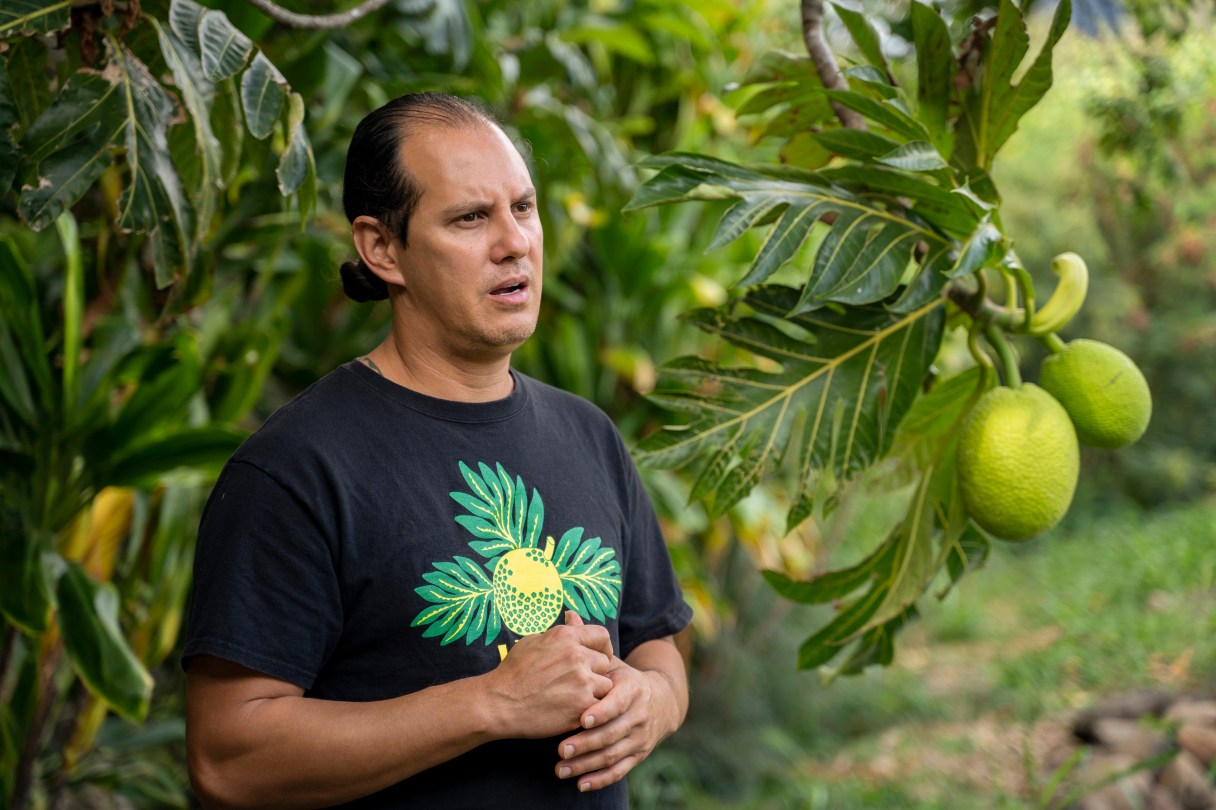
But the fire also nearly wiped out another set of trees, one with a much longer history in Lahaina and a greater significance in Hawaiian culture: breadfruit, or ulu, which had given sustenance since Polynesian voyagers introduced it to the islands many centuries ago. Before colonialism, commercial agriculture and tourism, thousands of breadfruit trees dotted Lahaina; the fire charred all but two of the dozen or so that remained.
Now, as Maui recovers from the deadliest U.S. wildfire in more than a century, one that left at least 98 people dead, a band of arborists, farmers and landscapers has set about trying to save Lahaina’s ulu, kukui nut and other culturally important trees, in some cases digging down to the roots of badly burned specimens to find live tissue that could be used to propagate new shoots.
They see the destruction as a chance to restore the trees to Lahaina, to teach about their care and use, and to reclaim a bit of the town’s historic identity amid a larger discussion about whether the community’s reconstruction will price out locals and Hawaiian culture in favor of deep-pocketed outsiders seeking a slice of tropical paradise.
“Even in this tragedy and the destruction, there is a lot of hope in our communities that there is opportunity here to bring awareness and appreciation and incorporation of some of our values and history and identity,” said Noa Kekuewa Lincoln, an associate researcher of indigenous crops at the University of Hawaii at Manoa.