
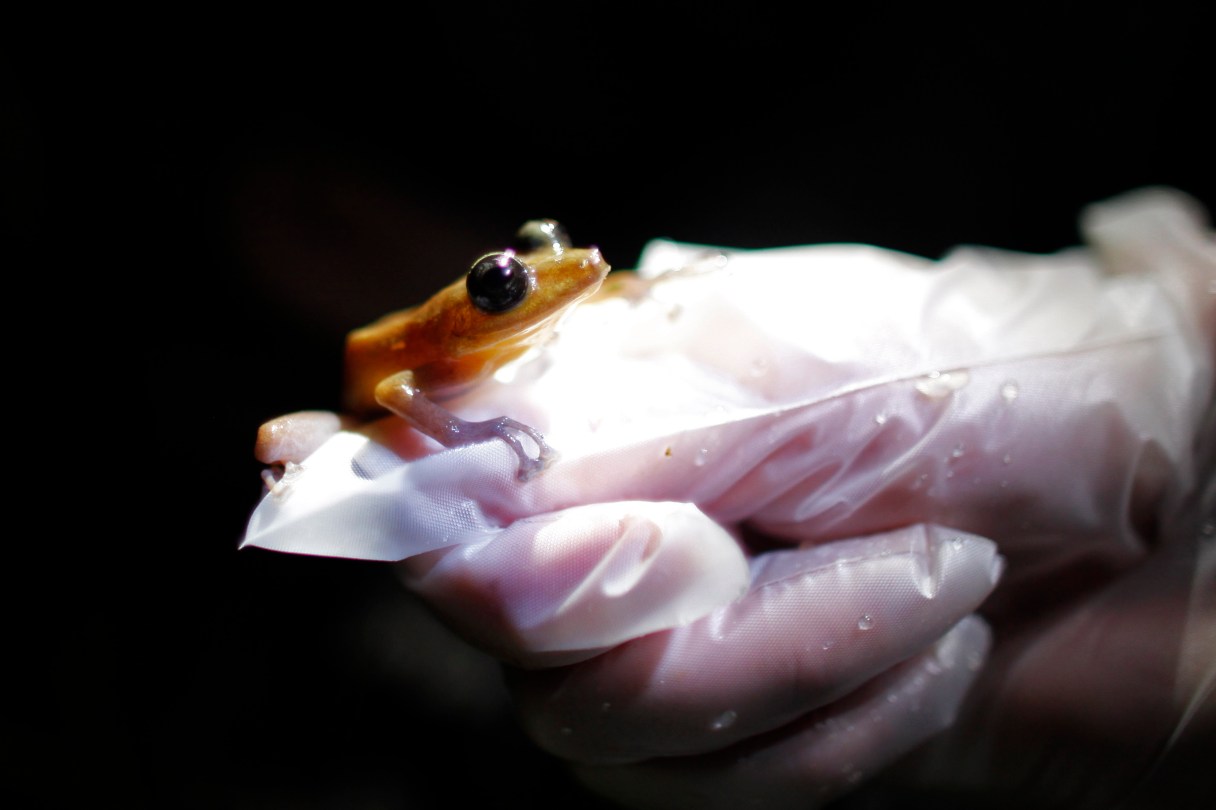
The world’s frogs, salamanders, newts and other amphibians remain in serious trouble.
A new global assessment has found that 41% of amphibian species that scientists have studied are threatened with extinction, meaning they are either vulnerable, endangered or critically endangered. That’s up from 39% reported in the last assessment, in 2004.
“Amphibians are the world’s most threatened animals,” said Duke University’s Junjie Yao, a frog researcher who was not involved in the study. “Their unique biology and permeable skin make them very sensitive to environmental changes.”
The study, published Wednesday in the journal Nature, found that the loss of habitat from the expansion of farming and ranching is the single biggest threat to amphibians worldwide. But a growing percentage of amphibian species are now also pushed to the brink by novel diseases and climate change, the study found.
Amphibians are especially vulnerable animals. They have distinct life stages that each often require separate habitats, so they can be disrupted by changes in either aquatic or land environments, said University of Texas biologist Michael Ryan, who was not involved in the study.