
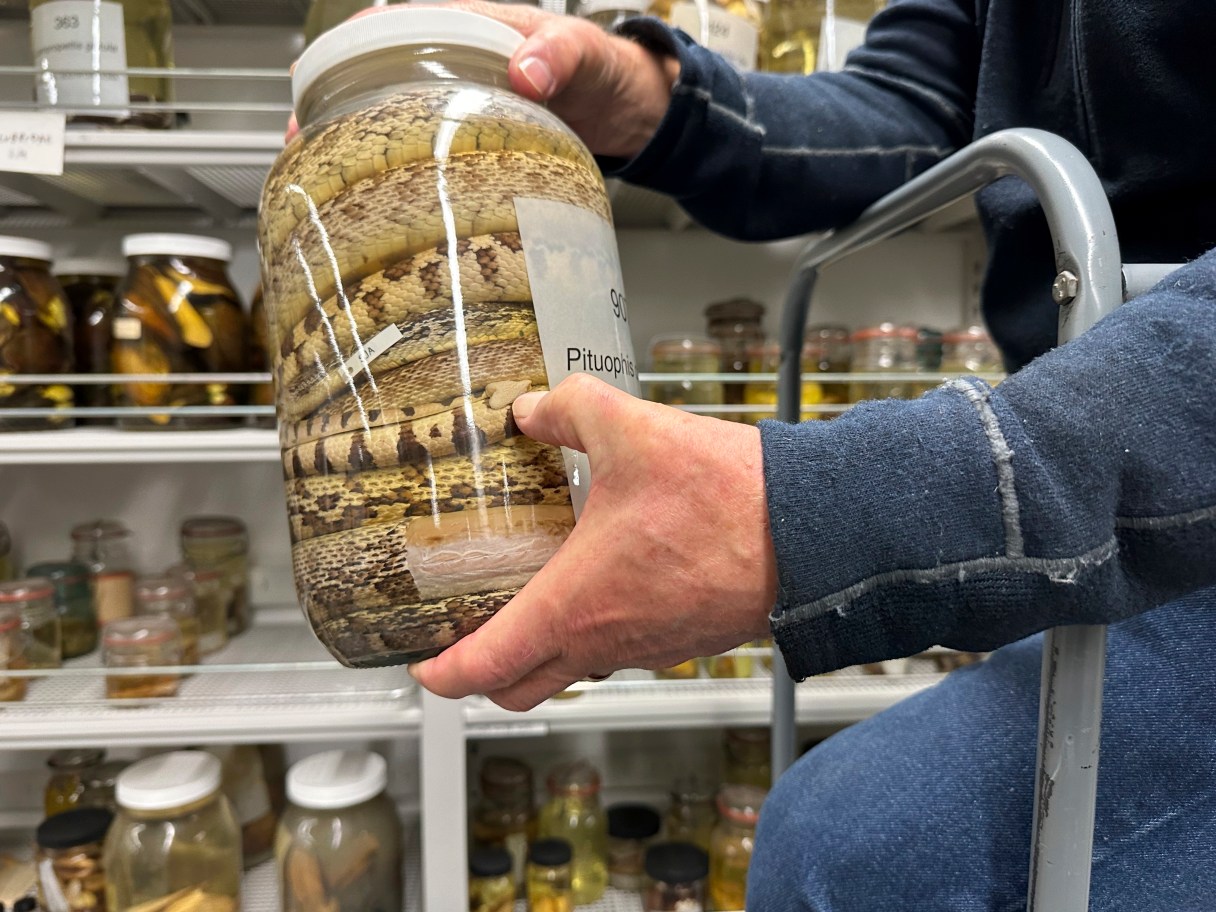
ANN ARBOR, Mich. (AP) — Greg Schneider scans rows upon rows of liquid-filled glass jars containing coiled snake specimens, just a portion of the University of Michigan Museum of Zoology’s reptile and amphibian collection believed to be the largest held by any research institution in the U.S. thanks to a recent donation.
The museum this fall acquired tens of thousands of reptile and amphibian specimens from Oregon State University, many of which are snakes. The development places the university in a unique position, according to Schneider, the research museum collections manager for the museum’s division of reptiles and amphibians.
“I’m fairly confident we’ll have the largest snake collection in the world,” he said. The extensive new additions also will allow scientists to conduct new snake and amphibian research, perhaps looking at trait evolution in mothers and their offspring.
Numerous studies have been conducted in recent years about declining amphibian and reptile populations, Schneider said, noting they “are very good biological indicators of the health of the environment and ecosystems,” especially the amphibians.
“Amphibians, unlike people, breathe at least partly through their skin, which is constantly exposed to everything in their environment,” he said, adding that “the worldwide occurrences of amphibian declines and deformities could be an early warning that some of our ecosystems, even seemingly pristine ones, are seriously out of balance.”