
Monday, November 16, 2026Nov 16

Former UK Prime Minister Boris Johnson admits to making mistakes but defends COVID record at inquiry

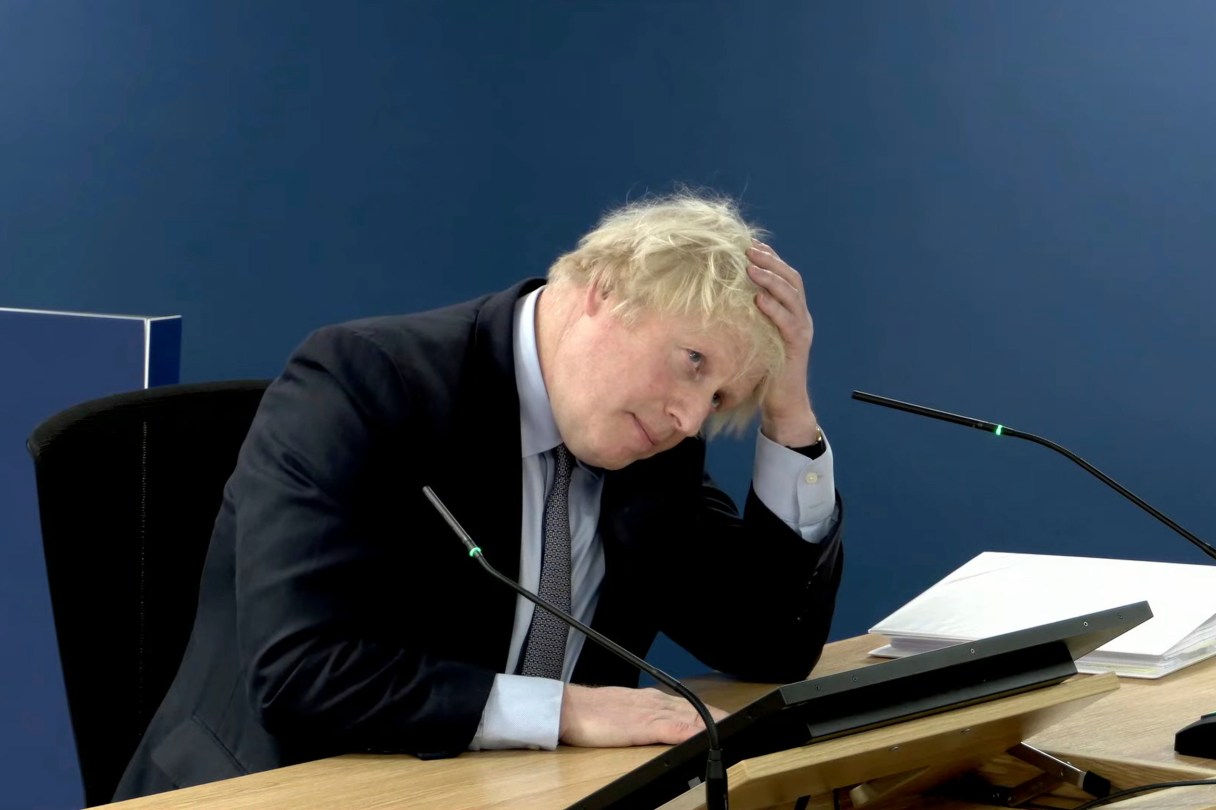
This image taken from the UK COVID-19 Inquiry live stream shows former British prime minister Boris Johnson giving evidence at Dorland House in London, Wednesday Dec. 6, 2023, during its second investigation (Module 2) exploring core UK decision-making and political governance. Johnson began two days of questioning under oath by lawyers for the judge-led inquiry about his initial reluctance to impose a national lockdown in early 2020 and other fateful decisions. (UK COVID-19 Inquiry via AP)

LONDON (AP) — Former U.K. Prime Minister Boris Johnson said Wednesday that his government was too slow to grasp the extent of the COVID-19 crisis, though he skirted questions about whether any of his decisions had contributed to the country’s high death toll in the pandemic.

Testifying under oath at Britain’s COVID-19 public inquiry, Johnson acknowledged that “we underestimated the scale and the pace of the challenge” when reports of a new virus began to emerge from China in early 2020.

The “panic level was not sufficiently high,” he said.

Ex-Health Secretary Matt Hancock told the inquiry last week that he had tried to raise the alarm inside the government, saying thousands of lives could have been saved by putting the country under lockdown a few weeks earlier than the eventual date of March 23, 2020.

The United Kingdom went on to have one of Europe’s longest and strictest lockdowns, as well as one of the continent’s highest COVID-19 death tolls, with the virus recorded as a cause of death for more than 232,000 people.